Country Living in a Cariboo Valley

Homesteading in BC

  • How to Get Started
  • Vegetable Gardening
  • Preserving Food
  • Recipes
  • Homemade Wine Recipes
  • About Us
  • Work With Me
  • Shop
    • Vegetable Garden Planner Printable: Grow Your Best Garden Ever
    • Grow Enough Food for a Year
    • Delicious Dandelions: A Recipe Collection
    • Dirt to Dollars: Selling at the Farmers Market
    • 8 Pounds in 8 Weeks: Raising Chicks for the Dinner Table
    • Making Wild Wine
    • Build a Hanging Chicken Feeder
    • 15 Things to Know About Living in the Country

How to Can Homemade Sauerkraut

By Annie

Ever wondered how to can sauerkraut so you can enjoy it all winter long? You can easily ferment and can your own sauerkraut in the comfort of your own kitchen!

Recently I wrote about our Cabbage harvest and using some of it to make Sauerkraut. Water bath canning Sauerkraut is pretty easy; a beginning canner can preserve cabbage with confidence and just a few ingredients.

a head of cabbage growing in the garden
We love our home-grown cabbage!

What is Sauerkraut?

Hailing from Germany, this salted cabbage dish is created by fermenting cabbage and results in a distinctive sour flavor.

Because it has a long shelf life, it’s an easy way to preserve some shredded cabbage and Graham loves it along with pierogies and sausages.

Read here to see how to make your own Sauerkraut including more details about the normal fermentation process.

The best part is the sauerkraut ferments passively, which means for the most part you can let it be.

The process essentially involves removing the outer leaves of the cabbage (don’t discard these, you can eat them!), shredding the cabbage with a knife or food processor, and layering with pickling salt.

It’s easy to cover cabbage and let the fermentation process do its job! Check out the recipe above for more detailed instructions on fermented sauerkraut.

Jar with homemade Sauerkraut ready to be canned.
Learn how to can Sauerkraut safely.

After leaving the kraut in a 3 gallon crock for a couple of weeks and checking it often, I scooped some out for Graham to do a taste test. He found it to be delicious and mild, which he likes.

That meant it was time to finish off the preserving of the Sauerkraut. If we wanted to, we could just put the crock down in our Cold Room and use the Sauerkraut when we wanted some.

We keep our Cold Room between 32 and 40F, and this temperature would be fine for the Sauerkraut.

However, we chose to can it instead – so should you if you cannot keep the crock in a cool enough place. Here’s how I did it.

You can also raw-pack your sauerkraut by skipping the steps that involve heating it before packing it into the jars. I prefer to hot-pack when canning sauerkraut.

See every one of our Preserving Recipe and Instructions Guides – right here!

Water Bath Canning for Homemade Sauerkraut

  1. Heat the Sauerkraut in a large pot, stirring with a plastic or wooden spoon. You want it to gently simmer, don’t boil it. Gentle bubbles means you’re at the right temperature.
  2. Add a bit of the juice. Make a brine (1 1/2 tablespoons of salt for each 1 quart of water), in case you don’t have enough juice in the crock.

    sauerkraut heated on stove before being canned in jars
    To hot-pack, you’ll want to heat the sauerkraut on the stove before transferring to jars.
  3. You’re going to Hot Water Bath the Sauerkraut, so wash your jars and then set them into your boiling water canner. Keep them in there for 10 minutes.
  4. Meanwhile, get your seals and rings ready. Pour boiling water over them and let them sit until you need them. I’m using Tattler lids for some of the jars – I should have ordered more so I had some new lids!

    tattler lids on a counter
    I love using these lids for easy and reliable food preservation!
  5. Use 1 1/2 tablespoons of salt for each 1 quart of water. Heat this brine on the stove.
  6. Once you get your Sauerkraut warmed up, hot pack it into jars. I use these pint jars but you can use quarts if you like a larger jar size.
  7. Leave 1/2 inch headspace in the jars. Add the warm liquid and use the brine, if you need to. Leave 1/2 inch of headroom and wipe jar rims.
  8. If you are using Tattler lids and seals, there is a slightly different process to follow and you can read it here. It is very important to let the contents vent during the processing.
  9. Place your jars in the Boiling Water Bath and once the water comes back to a boil, set your timer for 15 minutes for pints. If I had used quarts, the processing time would be 25 minutes.

    hot packed sauerkraut in jars ready for water bath canning
    Be sure to leave a bit of head room in your jars.
  10. I have to add 5 minutes because of our altitude (2800 ft). Make sure you always take your elevation into account when you do canning, it is very important.
  11. Once the time is up, remove your jars and leave them alone for 24 hours. After that, you can wipe the jars down, remove the metal bands if you like, and place the jars on your pantry shelf.

    canning jars of sauerkraut ready for canning
    Here’s the sauerkraut all packed into the jars. It’s easy to make dozens of jars like this all at one time!

What Supplies Do I Need for Home Canning?

Not sure where to start when it comes to canning? Here are some recommendations:

I have a very handy food grade Canning kit (Presto) that includes jar lifter, seal grabber, a funnel, a measuring gauge that allows you to easily figure out the headspace and more.

These items are almost a necessity when canning. You can order one of these Canning kits here.

For sauerkraut, I also recommend getting a nice sharp knife to slice the cabbage into nice thin shreds. A mandolin is also another option for slicing.

Here, you can find the Canning Supplies and Equipment Needed to Preserve Food

What Can I Use Sauerkraut For?

Graham has already enjoyed a meal of Bratwurst and Sauerkraut along with Perogies, and is looking forward to many more.

It can also be eaten on its own or as a simple side dish if you really enjoy the flavor. It pairs well with bold, savory flavors like onions and garlic.

Sauerkraut has many health benefits: lots of naturally occurring probiotics that foster beneficial bacteria in the body to improve digestion, nutrients, vitamins, and it can even help strengthen the immune system and reduce the risk of certain diseases.

A hearty mason jar of sauerkraut can also be given as a nice homemade gift for friends, family, and loved ones.

We ended up with 17 pints of Sauerkraut using a 3 gallon crock, which held a total of 15 pounds of cabbage.

Here’s an article about Canning Tips You Should Know

Jar of Sauerkraut ready to be canned.
Save this to your Pinterest board for later!

More Home Food Preservation Guides

  • Want to can some fruit? Here’s How to Can Cherries so you can fill your pantry shelves.
  • Here’s How to Can Salmon (and any other fish)
  • Using Tattler Lids? Here’s how I make sure to use Tattler Lids and Seals properly!
  • Make these Quick Pickled Carrots from the Minimalist Baker!
  • Learn how to store Home Canned Food Properly
How to can Sauerkraut jars on a shelf

How to Can Homemade Sauerkraut

Cook Time: 25 minutes
Additional Time: 1 day
Total Time: 1 day 25 minutes

This easy homemade sauerkraut is perfect to quickly can right in your own kitchen! This will extend its shelf life and keep it fresh and tasty for much longer.

No Ratings

Ingredients

  • 10 pounds cabbage leaf
  • 6 tablespoons pickling salt

Instructions

  1. Heat the Sauerkraut in a large pot, stirring with a plastic or wooden spoon, until it reaches a gentle simmer.
  2. Add a bit of the juice. Make a brine, in case you don’t have enough juice in the crock.
  3. You’re going to Hot Water Bath the Sauerkraut, so wash your jars and then set them into your boiling water canner. Keep them in there for 10 minutes.
  4. Meanwhile, get your seals and rings ready. Pour boiling water over them and let them sit until you need them.
  5. Use 1 1/2 tablespoons of salt for each 1 quart of water. Heat this brine on the stove.
  6. Once you get your Sauerkraut warmed up, hot pack it into jars.
  7. Add the warm liquid and use the brine, if you need to. Leave 1/2 inch of headroom and wipe jar rims.
  8. Place your jars in the Boiling Water Bath and once the water comes back to a boil, set your timer for 15 minutes for pints (or 25 for quarts).
  9. Once the time is up, remove your jars and leave them alone for 24 hours. At this point, wipe them down, remove the metal rims if you like, and store them wherever you like.

Notes

  • This recipe takes sauerkraut that's already been made and prepares it for canning. Check this post for information on how to make your sauerkraut from scratch!
  • As a general rule of thumb, you can fit 5 pounds of cabbage for every gallon that your crockpot or slow cooker will fit. Feel free to tweak the amount of cabbage depending on the size of your pot.
  • Make sure you always take your elevation into account when you do canning, it is very important. Higher altitudes will require more time.

Did you make this recipe?

Please leave a comment on the blog or share a photo on Pinterest


Filed Under: Canning, Food, Grow Your Own Vegetables, How To Tagged With: Grow Vegetables, preserving, Sauerkraut, vegetables

How to Transplant Tomatoes into a Greenhouse

By Annie

Check out this handy guide to learn how to Transplant Tomatoes into a Greenhouse!

Why Should I Be Transplanting Tomato Plants?

To put it most simply, planting tomatoes in a greenhouse extends their growing season. Most popular greenhouse setups allow for things like temperature control, more control over the irrigation system, and ability to monitor things like air circulation and humidity level.

Transplanted tomatoes in greenhouse with stakes and ties
Newly transplanted tomatoes in the greenhouse.

Growing tomatoes in a controlled environment will allow you to tend to them outside of their natural growing season in your climate. It can also prevent disease and infection ensure you end up with the healthiest tomato fruits possible! But there are some things to consider for growers of tomato transplants, so let’s get into it.


Want read about how to build a greenhouse for your back yard?


Our Tomato Plants

Because of our cooler nights, we start many of our vegetables inside the house. Right now, I have beans, corn and zucchini busting out all over the living room.

We have much better luck transplanting rather than direct seeding any of the heat loving vegetables that we grow.

Our elevation means cooler temperatures and so we get them started early inside and pop them into the garden towards the end of May.

Transplant Tomatoes into a Greenhouse from their seedling cups.
Once your tomatoes start getting a little too big for their containers, it’s usually a good sign they need to be moved.

Although I would love to be doing that this weekend, it is still just too cold out there. What happened to all that sunshine and heat we were having just a week or two ago?

It’s not stopping me though; I’ve just moved into the Greenhouse. I spent some time cleaning it out and then started watering it. It takes several days of good watering to moisten the soil enough to transplant tomatoes into a greenhouse.

My tomatoes are getting a bit leggy although they do have nice thick stems for their size. If I don’t get them planted in the greenhouse I would have to transplant them into even larger pots.

Transplanting Tomatoes into Larger Pots

These tomatoes have been transplanted into a larger pot.
You may need to transplant tomatoes into a larger pot before planting in the ground.

Most years, I have to transplant tomato seedlings from their starter pots into larger pots. You can read about why it is important to do that; it is especially important for people living with short growing seasons.


Transplant Tomatoes into a Greenhouse starting with putting stakes in place.
Ensure that the tomatoes have ample space and stakes or trusses to latch onto as they grow.

My tomato trusses all in place. You can see I just go out in the bush and saw off some limbs to use as stakes. What are the black jugs for?

De Wit Garden Tools in the greenhouse soil
Invest in high quality garden tools, you won’t regret it!

I’ve got some fantastic hand garden tools this year – a serrated trowel and a 3 tine cultivator from De Wit Garden Tools.

I am looking forward to using these quality tools for many years to come.

Once the greenhouse soil is nice and moist, I pound the tomato stakes into the soil, spacing the stakes as needed so the plants have room to grow.

Transplanted Tomatoes in the greenhouse ties to stakes
Here’s what they look like right after being transplanted.

I’ve got three different kinds of greenhouse tomatoes this year planted and later I’ll be adding my pepper plant seedlings alongside.

Make a well to hold water when transplanting tomatoes
Give them plenty of water in the beginning to make sure they have everything they need to adjust to the new environment.

How to Transplant a Tomato Plant

Here are some general tips on how to replant a tomato plant:

Choose a spot in the greenhouse that gets lots of sunlight. If possible, check the soil to ensure it’s rich in nutrients like nitrogen, calcium, magnesium, and potassium, or enrich it with soil or potting mix. Also, you can use a PH test kit like this one, to check that pH levels are optimal–you don’t want the soil to be too acidic.

When I transplant tomatoes I always remove the bottom set of leaves and tend to any side shoots that grow off the main stem. Then I plant deep into the hole so more of the stem is covered.

If you like, you can also use organic fertilizer, compost, manure, or another nutrient-rich growing medium to further promote growth. Apply the fertilizer at the time of transplanting, and then once more just before fruiting if you like.

This will help the plants grow strong with sturdy stems to support the weight of the tomatoes. Velcro ties are used and these will be checked and adjusted as the season goes on.


Growing Tomatoes in a Greenhouse
Learn how to grow tomatoes in a greenhouse.

Watering Transplanted Tomatoes

When transplanting tomatoes, I create a well around the plant to hold onto the water. For the next several days I will keep them well watered to help them settle in. After they’re settled, tomatoes typically don’t need huge amounts of water. Overwatering can actually be harmful for them, so be mindful of water application to prevent disease and other harm from affecting your plants.

For the rest of the season I will be checking the Greenhouse every day – if it needs watering, it will get it. The hotter the days become, watering every day is a must – we may even set up a drip sprinkler on a timer in here.

Note: When watering tomatoes, try to not get the leaves wet! This is why soaker hoses or drip sprinklers work well in a greenhouse.

Greenhouse Tomato Crop
Pruning your tomatoes regularly is a great way to ensure you have beautiful plants that are growing and fruiting efficiently.

In a few months, it should be looking more like this and we can’t wait. Harvests are a highlight of the summer when we can pick and eat these right off the vine and have baskets of delicious tomatoes!


What is the Best Way to Transplant Tomatoes?

A simple answer to this is to plant the tomato in good soil, remove the lower side shoots and then bury the stem as deep as possible. This will enable roots to grow laterally from the stem. You need to ensure that your tomatoes are able to take hold of their new environment, and the best way to do that is give the stem and roots lots of opportunity.


What Tomato Variety is Best for a Greenhouse?

When picking out your tomato seeds or tomato seedlings, it’s important to consider your climate and the type of tomato. There are two major kinds: determinate tomatoes (bush tomatoes) and indeterminate tomatoes (or cordon tomatoes).

In most cases, you’ll probably want to go for indeterminate varieties if the climate allows it, as this variety continues to grow throughout the growing season and continually grows fruit throughout the entire season. They’re also called vining tomatoes.

Types of Indeterminate Tomatoes

  • Beefsteak
  • Big Boy
  • Brandywine
  • Sungold
  • Sweet Million
  • Early Girl (one of our favorites)
  • Gardener’s Delight

Types of Determinate Tomatoes

  • Glacier
  • Legend Tomato
  • Roma
  • Better Bush
  • Sunrise Sauce
  • Cappricia


When is a Good Time to Plant Tomatoes?

This may require some planning, but you’ll want to sow tomatoes seeds indoors in January or so, then transplant to your greenhouse in April or May. Depending on the climate, you may even be able to move the tomatoes as early as late February or early March. Pay attention to the last frost date in your area–past this point, you’ll be able to transplant tomatoes into a greenhouse.


Transplanted tomato plants in a greenhouse.
Save to your Pinterest board.


How to Prevent Pests from Ruining Your Tomatoes

There are a number of insects and other animals that could pose a threat to your tomatoes. Aphids, flea beetles, whiteflies, cutworms, and nematodes are all possible, though aphids and whiteflies are the most common.

For the most part, removing infected parts of the tomato plant is often enough to stop the pests. In extreme cases, you may have to resort to sticky traps or pesticides. We don’t use pesticides here, so we only use natural ways to get rid of pests.

Generally, keeping a good eye on your plants and taking good care of them is a great way to shore them up against pests.


How to Ensure Proper Pollination of Tomatoes in a Greenhouse

You’ll also want to make sure that bees are able to access your plants for pollination. Bees are the opposite of pests! But in some greenhouses, this won’t be possible. Especially if you don’t have a lot of good natural airflow.

One way to distribute the pollen yourself to ensure proper fruiting is to use tools like electric toothbrushes or other kinds of electric vibrators to spread the pollen. For only a few tomato plants, you can also be more precise with a cotton swab or small brush.

More articles about growing Tomatoes

Read here to find out how to ripen green tomatoes indoors fast!

Want to make your own home made Tomato sauce? Here’s my recipe! Canning instructions included too!


Now that you know how to transplant tomatoes into a greenhouse, grow some tomatoes this year!


Originally published 2016; latest update November 2022

Filed Under: Grow Your Own Vegetables

How to Grow Onions

By Annie

How to grow onions from sets – plant in the garden or in containers!

Onions are so easy to grow in your vegetable garden! If you use a lot of onions in cooking, why not plant a row of onions in your garden? Onions are one of the easiest vegetables to grow and they are really low maintenance. 

Then just add regular chores (watering and weeding) and the onion plants will grow nice and big. Here’s how we grow enough onions here on our homestead to store enough for year round eating.

Onions growing in a raised bed garden.
Save this to your Pinterest Gardening board!

Another vegetable we grow a lot of is potatoes. If you want to learn how to grow potatoes, head over here!

How to Grow Onions

I always buy onion sets, because growing onions from onion seeds takes much longer. You can certainly do it, but you need to sow seeds indoors in January and then transplant later into the garden.


Large onions on a cutting board
Here’s how to grow onions in the garden. Or grow onions in containers or pots on your deck!


Onion sets are just small onion seedlings that can be planted in the garden. Be sure to choose a variety that works with the climate and day lengths where you live.

Long-day onions will need 14 to 15 hours of daylight per day, whereas short-day onions only need about 10.

There are also day-neutral onions which will produce good bulbs regardless of day length.

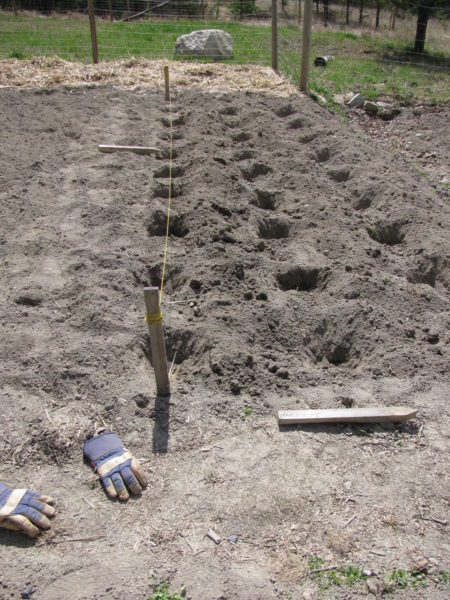
a string used to carve out an even line.
Using a string helps keep your trenches even.

To plant, I first run a string line. This way I can try to keep my rows straight; after it is in place, I make a furrow using my shovel.

Soil Recommendations

I like to add some well-rotted manure or compost to the trench before I plant, but you can also use nitrogen fertilizer like this one to promote bulb growth.

If you’re using mulch, be sure to keep it a fairly thin layer as this can retain too much moisture and you’ll want to tops of the bulbs to have pure sunlight.

If they aren’t able to have fresh air and full sun, this can lead to rot. Good drainage is crucial for healthy onions.

onion bulbs nestled in soil.
Be sure to actively plant the onions instead of scattering them.

How to Plant Onions

Make sure you seat the onion bulbs into the soil. Don’t just toss them into the trench – they really do need to be seated with the roots down and pointed end up.

I situate my onion plants about 4 inches apart, at least an inch deep, making sure they are well seated. Then just fill in the trench and water.

I like to plant my rows fairly close together and thin them later as they grow. I think planting vegetables tightly really helps to keep the weeds and leaves down.

It does make it a bit harder to get into the onion patch though, especially in the beginning months. Some people like to leave a lot more room between plants than I do.

It just makes for a bit more weeding.

How to Thin Onions

We can get onions planted here in the early Spring. They get planted in early May or as soon as I can get into the garden.

Sometimes I can get them planted in late April. Once planted, they will grow all spring and summer and are completely harvested in mid-September.

All growing season long, I thin any onions growing too close together. This way, we get to eat small onions all summer. Meanwhile the remaining onions get to grow a lot bigger.

Harvesting Green Onion

When you see small bulbs, you can snip off a few of the green stalks and use them as green onions, or scallions. Take a stalk from several plants, not ALL of the stalks from one plant.

green shoots coming up from the soil.
These green onion shoots are great to eat!

If you will want lots of green onions all summer long, keep planting sets every few weeks. We can grow large bulbs here; most root crops do very well in the Cariboo.

As the season goes on, you will notice that the onion tops start to turn yellow and fall over. If you are getting into September and the tops are still green, you can speed things up by knocking all the tops down.

Sometimes, we want to get the harvest out of the ground in order to plant fall rye to build the soil through fall and winter, so we knock the tops down.

Also be on the lookout for thrips, which suck sap from onion leaves, as well as other pests and insects like aphids and onion maggots that are naturally attracted to the organic matter.

You may have to get help in order to deal with these pests–your local garden center is a good place to start.

Mature onions in soil.
Once the tops start to yellow and fall over, your onions are close to ready to harvest.

How to Harvest Onions

Don’t cut the onion tops off, just push the tops over. Then let them dry some more before pulling them from the ground.

When it is time for harvesting, try to do it on a sunny and long day. Long summer days are great for this if the onions are ready by then.

Pull the onions, gently brush any dirt off and then leave them in the garden to begin to dry for a few hours.

If you don’t have cool overnight temperatures like we do, you can just leave the onions in the garden for a few days.

We can’t do that here, because we are concerned with even a very light frost falling on them. The onions always get moved before nightfall, just in case.

Curing onions by hanging from barn rafters.
This is a great way to cure your onions and also provide some natural decor!

We cure our onions by tying them in bunches and hanging them from the barn rafters. Here the onions get the benefit of fresh air and wind, but they are under cover.

This way they stay out of the sun. They are also protected from a freak frost, which can happen here in our Zone 3.

We leave them hanging there for two or three weeks. Then, they are brought up to the house and put downstairs. We do NOT store onions in the Cold Room storage. 

Read more about how to store onions for winter here

Onions are easy to grow and don't take much room. Here's how to grow awesome big onions. #onions #gardening #food
Onions are easy to grow and don’t take much room. Here’s how to grow awesome big onions.

If you use onions in cooking, grow some of your own. Almost free onions are much better than having to pay for them at the grocery store!

Varieties of Onions

Here’s a list of some varieties of onions that are good to grow in your garden. I’ve found that red onions and yellow onions tend to grow well!

  • White Bermuda Onions
  • Yellow Granex Onions
  • Yellow Sweet Spanish Onions
  • Walla Walla

Questions about Growing Onions

How long do onions take to grow?

Generally, onions take about 150 to 175 days to grow to full maturity. But, remember that you can dig onions while they are growing. 

How many onions grow from one bulb?

One onion will grow from one bulb. It’s just that you plant a little onion set and get a full size nice big onion months later.

How deep to plant onions?

Plant onion sets anywhere from 1 1/2 inches to 2 inches deep. 


More Posts about How to Grow Onions and Use Them

How to Store Onions for Winter – grow and save fresh onions to eat all winter

Make Pickled Onions – try this recipe!

A list of pretty much every Preserving Recipe we have here, from freezing to canning and more!


originally published 2016; latest update March 2026

Filed Under: Grow Your Own Vegetables Tagged With: Onions

How to Grow Potatoes

By Annie

Wondering how to grow potatoes? All you need to know is right here.

Potatoes are quite easy to grow. You can grow potatoes in a raised garden bed, in pots, in grow bags, you can even grow potatoes in trash cans.

Home gardeners often grow potatoes every year. If you’ve haven’t grown potatoes, you may be surprised at how easy it is to grow your own.

Potatoes are probably the most common vegetable eaten in North America. So if your family is like most, you eat your fair share of potatoes. Some stats say the average person eats more than 30 pounds of potatoes each year.

fresh dug potatoes on soil with hands holding some potatoes
Learn how to grow potatoes. Plant potatoes in grow bags or in the garden

Potatoes get expensive in the grocery store. As the weather cools down and winter comes around, the price of grocery store potatoes keeps going up.

If your family eats a lot of potatoes over the course of a year, then why not plant some? You can buy true potatoes for growing at garden centers and plant nurseries.

Potato plants are easy to grow and they are a great first crop for a new garden bed. Planting and growing potatoes will help break up the soil for future years.

As long as the soil is not too wet, you can plant your potatoes in very early Spring. As soon as you can get into your garden, get some potatoes planted.

You’ll also want to rotate your crops yearly to avoid things like pests like the Colorado potato beetle or other harmful potato beetles. Purchasing disease-free seed potatoes is another way to prevent diseases like potato scab.

sprouted potatoes in a paper bag ready for planting
Look at all these sprouts! These are great for using as seed potatoes.

Potatoes are one of the most versatile vegetables you can grow. Find yourself some great potato recipes and discover delicious new ways to serve them.

You can find lots of delicious potato side dish recipes over here.

Make homemade french fries if you have a deep fryer. Or make a homemade potato salad. Turn several pounds into delicious potato soups or stews.

New potatoes are delicious loaded with sour cream, then sprinkled with fresh garden herbs.

Put a chicken in the oven, add some potatoes, carrots and onions and roast the whole thing for dinner. Serve with peppers, eggplants, or tomatoes. Baking potatoes to serve with any meal is easy and delicious!

Holes dug in garden for potatoes seed
You can plant potatoes in a hole or in a trench.

How to Grow Potatoes – Planting

Potatoes can be planted early in the year. If you can get in to the garden to work, you can plant your potatoes. Soil temperatures are not that critical when it comes to growing potatoes, so they can grow in a variety of climates. 

The only thing they don’t like is an abundance of moisture in the soil – if your garden soil is still mucky and soaked, delay planting for a week or two to avoid rot. Make sure your potato bed has good drainage.

They do love full sun and their growing season here in Zone 3 is from May – October. Generally, you’ll want to aim to plant around a month prior to your last frost date.

There are several different ways to grow potatoes, but here is how we plant ours. I like to use a string line to mark my rows while I plant.

Once my row is planted, I move the string line and I mark the end of the planted row, either with a stake or even a larger rock.

Be sure to dig the holes as deep as possible. You may want to mix some compost (always the best organic matter) or other non chemical organic fertilizer into the soil. If you can dig 12 inches deep, that is fantastic.

Potatoes do like slightly acidic soil, with a pH of around 5.8 – 6.3. If you have doubts, test your soil pH and add composted matter as needed.

If you don’t have a lot of compost available, just add some to the bottom of the hole – the seed potatoes will love it.

Keep your plants spaced about 1 1/2 feet apart. (You’re going to need that extra soil later). Some gardeners prefer digging a trench instead of holes; either way works just fine.

Remember that rotating the potato patch yearly is a good idea, as over time your tubers can develop potato blight from always being planted in the same soil. 

sprouted potato getting planted in garden
If the potato has lots of long sprouts you can remove some of them.

Planting the Potato Seed

You want your potato to have at least 3 eyes on it. They do NOT have to be in full sprout like in this picture, but they should have 3 buds started at least.

Some people cut their larger potatoes with a clean knife, or put two in the same hole. As long as I have 3 eyes or more, I toss that baby in the hole. Plant them sprout/stem (or eye) pointing UP.

Many growers chit their potatoes by cutting the bigger potatoes into pieces and leave to cure the cut surface for several days prior to planting, but I don’t bother to do that.

The sprouting action tends to happen naturally with ours, by the time April rolls around.

After planting, ensure your patch receives 1 – inches of water every week. 

newly planted potato sits in hole in garden
Try to plant the potato with the eye or sprout facing upwards.

How Do Potatoes Grow?

An important thing to know! And here’s the secret to getting over 3 pounds of potatoes from 1 potato.

ALL the new potatoes you will get off of one plant will grow between the seed potato and the surface of the soil. This is important to keep in mind.

This is why you want deep holes and a good layer of soil, straw, or mulch to hill over the plants later. 

growing and hilled potatoes growing in the garden
These potatoes have just been hilled again.

Do You Have to Hill Potatoes

No, you don’t. You could just side-dress the plants with good compost.

Should you hill the potatoes? Yes, you definitely should.

Remember where those potatoes are going to grow? Potatoes grow between the seed potato and the surface of the soil.

So the more dirt you can get up to the foliage of the plants, the more potatoes you should get at harvest time. Remember, the more inches of soil you can hill onto the plants, the more potatoes you will get.

Above is a picture of hilled potatoes. The ONLY thing that will need to be done with these plants is to hill them (we try to do it 3 times) as the green leaves grow.

To hill them, just use a hoe and bring the dirt up tight around the base of the plants. Completely cover the stems if you can, right up to the bottom leaves.

Remember, the more and higher you can hill, the more yield you should get. If in doubt, add more loose soil – as much as you can.

A bonus is that hilling usually takes care of any weeding that needs to be done too! So take the time and get those potatoes hilled and kill every weed you can with the hilling.

It’s the hilling that ensures you get lots of potatoes per plant. So the more soil you can heap around your potatoes, the bigger the potatoes will grow.

Grow potatoes from potatoes that have sprouted.
Easily grow potatoes from potatoes that have sprouted.

How to Harvest Potatoes

Several months later, once the tops die down and turn yellow and brown, you can harvest them.

You can also cheat and steal a couple potatoes while they are growing.

After they flower (in early summer), I sometimes just feel around in the soil and grab a couple whole potatoes. They taste awesome when they are fresh out of the garden and have a better texture than store-bought.

Don’t disturb the plant too much, and it will just keep on growing. Take a few potatoes for dinner from several plants instead of taking them all from one.

a bucket full of harvested large potatoes
Look at the huge size of these potatoes!

In late September, when it is harvest time, use a pitch fork or shovel to Carefully dig up the plant.

Using your hands instead will ensure you won’t stab any potatoes. Make sure you get all the potatoes, they are great at hiding! Dig deep to ensure they have all been harvested.

Bonus points if you can always find that original seed potato! It’ll be the mushy, soggy one at the bottom of the hole.

Leave them laying in your garden for a few hours, then turn them all over and let the sun dry the other side.

Harvesting on a sunny or at least windy day will help. Do not harvest if it is raining  if you can help it.

On the other hand, never leave potatoes exposed to direct sunlight for the entire day. Not when harvesting, nor when storing.

Harvest them, let them dry in the sun and then move them out of the light!

Never leave your potatoes in the garden overnight. After you have gone to all the trouble of digging them up, why chance a cool night which will be detrimental to the tubers?

growing potatoes in the garden
You can use a single potato to grow lots more!

Sorting Potatoes for Seed and Storage

We sort our potatoes right in the field. They go into groups:

  • Stabbed or cut potatoes go into one bag – We will use these one first for fresh eating.
  • Beautiful shape and nice size go into large paper bags – We will use these for seed the following year.
  • Small, misshapen go into boxes – We will cook these up and feed them off to our chickens and pigs.

Once we get all the potatoes up into the house, we like to leave ours upstairs where it is warm and dry.

After a couple of days upstairs, it is time to move them down into our Cold Room.

We make sure we label all the bags, and the Seed Potatoes for the following year are put in a separate spot in the Cold Room.

Want to read about about how to store potatoes for the winter?

Potatoes curing on wire racks before being stored
Cured potatoes ready for winter storage.

If you don’t have a lot of garden room, why not try growing potatoes in growing bags like these? You can get a very good harvest using these. You could also grow potatoes in any deep container.

We always start with using organic seed potatoes. Here are some types of potatoes that are good to start with:

  • Yukon Gold – buy Yukon Gold seed potatoes online
  • Red Potatoes (Red Gold, Carolina, etc.)
  • Russets – buy Russet seed potatoes online
  • White Potatoes (round white and long white)
  • Fingerlings
  • Red Pontiac

Check with local gardeners to find out the potato variety that grows best in your area! You may find one variety does much better than another.

Bottom Line: Now that you know how to plant potatoes, be sure to plant some in your garden or in containers this year!


You May Also Like

  • This may help you to plan your food garden next year.
  • Here’s why you should be growing some of your own food.
  • What you want to know about how to store onions
Potatoes growing in a garden
This guide is full of helpful tips on how to grow your own potatoes.


Originally published 2011; latest update  March 2026.

Filed Under: Grow Your Own Vegetables Tagged With: Potatoes

The Yellow Rope – an Update

By Annie

Early in the gardening season, I had made the decision that I could NOT allow any deer in the garden. Not. Even. One.

With all the garden planning that Jaime and I were doing, we knew early on that we were going to be investing so much more time in the garden this year than I had in the past.

And I normally spend a lot of time in there each year.

Look, I really don’t mind deer, I actually like deer. Well, I like to eat deer, to be honest.

Yes they are cute and they look beautiful when we see Mamas and their spotted babies wandering around the yard. That being said, I like to eat them more than I like to look at them.

There’s nothing that can make me happier than looking at a bunch of butcher wrapped venison inside the freezer.

We love venison snitzel…ok, now I am just getting hungry.

With all our big plans for our garden veggies, there is no way we could afford to get up one morning and find that deer have been nibbling the lettuces and other goodies while we were sleeping.

Remembering what a friend had told me a few years ago, I decided to try the yellow rope trick.

I wrote about it earlier this year, so check out my original post.


Keeping deer out of the garden


A few of our readers wanted to be sure I updated that post, with the results. Did the deer stay out? Or did they jump the rope to get in?

And I can say, they did not jump the rope. They really did stay out of the garden! Maybe it had something to do with the colour of the rope.

Maybe it had something to do with our winding the rope all the way around the garden three times. It added at least two feet of height to our garden fencing.


Critterproofing the fence

They say that deer can EITHER jump high or jump wide. What’s hard for them it to do both at the same time.

I don’t know; I have seen deer jump pretty high over things when they are trying to get off the road when they see cars coming.

But I do know, that because we strung up that rope, we were able to keep the deer out.


yellow rope

Why not give it a try if you have deer hanging around. Of course, you could always fall back on our plans.

Which is, plant some extra food for the deer. Let them come in and nibble. Then, because they ate your food, you get to eat them.

After all, I am higher on the food chain. Next year, I am seriously considering planting a deer garden. What do you think?

Filed Under: Grow Your Own Vegetables

  • « Previous Page
  • 1
  • …
  • 7
  • 8
  • 9
  • 10
  • Next Page »

Connect With Us!

  • Email
  • Facebook
  • Instagram
  • Pinterest
  • Twitter

Search this site

Generic selectors
Exact matches only
Search in title
Search in content
Post Type Selectors
Search in posts
Search in pages

Our Most Popular Posts

Garlic cloves in oil

How to Preserve Garlic in Oil – and Other Ways to Store Garlic

a open jar of pickled brussel sprouts on a counter

Easy Pickled Brussels Sprouts Recipe (Water Bath Canning)

Privacy Policy

Read about our Privacy Policy

Disclosure

Please note that some of this site’s links are affiliate links, and CountryLivinginaCaribooValley.com is a participant in the Amazon Services LLC Associates Program, an affiliate advertising program designed to provide a means for us to earn fees by linking to Amazon.com and affiliated sites. At NO ADDITIONAL COST TO YOU, I will earn a small commission, if you purchase them. I recommend them as they are good products.

Theme Design By Studio Mommy · Copyright © 2026