Country Living in a Cariboo Valley

Homesteading in BC

  • How to Get Started
  • Vegetable Gardening
  • Preserving Food
  • Recipes
  • Homemade Wine Recipes
  • About Us
  • Work With Me
  • Shop
    • Vegetable Garden Planner Printable: Grow Your Best Garden Ever
    • Grow Enough Food for a Year
    • Delicious Dandelions: A Recipe Collection
    • Dirt to Dollars: Selling at the Farmers Market
    • 8 Pounds in 8 Weeks: Raising Chicks for the Dinner Table
    • Making Wild Wine
    • Build a Hanging Chicken Feeder
    • 15 Things to Know About Living in the Country

Best Garlic Cloves for Planting – Growing Garlic – Part 4

By Annie

How to choose the best garlic cloves for planting – just follow these tips!

Here’s the fourth (and last) installment in the How to Plant Garlic series and this part focuses on how to choose the best garlic cloves for planting. The first article can be found here; Part 2 here; Part 3 here.

Here in Canada, we plant garlic (Allium sativum) in the Fall before the ground freezes. This allows the garlic cloves to settle in and even grow a few roots. Then when the cold weather comes, the cloves go dormant for the winter, then begin to grow early in the Spring.

Choosing the best cloves for planting goes a long way in growing large garlic bulbs! Here is information on hardneck garlic, plus sorting garlic bulbs and choosing cloves for replanting.

Best garlic cloves for planting on a counter
Here’s how to find the best garlic cloves for planting.

What are the Best Garlic Cloves for Planting?

There are two types of garlic that can be used for planting – hardneck garlic and softneck garlic. Here in Canada, we grow the hardneck varieties of garlic, because they do well with a cold period, meaning a cold winter.

Garlic Varieties:

Softneck varieties, such as Silverskins, grow well in southern climates, where they do much better than the hardneck type. The softneck type of garlic is not covered here, as we cannot grow that here.

Hardneck types that grow well in Canada and northern USA include:

  • Purple Stripe
  • Rocambole
  • Porcelains – Yugoslavian and Music
  • Chesnok Red
  • Fish Lake
  • Tibetan

Elephant garlic is actually not a type of garlic at all; it is one of the varieties of leeks!

Garlic cloves in a bowl ready for planting in the Fall
Save to your Pinterest board!


Curing Garlic

Read through the prior installments (see above) that will explain everything about harvesting and curing garlic. 

We begin sorting the best looking garlic bulbs when hanging them for curing. The nice big bulbs get hung together, while the smaller bulbs get hung together. These smaller bulbs will be eaten over the Winter (Spring & Summer too, because I plant so many heads).

The nice big bulbs are the ones set aside for seed for next years garlic harvest. We usually hang my garlic bulbs in groups of 10 using nylon rope. This makes for easier counting of the bundles and finding the total number of bulbs we brought to harvest. A looped rope goes around the stalk, tying up the leaves and stem. 


Garlic bulbs hanging to cure
Porcelain garlic hanging to cure in bundles of 10.


It’s important to plant the largest, nicest looking cloves, if you are trying to improve your garlic harvests.

Since we sell some bulbs, it’s in our best interest to ensure that as many of the bulbs as possible are big and beautiful! If you plant small, misshapen cloves you will get garlic heads full of small misshapen cloves.

It’s logical – if you are always trying to improve your harvests (and you are, aren’t you?) then always use your biggest and best. That way, you will get more of those biggest and best heads!


Choosing the Best Garlic Cloves for Planting

Once the garlic is cured, the stalks are cut from the bulbs, the roots are trimmed with garden shears and the bulbs are put into boxes. At this point, you can either start splitting the heads or just set the box aside for a couple of weeks. You will find it is easier to split the bulbs into cloves if the bulbs are drier.

Breaking Open Garlic Bulbs into Cloves

When you are ready to start busting the bulbs open, grab a couple of empty boxes and get started. Carefully open up all the heads and separate the individual cloves.


Garlic bulbs split and separated
The box on the right is full of cloves to be replanted in the garlic bed.


Put the nice big garlic cloves in one box – these are the bulbs that will be replanted in the garden. (The planting will take place around late September, in order for us to have lots of fresh Garlic next August.)

Smaller cloves go in another box for storage over the winter. These will end up in our kitchen where they will get roasted in the oven or put in tin foil on the barbecue.


A bowl of large garlic cloves separated for planting.
Nice healthy large garlic cloves set aside for planting.


I’ll use them when I make Bacon Garlic Bites or add them to my jars of Homemade Pickled Asparagus. Look at these beautiful garlic cloves – these are the ones that will be replanted for harvesting garlic next year.


Garlic cloves on dirt ready for planting. A measuring tape is there for spacing
Large garlic cloves ready for planting in the Fall.

You can get a good idea of the clove size in the photo above. That’s a standard sized tape measure – those cloves are quite large.

Ready for replanting? Head over to Growing Garlic Part 1, for all the planting information you need. Information in that post includes:

  • planting depth for each individual clove
  • fertilizing with blood meal
  • side-dress cloves with well composted manure and compost to add nitrogen to the soil
  • mulching with straw to keep weeds from growing
  • cutting off the flowering stalks of each garlic plant (here this happens in late June or early July)

Garlic Questions 

Is Store Bought Garlic Good for Planting?

It depends! Often, garlic bulbs bought at the grocery store have been sprayed with chemicals. It is very important to buy organic garlic bulbs from a reputable nursery. You can also find organic unsprayed bulbs at the farmers market.

Be sure to ask if the plants have been sprayed with chemicals. Organic sprays such as fish fertilizer is fine; this is a chemical free spray that helps with bulb growth.

What Type of Garlic is the Healthiest?

Any variety of garlic that is organically grown is a healthy garlic! Tip: You may find grocery store garlic has all of its roots shaved off. If the base of the bulb is completely root free and clean, it can be assumed that those bulbs have been sprayed.

The reason for the shaved base is that countries do not allow garlic to be imported with roots, as there is a greater chance of dirt coming in on those roots. This dirt may possible contaminate the soil in which they will now be planted.

Yugoslavian Porcelain garlic cloves in a bucket
Yugoslavian Porcelain garlic cloves for planting.

What is the Difference Between Seed Garlic and Eating Garlic?

There is no difference between seed and eating garlic. Usually, smaller bulbs and cloves are used for eating and the larger cloves are reserved for replanting.

What Month is Best to Plant Garlic?

The ideal time for planting garlic depends on the climate where you live. Here in Zone 3 (Canada) we plant garlic in late September or early October. We always aim to have garlic planted before the middle of October.

It is best if the cloves are planted early enough that they can form some root growth, but not too early so that the leaves start growing tall.

If the weather is unusual and top growth begins, your plants will still be fine. Just cover them with mulch once the cold weather starts.

How Do You Grow Garlic for Beginners?

This information can be found in Part 1 of this series – then continue reading the different articles in the series to get all the information, right from growing through harvesting and curing.

Garlic growing in a garden bed
A garlic patch in our garden.

I hope these posts all about growing garlic are a help to you. Garlic is easy to grow and takes up hardly any room at all. Even if you live in an apartment, you can easily plant 20 or 30 heads of garlic in a few pots or growing bags, so do it!

Backyard garlic growers love the strong fresh flavor of homegrown garlic! Plus, garlic is a very powerful natural antibiotic as well as an antioxidant.

Have you learned more about growing garlic from this series of posts? Feel free to share this article!


How to Grow Garlic Articles:

How to Plant Garlic – garlic bed preparation, spacing and garlic planting information

What to do with Garlic Scapes – and why you really do need to remove them

How to Harvest and Cure Garlic – from digging to hanging garlic for curing.


Find your best garlic cloves for planting – then get them in the soil this Fall for bulbs next August.


Want to find out which are The 5 Easiest Vegetables to Grow?

Available only to subscribers; join our Newsletter!


originally published October 2019; latest update January, 2023

Filed Under: Garlic, Garlic (4 Part Series), Grow Your Own Vegetables Tagged With: Garlic, Grow Vegetables

Putting the Garden to Bed for Winter

By Annie

It’s Fall and things are finally winding down in the garden. Everything has been dug up and dealt with. Now it’s time to start putting the garden to bed for winter. Here’s what we’ve done so far this season with our garden harvests.

Root crops are being stored in our cold room.

The canning is almost finished for the season and we’re happy to see jars full of home canned goodness on our shelves.

We’ve canned green beans, made and canned strawberry jam and a few cases of pickled beets.

We’ve made Salsa (delicious!) and even managed to can fish.


An autumn garden that needs harvesting.

After dealing with garlic all season, we’re happy that the new crop of Garlic has been planted.

The Garlic beds have been mulched with old hay and the tools are slowly getting picked up and stored for winter.


Half of the main garden has been taken over by Garlic.

If you want to learn more about how to grow and harvest Garlic, check out our 4 part series.

But now, it’s time to get to work putting the rest of the garden to bed for winter.


putting the garden to bed for winter

Putting the Garden to Bed for the Winter

I never like to leave our garden soil exposed over the winter time. Part of putting the garden to bed for the winter season is taking care of the exposed soil.

I would rather have it covered with a green manure that will hold that topsoil in place.

A cover crop of green manure will also help to keep amending your soil.

You can see a bare area in the middle top of the photo above. Once that area was given a good weeding, I raked the area into raised beds.

We added a LOT of well composted manure to the empty garden. We have pushed a lot of heavy wheelbarrows!

Once the upper left part of the garden was cleared out and weeded, I scattered Fall Rye seed.

This will become a cover crop and in turn will act as a green manure to help amend the soil.

Sometimes I use Buckwheat, especially in the late summer.

Buckwheat doesn’t need much time to grow, so if you have a free area and 30 days of growing time left in the season, try Buckwheat.

From mid Fall into the early Spring, I like to cover with Fall Rye. Planted before the real cold sets in, it will start growing roots and a bit of top growth.

Then it will go dormant for the winter. In the Spring, it just starts growing again.

If we till the garden in the Spring, this gets tilled in.

If you want to learn more about green manure (cover cropping) click on the link.


Putting an Asparagus Patch to Bed for Winter

You can see the Asparagus patch on the far left in the photo above.

We pick Asparagus freely here until the end of the first week in July, and then we leave it alone.


The stalks grow and turn into fronds, starting to yellow in late summer.

Some people cut the stalks down in Fall, but we leave ours alone and do the cutting in the Spring.

Those fronds will add a bit of protection to the roots below the surface.

Before the snow flies, I’ll mulch the Asparagus with old spent hay to add further protection.

This is the only thing that is needed in a northern climate when putting this part of the garden to bed for winter.

This will get removed in the Spring and the Asparagus will grow again.


The leaves are gone now from most of the trees; Fall is slowly turning to Winter here in the Cariboo.

If you like gathering leaves to add to your garden soil, now is the time. Or add them to your compost pile where they will break down.

We haven’t had snow yet; thank goodness. Now is the time to finish outdoor homestead projects and make sure things are cleaned up and put away.


Leave some potatoes in the ground

putting a garden to bed


I still have to mulch the strawberry beds, but I’ll do that when I do the Asparagus. We are also leaving a row of potatoes in place and not digging them up.

We will dig those potatoes up in mid-March or so. It depends on the amount of snow we get, but we are looking forward to a few fresh and delicious potatoes to enjoy in the Spring.

Try this sometime; you can leave potatoes in the ground over winter!

Just don’t leave them in the ground too long. Don’t let the ground get too wet or they will rot.

If you have to, dig them up in February and then put them in your cold room.

We are already enjoying the extra rest we’re getting; sleeping in a bit is always the bonus of October.


More posts about putting a garden to bed for the winter:


Tucking the Yard in for Winter – The Garden

5 Outdoor Things We Have to Do Before Winter

Pruning Shrubs and Trees

Cleaning up a Raspberry Patch


Filed Under: Cover Crops/Green Manure, Garlic, Grow Your Own Vegetables

How to Grow Cabbage

By Annie

Looking for a guide that teaches everything you’ll need to know about how to grow cabbage? 

This article contains all the information and cabbage gardening tips you’ll need! Grow your own cabbage from seed to fully grown heads and ready to eat. Keep reading to find out how to grow cabbage from seed, when to transplant cabbage seedlings, how to harvest cabbage, and more.

Cabbage is a great crop to grow for its dense heads of inner leaves that are great for salads, coleslaw, stir fries, kimchi, soups and more. It’s also easy to harvest and store your cabbage throughout the winter to preserve it through the cold.

Close up of a Healthy cabbage plant growing in garden.
A growing healthy cabbage plant grows in our garden.

You can find all our vegetable growing articles here!

Why You Should Grow Cabbage

Cabbage is not a difficult plant to grow, especially in the Northern areas. It loves cooler weather and is quite hardy.

Cabbage is a heavy feeder (a nitrogen lover) and tends to quickly deplete soil moisture and nutrients. This means there will need to be a good layer of composted manure or organic fertilizer in the garden for it. Cabbage is such a good Cold Room staple for over Winter.

It is really worth it to set aside some room in your garden for cabbage. Stored at the right temperature, Cabbage heads will last for several months.

Cabbage is high in vitamins like A, B1 and B2, vitamin C, fiber, and calcium. Uncooked, cabbage will have a higher nutritional value, but it can be eaten both cooked and raw.

General Information on Cabbage

To begin, here are some essential facts about the plant and its growth process. Also called Brassica oleracea, cabbage is an annual vegetable crop that’s known for its dense leaves. It’s related to other crops such as cauliflower, broccoli, and Brussels sprouts.

Generally, you’ll want to aim to plant cabbage in a place that gets full sun. This means at least six hours of strong sunlight a day, but up to eight is optimal.

Cabbage tends to quickly deplete soil moisture and nutrients. Prepare for this by treating your soil with some kind of manure, compost, fertilizer, or other organic matter before planting. To encourage large heads to form, try to incorporate more phosphorus and potassium into your soil when applicable.

You’ll want to make sure to water regularly and generously. With that being said, be sure the soil is well draining to prevent roots and stems from splitting, rotting, or otherwise becoming stunted.

A head of healthy cabbage grows in the garden.
Save this to your Pinterest Gardening board!

Summer Harvest

If you’re looking to harvest your cabbage in the summer, sow cabbage seeds about 6-8 weeks prior to the final spring frost. This date will vary depending on your location, so be sure to match it up to your area’s climate.

Fall Harvest

A fall harvest can also be achieved by planting mid- to late summer. If you live in a particularly arid or hot area, hold off a bit longer to prevent these young late-season plants from shriveling in the hot sun.

Soil pH is best kept between 6.5 and 6.8, which can also help prevent clubroot disease.

How to Grow Cabbage

I start seedling flats of Red and Green Cabbage in the seedling room. We often can’t get into the garden until late April or even May, depending on the snow. I start seeds indoors under lights for lots of different vegetables.

Want to know which vegetables I just direct seed into the garden? Check out my article – I can direct seed quite a few things, but others definitely need to be started indoors, because of our shorter growing season.

Planting Cabbage Seeds in Containers

When it comes time to plant seeds, I reuse Styrofoam cups (with a hole in the bottom) or red Solo cups. Starting seeds in Solo cups is a great way to ensure that they’re well contained and protected, even indoors.

Seeded one or two a cup and about an inch deep in the soul, they sit in the seedling room for a couple of weeks where it is bright and warm.

how to grow cabbage from seed in small pots
Growing cabbage in containers indoors and later transplanting into the garden is a great way to monitor the plants and ensure they’re coming along nicely.

These cabbage seedlings are doing great! It won’t be long until they can start being moved upstairs away from the seedling lights.

When I run out of room for more seedlings downstairs, I move the cabbages upstairs. They are one of the first veggie seedlings to come upstairs and they’ll spend a couple of weeks in front of the living room windows.

Hardening Off Seedlings

Then I start bringing them out onto the porch during the day, to start hardening off. First I move them for just a couple of hours in the mid morning, when it is neither too warm nor too cool. Over a few days I extend the amount of time they spend outdoors.

Healthy growing cabbage seedlings ready for transplanting.
These healthy cabbage seedlings are ready to be transplanted in the garden.

Excuse the clothes drying in the background! But, I sure do love my drying racks! I use them upstairs in winter, so the heat from the wood stove dries our clothes.

Once the garden is dry enough that the tilling can be done, the cabbage is one of the first vegetables I can transplant.

Cabbage transplants in garden rows.
Cabbage transplants right after planting.

Transplanting Cabbage Seedlings into the Garden

Looking at the picture, you can see that I plant my cabbages pretty close together. They are about 8 – 10 inches apart. That’s OK, I like to plant thickly. I feel it helps reduce weeds and the big leaves will help to keep the soil moist. Besides, I’ll be thinning these cabbages as time goes on. They will have plenty of room to grow nice and huge.

If you have a lot of space, you can plant them as far apart as 18 inches or even 24 inches. This is largely based on personal preference!

Growing cabbages in rows in the garden.
Healthy cabbage transplants growing in garden beds.

Cabbage is quite hardy and fairly wind resistant. It doesn’t usually suffer too much from transplanting, especially if I can transplant on an overcast day. After planting them in the garden, I water them several times that same day. Just a nice good misting to help them settle in.

I watered the pots BEFORE bringing them down into the garden and this is an important thing to do. Don’t let your seedlings dry out! After a few weeks, they have grown several new leaves. Soon they will be large enough to start heading up.

A cabbage starting to head up.
The cabbage head is starting to form.

A beautiful healthy head of cabbage just starting to grow. I usually plant a mix of both green cabbages and purple cabbages.

A full head growing in the garden.
This nice big head of cabbage is ready for picking.

Here is that same cabbage plant close to the end of July. It’s growing really well, isn’t it?

If you have pigs or chickens, by this time you can start picking a few of the outside loose leaves off. Feed them to your animals and reduce your feed bill. We love knowing our animals are eating healthy homegrown food. Want to learn more about how to grow your own animal feed?

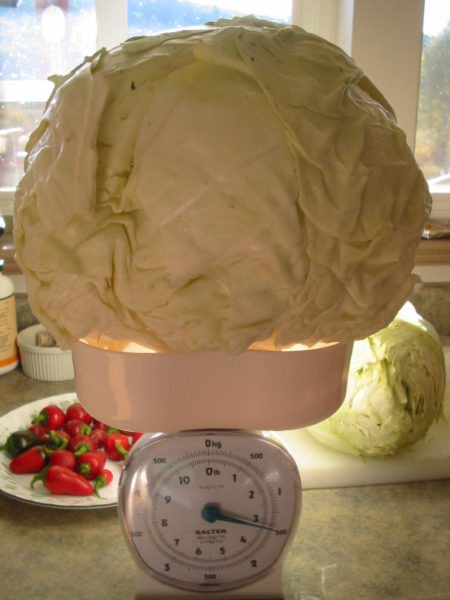
A 13 pound cabbage sits on the kitchen scale.
Our cabbage weighed in at over 13 pounds!

We can grow some BIG cabbage here in the Cariboo. This one weighed in at over 13 pounds! It was a surprise when the dial on the kitchen scale went all the way around…and then some!

How to Keep Cabbage Healthy

  1. Plant cabbage alongside other cole crops like kale, broccoli, kohlrabi, collards and cauliflower, as well as things like beets, peas, celery, radishes, and lettuce.
  2. Five inches tall is a good height to transplant cabbages from their smaller containers to a garden, as well as a good time to trim and thin them out.
  3. Use mulch around the planting area to help retain moisture (works great in hot dry weather) and regulate the temperature of your soil.
  4. If you plan to grow cabbages year after year, consider rotating their location every time you sow the seeds to prevent soil-borne diseases.
  5. Every week, you’ll want to water about 2 inches per square foot of garden. Excess water can cause cabbage heads to grow too fast and split on the stalk.
  6. The optimal temperature of soil for cabbage growth is 60 to 65 degrees F. Anything lower than 45 degrees F is almost sure to damage cabbage and form loose heads. If there’s an unexpected chill, find a way to cover the cabbages.

Pests and Deterrents

  1. Keep your cabbage safe from pests. Common cabbage pests include cabbage loopers, cabbage worms, cabbage moths, aphids, cabbage root maggots, white butterflies, slugs, flea beetles, snails, and other insects. There are also dangers like black rot and other fungus varieties like downy mildew and clubroot. To prevent and treat pests and diseases, try growing companion plants (like dill and thyme), removing any infected or diseased plants from the garden, and in some cases, hand picking pests from your cabbages.
  2. Another way to deter pests is to use any product that contains Bacillus thuringiensis, or Bt, which is a more natural type of pesticide that, when ingested by cabbageworms and other pests, will kill them off in two to three days.
  3. If birds such as pigeons become a problem, you can cover the cabbage plants with Remay cloth.
Red and green cabbage heads in a garden basket.
These red and green cabbages are ready for storing in the cold room.

How to Harvest Cabbage

  1. Wait for the cabbages to reach full maturity, which takes about 70 days. Maturity is reached when cabbage heads are nice and firm. It’s important to harvest once mature, as fully grown heads have potential to split on the stem if left for too long.
  2. With a sharp knife, cut the head of the cabbage at the base.
  3. Remove any yellow leaves and bring the plant indoors or to a cool and dry place.
  4. Cabbages can produce 2 crops if harvested correctly. For a second growth, be sure to leave outer leaves on the side of the plants and the cabbage root in the ground, then harvest when they reach approximately the size of a tennis ball.

How to Store Cabbage From the Garden

By the end of the season we always have lots of Cabbage to harvest. Make some sauerkraut or cabbage rolls. We put several heads of red and green cabbage in the Cold Room.

To prepare cabbage for the Cold Room, I peel off several layers of leaves. You can tell there are no loose leaves at all in the picture above. When you place them on the shelves, be sure they are not touching each other. Allow air all the way around.

I love cabbage in a Coleslaw! Shredded Red and Green Cabbage, with a good sized Grated Carrot for good measure – Great for alongside steaks!

Cabbage can also be stored in the refrigerator for up to 2 weeks wrapped well in plastic. Be sure to properly dry the leaves before storing to prevent rot.

Best Cabbage Varieties for a Garden

There are a number of varieties of cabbage that you can plant in your garden that will yield delicious cabbage leaves. Here’s a list of some popular varieties and why they make good garden growers. Linked cabbage varieties are available on Amazon!

  • Early Jersey Wakefield – Produces 2 to 3 pound heads and is great at resisting splitting.
  • Savoy Cabbage – Great for later planting or colder climates, this variety is more resistant of frosts and produces beautiful crinkled leaves. Alcosa and Wirosa are both Savoy types of cabbage.
  • Napa Cabbage – a variety of Chinese cabbage with an oblong head and ruffled leaves.
  • Blue Vantage – A disease-resistant variety that should require less upkeep.
  • Primo – Perfect if you prefer and earlier harvest of cabbage.
  • Golden Acre – This variety is quick to mature and typically produces 3 pound heads.
  • Ruby Perfection – A red cabbage variety that’s excellent for the fall.

How to Grow Cabbage from Seed

Cabbage seedlings in small pots ready for transplanting into garden.
If you plant cabbage tightly together, you can thin out (and eat!) as they grow.
Cabbage heads growing in garden.
Learn how to grow cabbage with this one-stop guide that will teach you everything you need to know about growing, care, harvesting, storage, and more!

originally published July, 2019; latest update March 2026

Filed Under: Grow Your Own Vegetables Tagged With: Cabbage

How to Make Pickled Garlic Scapes

By Annie

In this second installment on Growing your own Garlic, I’m going to share a fantastic Pickled Garlic Scapes recipe.

In the first post, I gave an overview about the process involved with growing Garlic. Garlic is one of the easiest garden vegetables to grow!

Here in the Cariboo, the Garlic Scapes come on hot and heavy in early summer around July. Since we have almost 300 garlic plants in the garden, we basically have almost 300 scapes!

Fresh garlic scapes in a bowl.
Here’s a Garlic Scape Pickle recipe you are going to love. Preserve garlic scapes to store them for year round use.

Every garlic plant sends one scape up and if you want the largest garlic bulbs possible, you have to cut the stems off.

The energy saved by not having the scape now goes into the bulb. This is a good thing. That makes the bulb grow BIGGER, which is what we want – the biggest, best bulbs we can grow.


Cooking Garlic Scapes

To cook the Scapes, just steam them for a few minutes if you like them still a bit crunchy or longer if you want to soften them. You can also lightly fry or grill them with a bit of sesame oil. Either way, they are delicious, with a strong garlic flavor.

We can only eat so many Scapes fresh with dinner so I looked around for something else to do with them. 

I found a recipe for pickling the scapes. I fiddled around with the ingredients and came up with this recipe.

You can print off the full Pickled Garlic Scapes recipe at the bottom of this post.


Pickled Garlic Scapes Recipe

  • 2 pounds garlic scapes
  • 1/4 cup canning salt (you can also use kosher salt in a pinch, but canning salt is better)
  • 2-1/2 cups white vinegar
  • 2-1/2 cups water
  • 1 tsp cayenne pepper, divided
  • <4 heads dill, divided
  • Pickling spice (optional)


  1. Trim ends off the garlic scapes. Combine salt, vinegar and water in a large saucepot. Bring to a boil.
  2. Pack scapes lengthwise into hot jars, leaving ¼ inch headspace. Add ¼ teaspoon cayenne pepper, and 1 head dill to each pint.
  3. Ladle hot brine over garlic scapes, leaving ¼ inch headspace. Remove air bubbles and adjust two-piece caps. Process pints and quarts 10 minutes in a boiling-water canner.

Yield: about four pints of liquid.

For some extra flavor, you can add ingredients like coriander seeds, red pepper flakes, black peppercorns, dill seed, bay leaves, garlic cloves, apple cider vinegar, or even some chili peppers.

Since we had fresh dill growing in the garden, I added that, along with a few very hot red and yellow peppers.

But first things first – I went down to the Garden and cut off all the Scapes I could find before retiring to the Porch to get started.

Fresh garlic scapes in a bowl.
Don’t these scapes look so green and beautiful?

I sat down with the bag of Scapes and first trimmed off just above the white bulb. Then I cut off the straight section of the Scape, leaving just the curled part. These went into separate bowls.

Trimmed garlic scapes in bowls.
You’ll want to trim them down so they fit in your jars.

I’m going to use fresh homegrown dill heads along with fresh homegrown hot peppers! They are going to add  great zingy taste to these Pickled Garlic Scapes.

Sterilizing Canning Jars

First, I need to get the water boiling as I need to sterilize the jars. Always sterilize your canning jars first when you are doing a boiling water bath!

sterilizing mason jars in boiling water.
All you need is a large pot and some boiling water to sterilize your jars.

Once the water is boiling (with enough water to fully cover the empty jars) I use tongs to submerse the jars and boil them for 10 minutes.

After cutting all the straight Scapes to a length to precisely fill the pint jars, I then cut the Curly Scapes into 2 or more pieces. These will go in separate jars.

At this point, I got the liquid mixture ready and put it on the stove to boil. I don’t like to do this too early in the process, as I find that it evaporates and I don’t have enough liquid to cover the Scapes in the jars.

Scapes in a colander in the sink.
As with any fresh produce, make sure you rinse them first.

Packing the Jars with Garlic Scapes for Canning

After the Scapes have had a good washing, I started packing them tightly into pint sized Mason jars.

Two mason jars fille with garlic scapes.
Don’t be afraid to really pack the scapes into the jars.

I cut the hot peppers into slivers, and included one of each color in each jar. These should really pack a punch, because those peppers are pretty hot.

tattler lids and rings.
I love my Tattler canning rings!


Using Tattler Lids and Seals

All this time, my canning seals and lids were sitting in scalding water waiting to be put on the jars. These are the Tattler lids and seals, which I love using.

I can easily recommend Tattler – using these lids and seals, you can get many many years of reuse from them. How nice not to have to buy new seals each year!

WIping down the rim of a jar.
Be sure to wipe down your jars before you finish up.

Adding Brine to Pickled Garlic Scapes

After filling the jars with Garlic Scapes, I poured the boiling liquid over top, leaving 1/4 inch of head space.

Before putting on the seal, I wipe each jar rim with a piece of clean paper towel. It’s important not to reuse the same portion of paper towel for the jars.

You don’t want to have lifted something off one jar, only to deposit it onto another. You want to make sure the rims are free of food and liquid.

Placing a rubber ring on the rim of a jar.
These rubber rings are super easy to use.

Time now to set a seal on the top of each jar. Just center the rubber seal on the rim. Once the top is put on, the seal will stay in place.

placing the plastic lid on top of the rubber ring.
Be sure everything is lined up nicely.

I add the the lid, then screw on the metal band.

Screwing on the Metal Band

Now here is where Tattler lids work differently than conventional canning seals and lids.

With the Tattler lids and seals, I need to screw the band on loosely and hold the lid in place with my finger while I finish tightening the band.

Then I need to turn the band BACK 1/4 inch. This is to allow the jars to vent while they are being processed.

Pickled garlic scapes and hot peppers in jars ready for home canning.
Look at how beautiful these scapes are all lined up!

Canning Pickled Garlic Scapes

Into the boiling hot water bath canner the jars go, and once the water is fully boiling, I set the timer for 15 minutes.

I need to add 5 minutes to the processing time, as I live at almost 3000 feet elevation. MAKE SURE you check your altitude before canning.

The elevation plays an important part of the canning process and you must be sure of how many minutes you need to process your food.

I often will have to remove water from the canner when I add the jars. You may need to as well, as the jar contents are heavier than the water.

You need enough water to cover the empty jars completely when sterilizing, but that may be too much water when you add the filled jars.

I keep a canning ladle and a large empty saucepan nearby so I can easily and safely remove some of the water while adding the filled jars.

Picking up a mason jar with tongs.
Using tongs to transfer your jars ensures you won’t get scalded or burnt.

Removing Jars from Water Bath Canner

After the 15 minutes are up, I use the canning tongs to remove the jars. I immediately tighten the metal bands on each jar.

Now I let the jars sit undisturbed for 24 hours. That means out of any drafts as well.

Then I wipe them down and put them away into the pantry or cold room. I can remove the metal bands now if I wish.

They serve no further purpose (sealed is sealed) and I can reuse the bands on other canning.

Right after I remove the band, I check the seal to ensure it is sealed. Just gently pick the jar up by the seal.

If the seal comes off, you can either put the jar into the fridge and use the contents within a week. You can also reprocess the jar in the boiling water bath.

Properly canned, these Pickled Garlic Scapes will last for years in your pantry.


Safe Home Canning

I have been canning food for well over 20 years. Canning is safe to do and safe to feed your family, but do NOT cut corners.

I cannot stress that enough. Do not go to all the trouble of preserving if you are not going to follow exact instructions.

They are in place for a reason – if you do not can safely and accurately, you run the risk of feeding your family spoiled food. This can cause very severe illness and even death. You can’t always smell the bacteria, so don’t rely on your nose!

Part 3 of Grow Garlic can be found here.

Now, start canning and filling your cupboard shelves with your own, freshly grown food. Water bath canning is easy, safe and can save you a lot of money. Do the work now while the harvest is here and you will enjoy that harvest right over Winter!


Other Uses for Garlic Scapes

Use your scapes to make a garlic scape pesto, which is great on burgers and sandwiches. You can also top salads with scapes for an aromatic garlic-y addition, or toss them in with your next stir fry.


Looking for more Pickle Recipes?

  • How about trying some Homemade Pickled Beets?
  • Pickled Asparagus Spears are great on a pickle plate or to add to a Caesar or Bloody Mary!
  • If you’ve got extra eggs on hand, try this Pickled Egg recipe.
  • Websites such as Simply Canning and Bernardin are great resources if you are new to canning.
Pickled Garlic Scapes with pickling spice being added to canning jars
Pickled Garlic Scapes are easy to make and have a wonderful zingy taste. Here’s a recipe to make your own Pickled Scapes at home.


Pickled Garlic Scapes in Canning Jars on wood counter

Pickled Garlic Scapes

Yield: 8 pints
Prep Time: 25 minutes
Cook Time: 15 minutes
Total Time: 40 minutes

These easy Pickled Garlic Scapes are a great way to preserve these short lived scapes.

No Ratings

Ingredients

  • 2 pounds garlic scapes
  • 1/4 cup canning salt
  • 2-1/2 cups vinegar
  • 2-1/2 cups water
  • 1 tsp cayenne pepper, divided
  • 4 heads dill, divided
  • Pickling spice (optional)

Instructions

  1. Fill water bath canner with water and turn on high heat.
  2. Add clean pint size mason jars to the water in the canner.
  3. Once boiling, set timer for 15 minutes to sterilize jars.
  4. Trim ends off the garlic scapes.
  5. Combine salt, vinegar and water in a large saucepot. Bring to a boil.
  6. Pack scapes lengthwise into hot jars, leaving ¼ inch headspace. Add ¼ teaspoon cayenne pepper, and 1 head dill to each pint.
  7. Ladle hot brine over garlic scapes, leaving ¼ inch headspace. Remove air bubbles and adjust two-piece caps.
  8. Process pints and quarts 10 minutes (depending on altitude) in a boiling-water canner.
  9. Remove jars when time is up, set on a thick towel on the counter out of the way and in a draft free place.
  10. Leave jars to seal and cool for 24 hours, before wiping jars and storing in your cupboard.

Notes

You can also use kosher salt in a pinch, but canning salt is better.

Nutrition Information:
Yield: 64 Serving Size: 1
Amount Per Serving: Calories: 6Total Fat: 0gSaturated Fat: 0gTrans Fat: 0gUnsaturated Fat: 0gCholesterol: 0mgSodium: 445mgCarbohydrates: 1gFiber: 0gSugar: 0gProtein: 0g

Did you make this recipe?

Please leave a comment on the blog or share a photo on Pinterest

© Annie
Cuisine: American / Category: Canning


Fresh garlic scapes in a bowl.
Here’s a Garlic Scape Pickle recipe you are going to love. Preserve garlic scapes to store them for year round use.


originally published 2011; last updated July 2022

Filed Under: Canning, Garlic, Garlic (4 Part Series), Grow Your Own Vegetables Tagged With: Canning, Garlic, Grow Vegetables, preserving, Tattler

How to Transplant Tomato Plants

By Annie

Learn how to transplant Tomato plants – and why it’s important to transplant tomato seedlings!

Whether you start tomato plants from seed, or you purchase tomato plants at the nursery, it’s important to transplant them again before planting them outside in your vegetable garden.

Unless you buy tomato plants in 2 gallon pots, you really do need to transplant them a few times before settling them in their final growing spot.

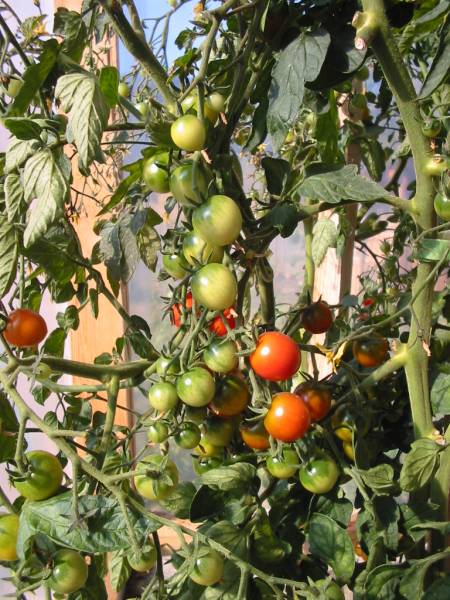
Transplant tomato plants twice before setting in greenhouse so plants grow lots of fruit like this one.
Healthy Cherry tomatoes growing in a greenhouse, full of ripe and unripe fruit.

We start tomatoes plants from seed, keeping them under grow lights in our warm seedling room. We will usually transplant them into larger pots at least twice before transplanting them into the ground in our greenhouse.

How to Transplant Tomatoes

Planting Tomato Seeds

I start seedlings in recycled Styrofoam coffee cups (or any other free container I can find). Check out all the strange containers I start our seeds in. The tomato plants get a great start and they can stay in that container until they are root bound.


Transplant tomato plants when rootbound. These Tomato seedlings growing in cups are too small.
Tomato seedlings growing in cups under lights. These are still too small for transplanting into a larger pot.

Once the seedlings get root bound in the small containers, it’s time to get them transplanted into larger containers.

One of the most important things I have learned about growing tomatoes is that they NEED to be moved into a larger container at least once. Why?

Why tomatoes should be transplanted

The most important reasons you should transplant tomatoes? Every time that you transplant your tomato seedlings, you help the stems become thicker and stronger!


Tomatoes growing in larger pots.
Look how thick the stems are after the tomatoes have been transplanted into a larger container.

This is so much better for the fruits that will come along later. The thick stems and branches will help to support the weight of the tomatoes.

Another reason to transplant tomatoes? The healthier the stalk, the healthier the plant. Leggy seedlings will equal leggy plants.

Leggy plants won’t yield anywhere near as much fruit. And the whole plant will need a LOT more support by way of stabilizing stakes and ties.

Leggy Tomato Seedlings

See how tall and spindly this plant is? This plant is in desperate need of transplanting into a larger container. It also should have had a support stick set in the cup. Tying the tomato stems to the stick would help support it.

A few more days like this and this tomato would probably fall over and break its stem. Who wants to go to the trouble of seeding cups, watering them daily and then just watch the seedling fall over and die?


Transplant tomato plants before they are leggy like this tall scrawny plant.
This leggy tomato is crying to be transplanted into a larger deeper pot.

Preparing to transplant tomato plants

Cleaning the Pots

To get ready for the transplanting, I scrub out all the 1 gallon pots I need. The general rule of thumb is to transplant the seedling into a container “one size bigger” than the one it has been in. I usually cheat on that, and go up two sizes, but no more.

A one gallon pot has a diameter of 6 – 7 inches and that works well. These one gallon grow bags are great for growing tomatoes.

It’s really important to wash your containers out before you put another plant into them. Even though we don’t use fertilizers, the containers all still need a good scrubbing.

It would be best to do this outside in the warmth and then let the sun dry out the containers.

The #1 tip for growing great tomatoes. Here's what you need to know to grow big beautiful backyard tomatoes. #gardening #tomatoes #growingtomatoes #tomatohacks #DIYgardening
Follow our tips for growing healthy tomatoes!

Adding Soil for Transplanting Tomatoes

I put some new potting soil into the new pot, filling it approximately half full. It just depends on how tall your seedlings are. Potting soil is full of nutrients, like phosphorus, nitrogen and potassium. It’s important to use good quality soil.

We prefer to use organic compost and potting soil, but you can use fertilizer added soil if you like. When we eventually plant these seedling into the greenhouse, we will add some calcium and bone meal, but not at this stage.


Transplant tomato plants by splaying your fingers around the upside down stem to protect the plant.
Splay your fingers around the stem to support it as it slides out of the seedling pot.

Once you add it to the pot, then give it a good watering. Then I turn my tomato seedling upside down, making sure to splay my fingers on either side of the main stem. I do this to protect the seedling from falling over and splitting. Always be sure to support that stem!

When the plants are this tall, it is really easy to have the seedlings topple over and split their main stem.


Transplant tomato plants when they have a good rootball like this one.
Well developed root ball ready to be transplanted into a gallon pot.

A nice looking root ball with some roots going all the way to the bottom. These are the makings of a great root system, which will only improve after transplanting. I should have watered all of these just before transplanting and you can see that the soil is dry.

I like to gently pull some of the roots apart so that as soon as they get soil packed around them. This way, they are ready to start growing outwards instead of downwards.


transplant tomato plants into a larger pot
Bury the stem as deep as you can – remove some lower leaves if it means planting deeper into the pot.

Transplanting Tomatoes – Pinching off those lower leaves

When you transplant tomatoes, pinch off one or both of the lowest leaves on the stem. Doing this means you can bury the stem deeper which will really benefit the plant.

The deeper you can bury the stalk, the better. This is why you want to transplant into deep containers. Burying the stalk deeper also means you will have a thicker sturdier central stalk. Exactly what you want.


a rootbound tomato seedling ready for transplanting
This newly transplanted tomato plant is ready to be tied up to the tomato stake.

Tie up Tomato Plants

Now it is time to tie the tomato stems to a stake or stick. I’ve just pushed a tall bamboo stake into the pot next to the stem. It’s tall enough that it can stay with the plant right up to transplanting into the greenhouse.

Velcro tomato plant tape in a roll.
This velcro plant tape works great and is reusable.


Always stake tomatoes; if you don’t, they can easily break or they will grow along the ground where the fruit can come into contact with the soil and start to rot.

Velcro Plant Ties for Tying Tomato Plants

Here’s what I use to tie my tomato plants. I love using these Velcro plant ties. I can just cut a tie as long as I need. Then I carefully wind the tie around the stake and the plant.

At the end of the season, I untie and toss them all in a bag. Put them away downstairs and use them again next year. These ties can be reused for years.


newly transplanted tomato plant sits in a larger pot
Transplanted tomato tied up to it’s stake and is ready for a good deep watering.

I use at least two ties to a plant this tall. Use as many as you need to support the plant all the way from bottom to top. I like to have a few extra ties on there so as the plant grows, and needs more support, I can just move one of those extra ties.

I do the same thing once the tomatoes are planted in the our hand made Greenhouse. Having those extra ties right there saves me a fair bit of time once the plants starting putting on a lot of growth.


Transplanted Tomato plant with Velcro plant tape.
This tomato plant is fully transplanted, ready to settle in and start growing.

See how easy it is to attach the ties? You just wrap the Velcro over itself. The last step is to give each pot a really good watering. Use lukewarm water – never water your seedlings with cold water.

Reducing Shock in Tomato Transplants

Remember that plants go into shock when they are transplanted. Do all you can to get them comfortable as soon as you can. I should have watered both the plants and the soil in the new pot before doing the transplant.


newly transplant tomato plants sitting indoors
Keep your tomato plants in a sunny window for at least 2 weeks after your last frost date, before planting outside.

Here are a few of the transplanted tomatoes, back upstairs sitting in the dining room. You can see in this picture how tall those plant stakes are. All that’s needed now is light, warmth and water.

These plants won’t go out to the greenhouse for another 3 weeks at the very least. Read here about how to transplant tomatoes into the greenhouse or garden.

Transplanting Tomato Plants in the Garden

When you are ready to transplant your tomatoes into your garden, digging a deep hole and trying to plant the seedling on a bit of a sideways angle will strengthen your stem even more.

Add a tomato cage around each plant, setting them as deep in the ground as you can. Using cages contains the growing plant nicely, and it can take the weight of the fruits as they grow.

Mulch around the plants with a layer of straw, which will conserve moisture as well as keep down the weeds.

Plant your tomatoes where they will get at least 7 hours of direct sunlight. Regular watering is important, as well as keeping an eye on your plants for pests.

Transplant tomato plants at least once before planting outside; you will have healthy plants and a larger harvest!


a rootbound tomato plant ready for planting in a larger pot
Save this to your Gardening board on Pinterest for later.


Thinking of getting a Greenhouse? Read about how we were able to build a greenhouse for less than $200

You don’t need to spend a lot of money on containers for starting seeds indoors. Here’s what I use as containers for starting seeds. Recycle!

If you want to grow Raspberries, here’s one of the MOST important things you need to do


originally published June, 2019; latest update January, 2023

Filed Under: Grow Your Own Vegetables, Starting Seeds

  • « Previous Page
  • 1
  • …
  • 4
  • 5
  • 6
  • 7
  • 8
  • …
  • 10
  • Next Page »

Connect With Us!

  • Email
  • Facebook
  • Instagram
  • Pinterest
  • Twitter

Search this site

Generic selectors
Exact matches only
Search in title
Search in content
Post Type Selectors
Search in posts
Search in pages

Our Most Popular Posts

Garlic cloves in oil

How to Preserve Garlic in Oil – and Other Ways to Store Garlic

a open jar of pickled brussel sprouts on a counter

Easy Pickled Brussels Sprouts Recipe (Water Bath Canning)

Privacy Policy

Read about our Privacy Policy

Disclosure

Please note that some of this site’s links are affiliate links, and CountryLivinginaCaribooValley.com is a participant in the Amazon Services LLC Associates Program, an affiliate advertising program designed to provide a means for us to earn fees by linking to Amazon.com and affiliated sites. At NO ADDITIONAL COST TO YOU, I will earn a small commission, if you purchase them. I recommend them as they are good products.

Theme Design By Studio Mommy · Copyright © 2026