Country Living in a Cariboo Valley

Homesteading in BC

  • How to Get Started
  • Vegetable Gardening
  • Preserving Food
  • Recipes
  • Homemade Wine Recipes
  • About Us
  • Work With Me
  • Shop
    • Vegetable Garden Planner Printable: Grow Your Best Garden Ever
    • Grow Enough Food for a Year
    • Delicious Dandelions: A Recipe Collection
    • Dirt to Dollars: Selling at the Farmers Market
    • 8 Pounds in 8 Weeks: Raising Chicks for the Dinner Table
    • Making Wild Wine
    • Build a Hanging Chicken Feeder
    • 15 Things to Know About Living in the Country

How to Transplant Tomato Plants

By Annie

Learn how to transplant Tomato plants – and why it’s important to transplant tomato seedlings!

Whether you start tomato plants from seed, or you purchase tomato plants at the nursery, it’s important to transplant them again before planting them outside in your vegetable garden.

Unless you buy tomato plants in 2 gallon pots, you really do need to transplant them a few times before settling them in their final growing spot.
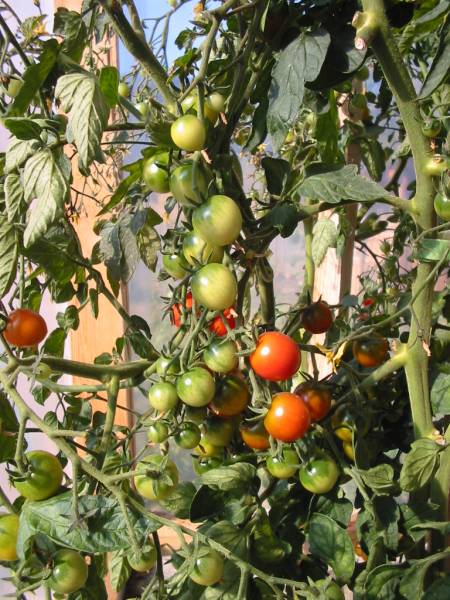
Transplant tomato plants twice before setting in greenhouse so plants grow lots of fruit like this one.
Healthy Cherry tomatoes growing in a greenhouse, full of ripe and unripe fruit.

We start tomatoes plants from seed, keeping them under grow lights in our warm seedling room. We will usually transplant them into larger pots at least twice before transplanting them into the ground in our greenhouse.

How to Transplant Tomatoes

Planting Tomato Seeds

I start seedlings in recycled Styrofoam coffee cups (or any other free container I can find). Check out all the strange containers I start our seeds in. The tomato plants get a great start and they can stay in that container until they are root bound.


Transplant tomato plants when rootbound. These Tomato seedlings growing in cups are too small.
Tomato seedlings growing in cups under lights. These are still too small for transplanting into a larger pot.

Once the seedlings get root bound in the small containers, it’s time to get them transplanted into larger containers.

One of the most important things I have learned about growing tomatoes is that they NEED to be moved into a larger container at least once. Why?

Why tomatoes should be transplanted

The most important reasons you should transplant tomatoes? Every time that you transplant your tomato seedlings, you help the stems become thicker and stronger!


Tomatoes growing in larger pots.
Look how thick the stems are after the tomatoes have been transplanted into a larger container.

This is so much better for the fruits that will come along later. The thick stems and branches will help to support the weight of the tomatoes.

Another reason to transplant tomatoes? The healthier the stalk, the healthier the plant. Leggy seedlings will equal leggy plants.

Leggy plants won’t yield anywhere near as much fruit. And the whole plant will need a LOT more support by way of stabilizing stakes and ties.

Leggy Tomato Seedlings

See how tall and spindly this plant is? This plant is in desperate need of transplanting into a larger container. It also should have had a support stick set in the cup. Tying the tomato stems to the stick would help support it.

A few more days like this and this tomato would probably fall over and break its stem. Who wants to go to the trouble of seeding cups, watering them daily and then just watch the seedling fall over and die?


Transplant tomato plants before they are leggy like this tall scrawny plant.
This leggy tomato is crying to be transplanted into a larger deeper pot.

Preparing to transplant tomato plants

Cleaning the Pots

To get ready for the transplanting, I scrub out all the 1 gallon pots I need. The general rule of thumb is to transplant the seedling into a container “one size bigger” than the one it has been in. I usually cheat on that, and go up two sizes, but no more.

A one gallon pot has a diameter of 6 – 7 inches and that works well. These one gallon grow bags are great for growing tomatoes.

It’s really important to wash your containers out before you put another plant into them. Even though we don’t use fertilizers, the containers all still need a good scrubbing.

It would be best to do this outside in the warmth and then let the sun dry out the containers.

The #1 tip for growing great tomatoes. Here's what you need to know to grow big beautiful backyard tomatoes. #gardening #tomatoes #growingtomatoes #tomatohacks #DIYgardening
Follow our tips for growing healthy tomatoes!

Adding Soil for Transplanting Tomatoes

I put some new potting soil into the new pot, filling it approximately half full. It just depends on how tall your seedlings are. Potting soil is full of nutrients, like phosphorus, nitrogen and potassium. It’s important to use good quality soil.

We prefer to use organic compost and potting soil, but you can use fertilizer added soil if you like. When we eventually plant these seedling into the greenhouse, we will add some calcium and bone meal, but not at this stage.


Transplant tomato plants by splaying your fingers around the upside down stem to protect the plant.
Splay your fingers around the stem to support it as it slides out of the seedling pot.

Once you add it to the pot, then give it a good watering. Then I turn my tomato seedling upside down, making sure to splay my fingers on either side of the main stem. I do this to protect the seedling from falling over and splitting. Always be sure to support that stem!

When the plants are this tall, it is really easy to have the seedlings topple over and split their main stem.


Transplant tomato plants when they have a good rootball like this one.
Well developed root ball ready to be transplanted into a gallon pot.

A nice looking root ball with some roots going all the way to the bottom. These are the makings of a great root system, which will only improve after transplanting. I should have watered all of these just before transplanting and you can see that the soil is dry.

I like to gently pull some of the roots apart so that as soon as they get soil packed around them. This way, they are ready to start growing outwards instead of downwards.


transplant tomato plants into a larger pot
Bury the stem as deep as you can – remove some lower leaves if it means planting deeper into the pot.

Transplanting Tomatoes – Pinching off those lower leaves

When you transplant tomatoes, pinch off one or both of the lowest leaves on the stem. Doing this means you can bury the stem deeper which will really benefit the plant.

The deeper you can bury the stalk, the better. This is why you want to transplant into deep containers. Burying the stalk deeper also means you will have a thicker sturdier central stalk. Exactly what you want.


a rootbound tomato seedling ready for transplanting
This newly transplanted tomato plant is ready to be tied up to the tomato stake.

Tie up Tomato Plants

Now it is time to tie the tomato stems to a stake or stick. I’ve just pushed a tall bamboo stake into the pot next to the stem. It’s tall enough that it can stay with the plant right up to transplanting into the greenhouse.

Velcro tomato plant tape in a roll.
This velcro plant tape works great and is reusable.


Always stake tomatoes; if you don’t, they can easily break or they will grow along the ground where the fruit can come into contact with the soil and start to rot.

Velcro Plant Ties for Tying Tomato Plants

Here’s what I use to tie my tomato plants. I love using these Velcro plant ties. I can just cut a tie as long as I need. Then I carefully wind the tie around the stake and the plant.

At the end of the season, I untie and toss them all in a bag. Put them away downstairs and use them again next year. These ties can be reused for years.


newly transplanted tomato plant sits in a larger pot
Transplanted tomato tied up to it’s stake and is ready for a good deep watering.

I use at least two ties to a plant this tall. Use as many as you need to support the plant all the way from bottom to top. I like to have a few extra ties on there so as the plant grows, and needs more support, I can just move one of those extra ties.

I do the same thing once the tomatoes are planted in the our hand made Greenhouse. Having those extra ties right there saves me a fair bit of time once the plants starting putting on a lot of growth.


Transplanted Tomato plant with Velcro plant tape.
This tomato plant is fully transplanted, ready to settle in and start growing.

See how easy it is to attach the ties? You just wrap the Velcro over itself. The last step is to give each pot a really good watering. Use lukewarm water – never water your seedlings with cold water.

Reducing Shock in Tomato Transplants

Remember that plants go into shock when they are transplanted. Do all you can to get them comfortable as soon as you can. I should have watered both the plants and the soil in the new pot before doing the transplant.


newly transplant tomato plants sitting indoors
Keep your tomato plants in a sunny window for at least 2 weeks after your last frost date, before planting outside.

Here are a few of the transplanted tomatoes, back upstairs sitting in the dining room. You can see in this picture how tall those plant stakes are. All that’s needed now is light, warmth and water.

These plants won’t go out to the greenhouse for another 3 weeks at the very least. Read here about how to transplant tomatoes into the greenhouse or garden.

Transplanting Tomato Plants in the Garden

When you are ready to transplant your tomatoes into your garden, digging a deep hole and trying to plant the seedling on a bit of a sideways angle will strengthen your stem even more.

Add a tomato cage around each plant, setting them as deep in the ground as you can. Using cages contains the growing plant nicely, and it can take the weight of the fruits as they grow.

Mulch around the plants with a layer of straw, which will conserve moisture as well as keep down the weeds.

Plant your tomatoes where they will get at least 7 hours of direct sunlight. Regular watering is important, as well as keeping an eye on your plants for pests.

Transplant tomato plants at least once before planting outside; you will have healthy plants and a larger harvest!


a rootbound tomato plant ready for planting in a larger pot
Save this to your Gardening board on Pinterest for later.


Thinking of getting a Greenhouse? Read about how we were able to build a greenhouse for less than $200

You don’t need to spend a lot of money on containers for starting seeds indoors. Here’s what I use as containers for starting seeds. Recycle!

If you want to grow Raspberries, here’s one of the MOST important things you need to do


originally published June, 2019; latest update January, 2023

Filed Under: Grow Your Own Vegetables, Starting Seeds

Containers for Seed Starting

By Annie

With these ideas for homemade Containers for Seed Starting, you’ll save money and the environment by recycling common household items!

tables of seedlings growing inside under lights.
The best seed doesn’t need an advanced nursery or special seed trays to grow properly. Learn how to recycle household containers to start seeds!

It won’t be long until I can start planting the first seeds of the year. I can’t wait – I always get itchy to get my hands in some dirt. I begin to dream of being in the garden, working the soil and being in the sun. For now I have to content myself with starting seeds indoors.

Part of the process is getting my hands on containers for seed starting.

What Containers to Use for Seed Starting

Once you start looking around, you may be surprised at how many used containers you can recycle into seedling germination pots.

Get creative – the idea is to reuse and recycle! Why buy seedling trays if you really don’t need to?

Containers for seed starting are growing seeds on a table under light.
Sow seeds in containers until their root systems are large enough to transplant to an outdoor garden or larger pot.

I save any type of container I think I’ll be able to use for seeding. Just some examples are cartons from coffee cream (great for tomato seedlings) and wide squat canned vegetable containers.

Also the wonderful tall containers that hold the malt we use for making beer. When I get ready for seeding, I punch drainage holes in the bottoms to prevent excess moisture–3 holes per container will do.

Recycled seed starting pots in plastic trays on a windowsill.
Sow seeds in even simple plastic or styrofoam cups to save money!

Years ago, I bought several packs of Styrofoam cups. I know, not very environmentally minded of me.

BUT since I am very careful with handling them, I can reuse these as well. I still have some from the first year we moved up here and they are still going strong.

Free seedling starter containers made from simple cardboard trays.
Cell trays not required! You can use large cardboard trays or plastic trays instead.

Also, whenever we hit a Costco or other big box stores and buy things in bulk, I save the cardboard trays – usually they have plastic wrapped around the outside. I don’t pull off the plastic as it adds another layer of protection during watering. I’ll keep seedling pots in these trays until I can move the plants out to the garden.

The trays are really strong, especially with the plastic on. We keep every Styrofoam tray we can get our hands on too. They are handy for putting seedling plants in our windowsills. You can also use heat mats for faster germination.

Starting seeds in repurposed household containers on a counter with lights.
Before throwing empty containers in the recycling bin, wipe them out with paper towels and repurpose them as seed starting containers!

If you aren’t doing it already, save every type of container you can find, as well as other household items that may be able to hold seeds. I used to use those little seedling containers (the ones with 4 or 6 cells), but have moved away from them.

Although they are good when first sowing seed, because they are so small, I end up having to transplant them. This is something I avoid if I can. I don’t mind transplanting once but don’t like having to do it more than that.

I’ll find someone to pass them along to or just get rid of them. I don’t like using them. Using the styrofoam cups works the best for me – I seed them right in the cups.

Many vegetables don’t need to be transplanted again until I am ready to pop them into the garden. Exceptions? Tomatoes!

Easy is best! Why create extra work for yourself? Reusing your pots and trays is cheap, cheap, cheap. There is no point in spending lots of money on those trays with the cell packs and covers.

For every move you make planning and starting your veggie garden, think about it. Is there a way to use free materials, or reuse something you already have?

How to Use Homemade Containers for Seed Starting

I seed the cups in my potting room, then move them into my seedling room, where Graham has hung lights. They stay in here until they are up and doing well.

To give your seed starter an extra boost, you can also use some peat moss, compost, or eggshells.

Then I move them upstairs into the living room in front of the big windows. By the time mid-May rolls around, the living room is filled with plants. I usually still have a full seedling room downstairs as well with tomatoes, peppers, herbs, and more.

For the hardier seedlings, I can put them in our unheated Greenhouse. Depending on the nighttime temperature, I can cover these with Remay cloth and remove it in the morning.


More Ideas for Seed Containers

  • Yogurt cups or other yogurt containers
  • Toilet paper rolls/toilet paper tubes
  • A milk jug
  • Plastic trays
  • Cardboard egg cartons
  • Finished candles (would have to be emptied first)
  • Butter containers
  • Paper bowls


More Helpful Posts

  • Thinking of getting a Greenhouse? Read about how we were able to build a greenhouse for less than $200.
  • Growing lots of herbs? Learn how to preserve basil for fresh and delicious flavors all year round.
  • If you want to grow Raspberries, here’s one of the MOST important things you need to do!
  • Looking for info specifically on growing peppers? Check out this post explaining how big a container peppers need to grow.
  • And if you’ve always wanted to learn how to make your own seedling pots, check out this post from Dovid Domoney!


Graphic showing seedlings growing in recycled containers.
You can easily turn lots of empty containers into as many seed starters as you want according to personal preference.


published 2012, latest update Sept 2024

Filed Under: Grow Your Own Vegetables, Starting Seeds

Make A Personalized Seed Starting Schedule

By Annie

At this time of year, my mind starts to fixate on seeds for the upcoming garden. Not that I can do anything about it; it is way too early for me to get any seedlings started indoors.

I do, however, check my seed starting schedule to see when I can get those first seeds started.


Seed starting schedule hand written in a lined book.


Sometimes I will feed my urge and start some perennial flower seeds and that helps a bit. But really it is veggie seeds I want to start planting. I am always itching to get some salad greens going.


The very best posts for 2017 from Country Living in a Cariboo Valley #homesteading #farm #selfsufficiency


But it’s definitely still winter here in the Cariboo. We usually have several feet of snow – the garden soil is resting for a while longer. That snow acts as a great insulator. 


Make your own zone specific seed starting schedule.


Your Elevation is Important to your Seed Starting Schedule

A really important factor in when you should be starting your seedlings is your elevation. Most people do not take into consideration the importance of the elevation you are gardening at.

Higher elevations can mean later harvest dates and the possibility of earlier frosts.

We’re at 2800 feet elevation here and often can’t even get into the garden until the early weeks of May. In drier years, we might be able to get root crops planted in late April.

Root crops include vegetables like potatoes, beets, carrots, turnips…the list goes on. These root crops can go in the garden just as soon as you can work the soil.

It doesn’t matter if the weather turns cold after they are planted, they will be fine.


If you’re not sure of your elevation, you won’t really know how long your growing season is.


You need to know the length of your growing season. Talk to gardening neighbors and ask for gardening tips.

You can learn a lot about local weather conditions and the micro climates in your garden.

If you are new to gardening in the North, you may not know how difficult it can be to grown certain kinds of vegetables.

I had no idea before we moved here that it is VERY hard for us to grow corn outside of the greenhouse. Some veggies are definitely more heat loving than others.

Getting these heat lovers (peppers, tomatoes, squash) started too soon can mean leggy plants or even flower buds forming in the house.

Colder winter climates mean later starts in the garden and you have to adjust accordingly. Don’t forget to take cool nights into consideration.

If you have extreme temperature swings (night and day) take extra precautions if you need to.

Remay cloth or a small hoop house may be a great help in protecting those heat loving vegetables. They can extend the growing season by at least one month on either end.


The greenhouse in early Spring.


If you are thinking of something larger, read about how to build a greenhouse for under $200.00 like we did.

The flip side of living here is that vegetables seem to grow a lot faster here than they did down on the BC Coast.

Even though we start later than a lot of other gardeners, most of our late maturing vegetables can still be harvested before the end of September.


My Seed Starting Schedule


Create your own zone specific seed starting calendar. Know when to seed and when to harvest. #garden #gardeningideas #seed #seedschedule


Not long after we moved here in 2006, I sat down with all my seed packages and figured out a seed starting schedule.

This is specific for my area (Zone 3 Canada) and I use a transplant date of June 1 (the date by which I can actually move the seedlings into my Garden).

Plants like peppers and tomatoes can go into the greenhouse usually by the end of the first week of June. Overnight temperatures here can be a killer, even when plants are under cover!

When I wrote this up, I couldn’t find a plant chart anywhere with my Garden Zone. Use my seed starting schedule and make it your own.

Vary the dates according to your gardening zone. Remember to check your elevation and change the dates accordingly.

If you are at a higher elevation, you may need to stretch the dates out another week.


create a personalized seed starting schedule for your garden.


The Headings for my personalized seed starting schedule:

I’ve got the Indoor Start Date, the Days to Maturity and the Dates of Maturity, using the June 1 transplanting date.

I also have a column named Direct Seed.

This is for vegetables that I can just direct seed right into the garden and don’t need to bother starting in the house.

You may think that is an unnecessary column, but it helps me when it comes to seed ordering time.

I can look at the vegetables that fall into that category, check them against my supply on hand and figure out easily if I need to buy more seed.


A garden specific seed starting schedule for your garden.


See the numbers in parentheses after the Vegetable type?

Those were the number of seed packages that I had on hand the year I made up the list, so just ignore them.

As you can see by looking down the Indoor Start Date, the earliest date to start anything is March 26!

I will start with seeding Cabbages and Peppers and won’t even move on to seeding any Tomatoes until mid-April!

This seed starting schedule helps me keep on track and not plant too early (or too late).

These dates may seem very late to you, but this is what works here for us at 2850 feet elevation and a Zone 3 garden.


Personalized seed starting schedule for YOUR garden!


The Downside of Starting Seeds Too Early:

If you live in the Cariboo (or northern US), don’t start your seeds too early. It is an easy mistake to make!

Make a specific seed starting schedule for your own garden and then follow it.

It is heartbreaking to end up with very leggy vegetable seedings. They tend to break very easily when you have to move them from the house out to the garden.

You can transplant them into larger containers if you need to. Most plants like growing root bound and then being transplanted into extra room to put on more growth.

We usually start so many seeds indoors I simply don’t have room to keep that many big pots in the house.


Your garden specific personalized seed starting schedule makes sowing seeds easy.


Tomatoes are always transplanted, at least once but sometimes twice. They really benefit from being moved up into a larger pot.

I try to start in small containers and then transplant them as they grow. It is more work for me, but the plants respond better by getting root bound first and then transplanted.

Here’s how to transplant tomatoes.


Personalized seeding schedule for your garden.


I start a lot of my seeds under lights down in our basement and then move them up to my living room when they get large enough to not need the lights.

This helps make room for even more seedlings downstairs.

If the weather is warm enough, I then move them out to the greenhouse, where I can also start other seeds.

Our greenhouse is unheated and so it depends on how cool the nights are, as to whether I can move and start seedlings out there.


Filed Under: Grow Your Own Vegetables, Starting Seeds Tagged With: Grow Vegetables, seed starting

How to Harvest Spinach Seeds

By Annie

Here’s how to harvest spinach seeds from spinach plants growing in your garden!

Can you save Spinach Seeds? Yes! Saving spinach seeds is something we do every year! As long as you grow heirloom or open pollinated seed, you can save spinach seeds from this years harvest to plant next year.

I like using a lot of spinach in smoothies for breakfast and so we always grow a couple of rows. We eat spinach in salads and on sandwiches in early spring and later in the fall.

This is a vegetable that we begin to grow in early spring. It loves cool weather and we can sow seed into the garden as soon as the snow is off the beds. In the fall, we fill our garden beds again with lots of good compost, full of nutrients. Come early spring, we are good to start growing.

spinach growing to save spinach seed
Save spinach seed by letting some of your spinach mature to set seed.

Once the spinach seedlings have started growing lots of leaves, we start enjoying baby spinach leaves. And as the plants get larger, we make sure to pick the outer leaves (cut or snap the stem). We usually just pick the small leaves for salads and the mature leaves are added to soup or steamed as a side dish for dinner.

Spinach bolts easily in the hot summer months we have here. Actually, by late spring and early summer, the plants have usually started to bolt in the warmer days. We can use this to our advantage and easily save seeds for next year.

Spinach growing in garden row.
Healthy spinach growing in a garden row.

In late summer, we can put in another row of spinach seed because the temperatures have cooled down. The plants will grow until after the first frost, past early fall. This way we can get two good crops each year.

If really cold weather hits for some reason, we can always use row covers overnight. But we usually don’t have any problems growing enough for salads, soups and even dehydrating some for winter use.

There are many spinach varieties; we usually grow Bloomsdale spinach which has a good germination rate and does very well in northern gardens. Any variety of spinach will eventually bolt and when that happens, plan to save your own seeds!


How to Harvest Spinach Seeds

The most important thing when it comes to saving seed is to use the correct seed in the first place. Using heirloom seed is what you want!

Harvesting spinach seed is quite easy to do and it saves a lot of money. It also gives me a feeling of security knowing that I have viable seeds for the following year and don’t have to rely on ordering them.

Here’s a few pictures of how I harvest Spinach seeds. The theory works the same for pretty much any leaf crop, such as Swiss Chard.


When you harvest your Spinach leaves, be sure to leave a few plants alone and just let them grow. Let some young plants just grow to maturity and then set seed. 

If you can, pick your healthiest looking ones  (dark green leaves)  so that you will have the healthiest best seed for next year.


Mature spinach plants growing in garden
Set aside plants to grow, mature, flower and set spinach seed.


As the season carries on, those Spinach plants will get larger and larger and the female plants will start sending up flower stalks from the middle of the plant.

Note: the male plants will also flower a little bit, but much sparser than the female plants. However, only the female plants will set seeds.

Just leave them be and sit back and enjoy the flowers.

When to Harvest Seeds

Spinach plant flowering
This spinach plant is bolting and starting to flower.


After the flowers fade just leave the plant be to continue maturing. Let the flowers dry on the stalks and over the next few weeks, you should see seeds setting. There will be a mix of seeds, some larger, some smaller. Once the seeds begin to dry, keep an eye on them. 

You can either remove the spinach flower stalks now or let the seeds keep drying on the stems. As long as you remove them before the seeds actually start falling to the ground, it’s fine.

At that point, carefully snip the stalks with good garden scissors and put them into a paper bag large enough to fit all the stalks. If seeds start falling, put a paper bag over the entire seed head, close the bag and then cut the stem. 

How to Save Spinach Seeds

Now, you want to store the spinach seeds safely until all of the moisture has evaporated. So, just tie a string around the bag and hang it up or set it out of the way. Air drying spinach seeds is the easiest way; just hang it up and forget it for a couple of weeks.

Stems on spinach plants with seeds on them all inside a tied paper bag.
Air drying the seeds and stalks of spinach plants.


After a few weeks, you can thresh out your seeds. An easy way to do this is to reach inside the bag, grab a stalk and then move your hand down the stalk, removing everything which will then fall to the bottom of the bag.

What do spinach seeds look like?


Spinach seeds hanging in tight clusters close to the dry stalk
Spinach seeds hang in tight clusters close to the stalk.


I realize this is a blurry shot, but it’s the best I have right now. Still, here you can easily see all the seed in tight clusters. The leaves have withered to almost nothing, but there are a lot of seeds on that little portion of stalk. When you finish threshing them into the bottom of the bag, transfer the seeds into a bowl.

Spinach seed cleaned and ready for storing
Cleaned spinach seed ready for storing in a paper envelope.

Now, we need to separate those pieces of leaves from the seeds. An easy way to do that is to stand on the porch with a breeze going and pour the seed from one bowl to another, letting the breeze catch those leaves.


The seeds are heavier so they will fall into the lower bowl. Meanwhile, the breeze will blow the leaves away.

Spinach seeds in paper envelope
Store spinach seeds in an sealed envelope in a cool spot.

After that, I can put them in an paper seed envelope and save them in a cool dark place. I store my seeds in our cool basement but you can store them in the freezer as well.


Spinach growing alongside spinach seeds in bowl
Save to your Pinterest board.


Filed Under: Starting Seeds

Starting Seeds

By Annie

As much as I love winter, I am always excited about Spring. Starting seeds is always a sure sign that Spring is right around the corner. I usually have my garden plan set for the year and look forward to moving ahead. I love to do my planning during the cold days of winter, with a cup of tea in hand and a gardening catalogues or three.
 
propogating, growing under lights
I have two ways to get seed in the ground. The seeds for root crops (beets, potatoes, carrots, etc) will all be planted right into the garden. As soon as the soil is dry enough, I can get in the garden and get these seeds planted. Root crops usually don’t mind the cold and some even prefer it. Other vegetables, like peppers and tomatoes, cabbages, broccoli and cauliflower get started in the house.


Just one of my boxes of seeds. These are a mix of seeds I have gathered myself from previous years and also some that I have ordered online or at the store. I try to use heirloom seed when I can. I can save the seeds from this years plants and won’t have to buy them next year. Also, there are no GMO’s and I like that!


These styrofoam cups are great for starting seeds. You can use them over and over again; if you handle them carefully they last for years..


I reuse the trays that grocery store meat comes on – they are especially handy. Those narrow trays work great for setting seedlings onto our windowsills in the living room, once the plants get moved upstairs.


propogating seeds, greenhouse


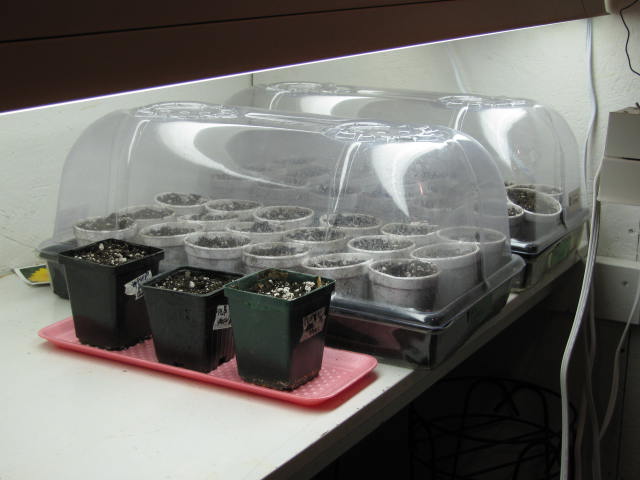
Here’s a picture of my seedling room. I’ve got the heat on in the room and before long, I’ll be putting an oscillating fan in the room. The fan will help stir the air and also strengthen the stems of the seedings.

I have greenhouse covers on a few of the trays, but you don’t need them. If I use them, I like to spray the inside of the cover with water from a misting bottle. Put the lids back on and it has a greenhouse effect on the seedlings.


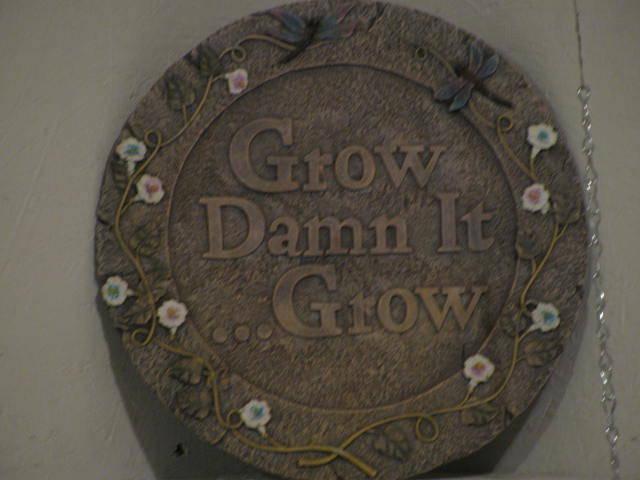
As always, the Inspirational Plaque is set behind the seedlings to threaten encourage them to grow.

I find that although I may start out with full trays of one kind of seedling, I do find myself moving cups from one flat to another later on. This just depends on things like extra room, light and other variables. So I label each cup so that I will always know what is what. In the end it can be tricky to know a broccoli from a cauliflower.


Filed Under: Starting Seeds

Connect With Us!

  • Email
  • Facebook
  • Instagram
  • Pinterest
  • Twitter

Search this site

Generic selectors
Exact matches only
Search in title
Search in content
Post Type Selectors
Search in posts
Search in pages

Our Most Popular Posts

Garlic cloves in oil

How to Preserve Garlic in Oil – and Other Ways to Store Garlic

a open jar of pickled brussel sprouts on a counter

Easy Pickled Brussels Sprouts Recipe (Water Bath Canning)

Privacy Policy

Read about our Privacy Policy

Disclosure

Please note that some of this site’s links are affiliate links, and CountryLivinginaCaribooValley.com is a participant in the Amazon Services LLC Associates Program, an affiliate advertising program designed to provide a means for us to earn fees by linking to Amazon.com and affiliated sites. At NO ADDITIONAL COST TO YOU, I will earn a small commission, if you purchase them. I recommend them as they are good products.

Theme Design By Studio Mommy · Copyright © 2026