Country Living in a Cariboo Valley

Homesteading in BC

  • How to Get Started
  • Vegetable Gardening
  • Preserving Food
  • Recipes
  • Homemade Wine Recipes
  • About Us
  • Work With Me
  • Shop
    • Vegetable Garden Planner Printable: Grow Your Best Garden Ever
    • Grow Enough Food for a Year
    • Delicious Dandelions: A Recipe Collection
    • Dirt to Dollars: Selling at the Farmers Market
    • 8 Pounds in 8 Weeks: Raising Chicks for the Dinner Table
    • Making Wild Wine
    • Build a Hanging Chicken Feeder
    • 15 Things to Know About Living in the Country

Homemade Chunky Salsa Recipe for Canning

By Annie

This homemade chunky salsa recipe for canning is so easy to make! Keep reading for tips on how to use a hot water bath to can your homemade salsa!

Making and canning Salsa is pretty much a yearly event here. After all, who doesn’t love homemade salsa? We often have a pre-dinner snack of fresh tomato salsa and tortilla chips or nachos, usually with a cold mug of home brewed beer. 

Want more articles about preserving food? Check out all of our Preserving Food posts here.

 
Home made Salsa recipe for canning. bowl of fresh salsa with chips
This Salsa recipe for canning is the best one I have found.

This is the Best Homemade Chunky Salsa Recipe for Canning!

You can also add a couple of teaspoons of this hot salsa to egg dishes, as it adds wonderful flavors. Or ramp up the taste of tacos or grilled fish with a good dollop of salsa; you can even add it to sauces for meats.

Here is the ultimate homemade salsa recipe for you to try. It’s one of our favorite canning recipes!

Make a small batch to eat fresh or make a large enough batch of this canned salsa recipe to can some up to enjoy come Winter. The canning instructions are included below!

Watch this short video that shows you the process of making homemade salsa!

Now that you’ve seen the video above with the process of making this Canning Salsa recipe, let’s get started.

Best Salsa Recipe Ingredients

Salsa ingredients on a wooden chopping board.
Ingredients you need to make home made salsa.
  • chopped fresh tomatoes – form the base of this delicious homemade salsa recipe. Roma tomatoes are the best, but you can use any kind. We don’t bother to remove the skins from the tomatoes, but it’s up to you whether you want to or not.
  • chopped onions – another commonly found ingredient in salsa.
  • chopped bell pepper – I used green to give this salsa a pop of extra color, but any kind of bell pepper will work just fine!
  • jalapeno peppers – provides some real heat and spiciness to the salsa, but these can be omitted if you prefer something milder. If you want more heat, you might try chilies or serrano peppers.
  • minced garlic – buy organic minced garlic or finely dice cloves of fresh garlic.
  • tomato paste – aids in bringing out the delicious tomato flavors.
  • white vinegar – gives the salsa a nice bite and acidity. Used instead of bottle lemon juice.
  • chopped fresh cilantro – a classic herb found in salsa, cilantro helps to marry all of the other flavors and bring them out more strongly.
  • ground cumin – adds a bit of heat and warm flavor!
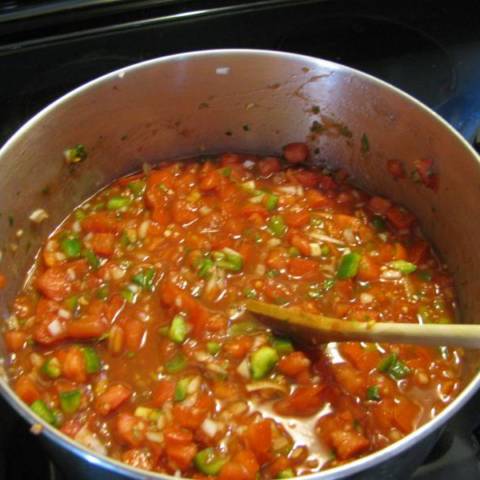
Fresh Salsa being cooked on the stove.
This homemade salsa recipe is so simple and delicious, and you can also can it yourself!

How to Make Homemade Chunky Salsa

  1. Coarsely chop all the veggies (I actually dice them quite small.) You can use a food processor, but I always just hand chop.
  2. Remove the seeds from peppers (Hah! that’s no fun – we throw some seeds in the pot too for an extra kick.)
  3. Combine all ingredients in a large stainless steel saucepan (I use our large stockpot) and put on the stove on medium or medium high heat.
  4. Bring to a boil and boil gently, stirring occasionally. Let it simmer until it has the desired consistency.
  5. Let it cool and it is ready to eat!
Fresh ingredients are on the stove for chunky salsa recipe for canning
Mixing ingredients for homemade salsa.

How to Can Salsa – the Salsa Canning Recipe

  1. Ladle into clean sterilized canning jars, leaving 1/2 inch headspace and remove air bubbles. Wipe rims of the jars, using a clean paper towel.
  2. Put on the seal and ring. Boil in a boiling water bath 20 minutes for pints. We can for 25 minutes, because we are above 1000 ft elevation. Check your elevation; it makes a difference. Remember to use a canning rack if you are setting jars on top of each other!
  3. Remove from the canner and let jars sit for 24 hours. Don’t move them and keep the jars out of drafts. You can just put a towel over the jars if you need to keep them from a draft.


Jars of homemade chunky canned Salsa ready for the pantry.
Jars of home-canning ready for the pantry.

This homemade salsa recipe makes 5 pint jars of salsa. Then, this winter, enjoy this salsa, I think you’ll like it! You may find yourself planning to make even more jars next year.

Questions about Making and Canning Chunky Salsa

Do you have to boil salsa before canning?

There are different opinions on this. I always do bring my salsa to a boil, then let it simmer before canning.

What tomatoes make the best salsa?

Roma tomatoes are the best for salsa, as they are naturally a more meaty tomato. However, I use whatever kind I can grow or find at the grocery store.

Salsa in canning jars on a wooden table.
Easy Spicy Salsa recipe to make your own salsa at home.

How do I make thick salsa?

Using Roma tomatoes works the best, but if you let your salsa simmer (without a lid) some of the liquid will evaporate.

Another option would be to use a slotted spoon when filling your jars, so some liquid stays behind in the large pot you used for cooking the salsa.

More Tips for Canning

If you are new to canning, you need to know which foods can be safely canned in a water bath canner and which foods need to be canned using a pressure canner.

Fresh homemade chunky Salsa sits on a taco chip ready to be eaten.
Making and canning salsa is a yearly delight here.

Salsa can be safely canned in a water bath – I usually put mine up in half pint jars. Perfect size for us and if we have company to visit, I just crack the lid on another jar and transfer to a serving bowl. Always nice to squeeze a little fresh lime juice on top of the salsa.

Water Bath Canning

And water bath canning is an GREAT way to start canning if you are a beginner. It’s easy, inexpensive and a good way to start building up your pantry.

A complete water bath canning kit sitting on a counter.
Complete water bath canning kit is what you need!

Here’s the water bath canner set up that we use here and we get a LOT of use from it. This water bath canner is used to can fruits, make jams and jelly, salsa, applesauce and lots of other foods.

Some years I put up hundreds of jars of vegetables and soups. Graham loves canning stews and fish, so he often adds hundreds more jars to our cold room. These need to be pressure canned, which is a bit different than water bath canning. I’ve included some links to other canning articles here on the website – you’ll find them at the bottom of this post.

Canning is a very worthwhile skill to learn – you can save so much money! Plus, you are serving your family healthy food.

Home made chunky Salsa on taco chips in a basket.
Home made Salsa with chips and beer for an afternoon treat.

Get yourself a copy of the Ball Blue canning book –  it has all the information you need. And there’s some great recipes as well!

There is a difference between canning fruits, vegetables and meats – you need a good reference book, one that you can count on.

home canned goods sitting on a stove
Canned Salsa is added to our pantry shelves for winter eating.

When I see all my canned jars on the shelf, I want to KNOW for sure that every one of them is safe to open and feed my family.

More Info on Canning

  • Using a Pressure Canner – here’s what you need to know.
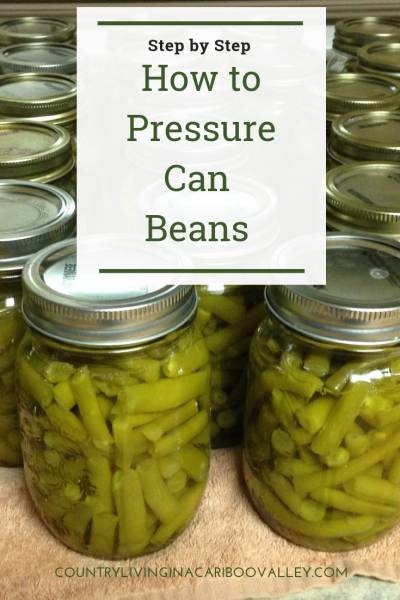
  • Pressure Canning Beans – grow your own and then can them up!
  • Pressure Canning Salmon – and other fish.
  • Making and Canning Sauerkraut – ferment your own.
  • Canning Pears – this recipe works for almost any fruit you want to preserve.
  • Pickled Brussels Sprouts – these “Frog Balls” are delicious!

Want ALL of our CANNING RECIPES? Find them all right here!

Salsa in a bowl with tortilla chips
This Salsa Recipe for canning is going to be a family favourite!

More Recipes

Our entire Country Living in a Cariboo Valley Recipe Collection can be found here, and here are some more recipes!

  • Once you’ve got the hang of canning, try this Pickled Pearl Onions, which you can also can for yourself!
  • This No Cook Strawberry Jam is another great homemade delicacy that can be jarred and kept around.
  • Love garlic? This Roasted Garlic with Oil Drizzle is the recipe for you!

Chunky Salsa Recipe for Canning

Homemade Salsa Recipe

If you enjoy this recipe for homemade salsa, please be sure to rate it 5 stars below! And print this off or save it to your Recipes folder!
Home Made Salsa Recipe

Home Made Salsa Recipe

Yield: 10 cups
Prep Time: 45 minutes
Cook Time: 15 minutes
Total Time: 1 hour

The Ultimate Home made Salsa recipe - you will love it! And you will be glad this makes enough Salsa to can a few jars to enjoy later.

Ingredients

  • 7 cups chopped tomatoes (about 6 lbs)
  • 2 cups chopped onions
  • 1 cup chopped green bell pepper
  • 8 jalapeno peppers
  • 3 gloves minced garlic
  • 1 can tomato paste (5.5 oz or 156 ml size)
  • 3/4 cup white vinegar
  • 1/2 cup chopped cilantro
  • 1/2 tsp ground cumin

Instructions

  1. Coarsely chop all the veggies (I actually dice them quite small.)
  2. Remove the seeds from peppers (or leave them in, if you like)
  3. Combine all ingredients in a large stainless steel saucepan and put on the stove on medium heat.
  4. Bring to a boil and boil gently, stirring occasionally, until it has the desired consistency.
  5. Let it cool before eating.
Nutrition Information:
Yield: 30 Serving Size: 1
Amount Per Serving: Calories: 22Total Fat: 0gSaturated Fat: 0gTrans Fat: 0gUnsaturated Fat: 0gCholesterol: 0mgSodium: 6mgCarbohydrates: 5gFiber: 1gSugar: 3gProtein: 1g

Did you make this recipe?

Please leave a comment on the blog or share a photo on Pinterest

© Annie

First Published July 2017; latest update September 2022

Thanks for checking out this recipe chunky salsa recipe for canning. For more, follow me on Facebook, Pinterest, Instagram, and Twitter!


Filed Under: Canning, Food, Recipes

How to Make Easy No Cook Strawberry Jam (Freezer Jam)

By Annie

Easy no cook strawberry jam is a simple and delicious way to make fresh jam!

Sweet and refreshing with a hint of citrus, this homemade strawberry jam recipe will make you wonder why you’ve been settling for store-bought!

Why You’ll Love This Recipe

In the very busy days of early summer, I always end up taking whatever shortcuts I can to get things done and in the pantry or freezer.

I need to make some jam this year, because we finally finished off our last jar. And, learning how to make no cook freezer jam is a great way to begin to learn about preserving food.

Making freezer jam is one of my absolute favorite time saving shortcuts during my busy summer! This recipe is perfect for beginners wanting to learn about preserving.

Of course, it’s also fantastic for seasoned canners and jam makers! Here’s a recipe to make a batch of some easy no cook Strawberry Jam.

no cook Strawberry Jam with lid on
This no cook strawberry freezer jam is perfect for sandwiches and baking.

Jams and jellies are very easy to make, plus they make a lovely gift for anyone who is a jam lover!

Since we often have lots of strawberries and not much time to process them, I like to just spend a couple of hours and make freezer jam.


Strawberries in the garden will be used for making freezer jam.
Look how beautiful and red these fresh strawberries are!

I turned the berries into jam and here’s how that happened. I used Certo Pectin and made some delicious & sweet easy no-cook Strawberry Jam.

If your grow your own Strawberries, have you discovered the one thing you NEED to do, in order to grow huge strawberries? Find out right here!


Jars of no cook strawberry jam waiting for their lids and seals.
This jam is perfectly fruity and so easy to make!


Ingredients for Strawberry Jam

With only 4 ingredients, this jam is so simple!

  • crushed fresh strawberries
  • sugar – offsets the acidity of the lemon juice and plays up the natural sweetness of the strawberries
  • Certo liquid pectin – helps the fruit mixture form a more solid, jam-like texture
  • lemon juice – gives the jam a bite of acidity which balances the sweet red strawberry flavor


Fresh picked Strawberries are going to be made into Strawberry Jam.
It’s hard to beat the fresh flavor of home-grown fruit.

How to Make No Cook Strawberry Jam

Crushing berries for strawberry jam.
There’s no cooking involved with this jam, which makes it super easy and nearly foolproof.
  1. Crush and mash the strawberries, using a fork or potato masher; measure and transfer the crushed berries to a large bowl.
  2. Add the sugar and mix together. Let it stand for 10 minutes.
  3. Add the Certo and lemon juice then stir the mixture for 3 minutes.
  4. Ladle the jam into clean containers. I always use a canning funnel so there is no mess as I am moving the liquid.
  5. Leave 1/4 inch headroom, wipe the rims of the jars and cover with lids.
  6. Then let them stand for 24 hours; don’t move the jars at all, just leave them be.


Easy No Cook Strawberry Jam being made.
Using liquid pectin makes the preparation process for this jam so simple!

Tips for Strawberry Jam

  • After a day, the jam will be set and you can transfer the containers to the freezer and refrigerator.
  • A jar will last for 3 weeks in the fridge and probably not that long, once you taste it!
  • If you like, you can just put the half pint jars in the freezer where they will be fine for about 8 months.
  • That half full jar will go in the fridge and we’ll enjoy it on toast or even spooned over some ice cream.
  • This jam freezes very well; just remove a jar as needed and let it thaw on the counter until it comes to room temperature.


Mason jars of No Cook Strawberry Jam right out of the canner.
This recipe makes a decent amount of jam, so feel free to give some of it away as gifts (or keep it all to yourself; you might be tempted to!).

Those jars in the back left of the photo? Those are Pickled Garlic Scapes! They are easy to make and if you grow garlic, these pickles are just one way to use the scapes.

If you’ve got a nice harvest of strawberries, give this quick jam a try. This strawberry freezer jam recipe has a nice consistency and is awesome on homemade bread or on a scone.

Of course, it’s also yummy stirred into some yogurt or spread over warm pancakes!

If you don’t have your own strawberry patch, support your local Farmers Market and pick up a flat of beautiful berries!


Home made jam on buttered toast sits on a plate.
One of the many uses for this strawberry jam; it’s great on toast for a sweet and wholesome breakfast!

Long Term Storage for Strawberry Freezer Jam

The very important thing to remember about freezer jam is that unopened jars NEED to be stored in the freezer. Open jars can be stored in your fridge.

This jam recipe is not shelf-stable, meaning you cannot just store it in your kitchen cabinet. If you want your jars of jam to be able to go into the pantry, or in a cold room, they MUST be properly canned.

Use the water baths method for canning jars if you want them to be shelf-stable!

If you want to learn about how to do water bath canning, head over here and follow along as I made some canned pears!

For the pears I used Tattler lids, but you can easily substitute regular canning seals and rings. The whole process of water bath canning can be seen in that post.

Or, you can read about how to can cherries – canning fruit usually uses the water bath method of preserving food. The type of fruit may vary, but the process for the canning is the same.

NOTE: You can find ALL of our Preserving recipes right here – this covers pickling, freezing, water bath canning and pressure canning, even drying herbs is included!

More Fruit Recipes

Our entire Country Living in a Cariboo Valley Recipe Collection can be found here, and here are some more recipes featuring delicious fruits!

  • Try this delicious Lemon Loaf Cake with Rosemary Glaze!
  • This Raspberry Vinegar with Honey makes for a delicious and unique addition to your pantry.
  • With the summer months coming up, brush up on how to make Homemade Lemonade!
  • An Apple Crisp is an easy and delicious dessert that goes great with some ice cream.
  • Need to clean out your freezer? Here’s the quickest way to defrost and organize your deep freeze.


Homemade No Cook Strawberry Jam Recipe

If you enjoy this recipe for no cook strawberry jam, please be sure to rate it 5 stars below! And print this off or save it to your Recipes folder!

Easy No Cook Strawberry Jam

Easy No Cook Strawberry Jam

Additional Time: 1 day
Total Time: 1 day

This Strawberry Jam literally takes minutes to make with no cooking. Whip up a batch of this jam and store it in the freezer for whenever you need it. Great on toast, sandwiches or used as a sauce on desserts.

Ingredients

  • 1  3/4 cups crushed strawberries
  • 4 cups sugar
  • 1 pouch Certo Liquid Pectin
  • 2 Tbsp lemon Juice

Instructions

  1. Crush the strawberries and measure; transfer to a large bowl.
  2. Add the sugar and mix together. Let it stand for 10 minutes.
  3. Add the Certo and lemon juice then stir the mixture for 3 minutes.
  4. Ladle the jam into clean containers. Leave 1/4 inch headroom, wipe the rims of the jars and cover with lids.
  5. Then let them stand for 24 hours; don't move the jars at all.
  6. After a day, the jam will be set and you can transfer the containers to the freezer and fridge.
  7. A jar will last for 3 weeks in the fridge and 8 months in the freezer.

Did you make this recipe?

Please leave a comment on the blog or share a photo on Pinterest

© Annie

First Published July 2017; latest update Sept 2022

Thanks for checking out this recipe. For more, follow me on Facebook, Pinterest, Instagram, and Twitter!

Filed Under: Canning, Recipes

How to Make Dandelion Jelly – Recipe

By Annie

This homemade Dandelion Jelly recipe is easy to make in early Spring.

One of our favorite jellies to make is homemade Dandelion Jelly. Spring is Dandelion season and I spend a bit of time gathering the flowers (leave the stem behind) and make up a bunch of half-pint mason jars full. 

Since we run an organic homestead here we do not use any pesticides or commercial weed killers. And, because of that, our native flowers and plants are left to grow, flower and reseed themselves.

Dandelions are not weeds, no matter what people say! They are nutritious for us – we often eat salads made up of young Dandelion greens in very early Spring here. They are one of the earliest blooming flowers here!

So in Spring, I enjoy making Dandelion Jelly and we love eating it year round on toast and spread on English muffins for breakfast.

Dandelion jelly in a jar surrounded by dandelion flowers
Dandelion honey in a jar and fresh flowers

It’s quite easy to make and doesn’t take a long time to put up a batch. It has a sweet and delicious taste – now I have 8 jars in my pantry for us to enjoy all year around.

Plus, homemade dandelion jelly makes a wonderful gift for friends! So, if you’ve got an abundance of dandelions, start picking and making cups and cups of petals to make jelly!

Here’s how to make Dandelion Jelly from fresh dandelion flowers for your family. Then, maybe you’d like to try this Spicy Jalapeno Plum Jelly; it’s delicious.

Make your own Dandelion Jelly. It's tasty, easy and fast to preserve. Here's how to water bath can Dandelion Jelly. #dandelion #canning #recipe
This dandelion jelly is light and sweet and the perfect way to use dandelion petals instead of killing them!

How to Make Dandelion Jelly

Note: One batch will make about 4 or 5 half pint jars.

dandelions in a field.
These flowers actually have many uses!

With some fresh petals and just a few ingredients, you can easily make your own jelly!

First, you will need to go picking! For one batch of Dandelion Jelly, you will need 2 cups of dandelion petals.

You don’t need to compact the dandelion blossoms. Just pick two cups of loose flowers.

You do NOT want the green parts or stems on the backs of the flowers, you just want the yellow flower petals.

I found the easiest way was to take scissors and my measuring cup out into the yard and just snip the yellow petals right from the leaves into the cup.

how to make dandelion jelly
Start by making a dandelion tea by steeping the petals in hot water.

Take 2 cups of boiling water and add this to the petals to make a dandelion tea. Leave for up to 24 hours to let the dandelions steep in the water.

I waited until the water had cooled down, then placed the measuring cup in the fridge.

straining dandelion petals.
Strain the petals well so your jelly doesn’t have any unwanted solids.

When you are ready for the next step, pour the contents from the measuring cup and strain through a strainer into a large pot. I like to use a really big saucepan.

Boiling Dandelion Jelly

Add 1/4 cup lemon juice. Then add 4 cups of sugar and give it all a good mixing.

bringing the dandelion tea to a boil.
Get the liquid nice and hot before adding the other ingredients.

Bring this mixture to a full rolling boil, which is a boil that cannot be stirred down.

Once it boils, add 1 package of Certo liquid fruit pectin. You may also be able to use powdered pectin.

Bring it back to a boil, and boil it for 2 minutes, stirring constantly.

If some foam develops from air bubbles, just skim foam off using a metal spoon. Eat it if you like, it’s yummy. Kids usually love the skim!

ingredients for dandelion jelly
You only need a few additional ingredients to finish up your jelly!

You may find, as I did, that the liquid has a greenish tinge to it.

Since I wanted my finished jelly to be a bright yellow, I added drops of yellow food coloring. Just add a few drops, then stir and see if it is a pretty yellow. If not, add a few more drops.

You can also add some honey for natural sweet flavor and the golden color for your dandelion jam!


Canning Dandelion Jelly

boiling seals and lids.
Heating your lids and seals is great both for sanitation and to loosen them up so they’re easier to work with!

Since I am going to be water bath canning these jars of jelly, I poured hot water over the seals. This helps soften them up, ensuring a better seal when you screw the lid on the jar. It may be easiest to leave hot seal or jars on a towel.

Ladle the jelly into clean half pint jars. Leave 1/4 inch headspace. Wipe the rims of the jars and add seals and rings. At this point, you can just let the jelly jars cool on the counter at room temperature with the lids on for 24 hours. Then, keep the jelly in the fridge – it will last several weeks.

Why not make your own Dandelion Jelly? Here's the full recipe plus canning instructions! #dandelions #jams #preserving #jelly #canning
This jelly has a beautiful golden color and a light refreshing taste!

If you want to store the jelly for a longer time, process the canning jars (right after filling and sealing) in a water bath canner for 10 minutes.

Here’s how I water bath canned Cherries. Different fruit but the process is just the same, so go ahead and read through how water bath canning works.

All kinds of jellies and jams can be safely preserved by using the water bath canning method. It’s easy to do and it’s a great way to learn how to safely can food at home.

Dandelion Questions:

Is it safe to eat dandelions from your yard? 

Yes it is safe to eat dandelions, as long as you can be assured no chemicals have been sprayed on your lawn! 

Can you eat dandelions right our of your yard?

Yes! All of the dandelion plant is edible (and delicious!) Again, be sure that the plants have not be sprayed or had any chemicals used on them at all. If in doubt, pass them by! 

(And next year, don’t spray – this way you’ll be able to harvest dandelions for eating all season long)

Is it safe to eat fried dandelions?

Yes, and we have a delicious recipe for fried dandelions in our book full of Dandelion Recipes!

How to safely eat dandelions?

Once you’re sure you are picking unsprayed flowers and plants, simply rinse well to get any dirt off. Then use in recipes!

Preserving Food at Home

If you want to read more about preserving and find our awesome recipes, take a look at this page all about Preserving Food. It has links to every preserving recipe on this site!

And it goes through all kinds of preserving including pickling, freezing food, water bath canning, pressure canning and even dehydrating!

jars of finished dandelion jelly.
Dandelion Jelly is a great option for a homemade gift.

Isn’t it pretty? That Dandelion Jelly is such a pretty colour of yellow – it’s sure to please.

spreading dandelion jelly on a piece of toast.
Enjoy your jelly on a nice slice of toast for breakfast!

Enjoy on homemade toast! It is also delicious as an appetizer – spread some softened cream cheese on a nice cracker and add a small dollop of jelly. Or try some spread on pancakes – yumm!

two glasses of golden dandleion wine.
Dandelion Wine is another homemade treat you can make from the yellow petals!

Want to try your hand at making Dandelion Wine? We have been making this for years and we often give a bottle as a hostess gift. Check the link for the complete recipe and process for making your own Dandelion Wine from dandelion flower heads!


Want even more Dandelion Recipes?

cooking with dandelions, eat dandelions
Check out this whole collection of recipes to make using dandelion.

Grab my ebook Delicious Dandelions: a Recipe Collection!


Want to print the recipe for making your own Dandelion Jelly? Here it is:


Dandelion Jelly Recipe Card

 
Dandelion Jelly

Dandelion Jelly

Yield: 5 half pint jars
Prep Time: 1 hour
Cook Time: 20 minutes
Additional Time: 10 minutes
Total Time: 1 hour 30 minutes

Dandelion jelly, preserved in jars tastes wonderful and makes a pretty gift!

Ingredients

  • 2 cups Dandelion petals (just the yellow petals)
  • 2 cups boiling water
  • 1/4 cup lemon juice
  • 4 cups sugar
  • 1 pkg Certo Liquid Pectin
  • 8 - 10 drops yellow food coloring

Instructions

  1. Add boiling water to dandelion blossoms. Let steep for up to 24 hours.
  2. Pour the liquid through a strainer into a large saucepan.
  3. Add lemon juice and sugar.
  4. Bring to a full rolling boil.
  5. Add Certo and bring again to a full rolling boil. Let boil for 2 minutes. Stir constantly.
  6. Skim any foam off the top of the liquid, using a metal spoon.
  7. Add food coloring, until you are pleased with the color.
  8. Ladle into jars, wipe the rims and seal. Keep in fridge if the jelly will be used within three weeks.
  9. Use a water bath canner to process the jars if you want to store the jelly for later use. Can for 10 minutes.
Nutrition Information:
Yield: 16 Serving Size: 1
Amount Per Serving: Calories: 204Total Fat: 0gSaturated Fat: 0gTrans Fat: 0gUnsaturated Fat: 0gCholesterol: 0mgSodium: 9mgCarbohydrates: 53gFiber: 0gSugar: 50gProtein: 0g

Did you make this recipe?

Please leave a comment on the blog or share a photo on Pinterest

© Annie
Cuisine: American / Category: Recipes


jars of dandelion jelly on a counter.
You’ll love this golden and sweet homemade dandelion jelly!


originally published 2017; latest update May 2026

Filed Under: Canning, Flowers, Food

How to Can Homemade Sauerkraut

By Annie

Ever wondered how to can sauerkraut so you can enjoy it all winter long? You can easily ferment and can your own sauerkraut in the comfort of your own kitchen!

Recently I wrote about our Cabbage harvest and using some of it to make Sauerkraut. Water bath canning Sauerkraut is pretty easy; a beginning canner can preserve cabbage with confidence and just a few ingredients.

a head of cabbage growing in the garden
We love our home-grown cabbage!

What is Sauerkraut?

Hailing from Germany, this salted cabbage dish is created by fermenting cabbage and results in a distinctive sour flavor.

Because it has a long shelf life, it’s an easy way to preserve some shredded cabbage and Graham loves it along with pierogies and sausages.

Read here to see how to make your own Sauerkraut including more details about the normal fermentation process.

The best part is the sauerkraut ferments passively, which means for the most part you can let it be.

The process essentially involves removing the outer leaves of the cabbage (don’t discard these, you can eat them!), shredding the cabbage with a knife or food processor, and layering with pickling salt.

It’s easy to cover cabbage and let the fermentation process do its job! Check out the recipe above for more detailed instructions on fermented sauerkraut.

Jar with homemade Sauerkraut ready to be canned.
Learn how to can Sauerkraut safely.

After leaving the kraut in a 3 gallon crock for a couple of weeks and checking it often, I scooped some out for Graham to do a taste test. He found it to be delicious and mild, which he likes.

That meant it was time to finish off the preserving of the Sauerkraut. If we wanted to, we could just put the crock down in our Cold Room and use the Sauerkraut when we wanted some.

We keep our Cold Room between 32 and 40F, and this temperature would be fine for the Sauerkraut.

However, we chose to can it instead – so should you if you cannot keep the crock in a cool enough place. Here’s how I did it.

You can also raw-pack your sauerkraut by skipping the steps that involve heating it before packing it into the jars. I prefer to hot-pack when canning sauerkraut.

See every one of our Preserving Recipe and Instructions Guides – right here!

Water Bath Canning for Homemade Sauerkraut

  1. Heat the Sauerkraut in a large pot, stirring with a plastic or wooden spoon. You want it to gently simmer, don’t boil it. Gentle bubbles means you’re at the right temperature.
  2. Add a bit of the juice. Make a brine (1 1/2 tablespoons of salt for each 1 quart of water), in case you don’t have enough juice in the crock.

    sauerkraut heated on stove before being canned in jars
    To hot-pack, you’ll want to heat the sauerkraut on the stove before transferring to jars.
  3. You’re going to Hot Water Bath the Sauerkraut, so wash your jars and then set them into your boiling water canner. Keep them in there for 10 minutes.
  4. Meanwhile, get your seals and rings ready. Pour boiling water over them and let them sit until you need them. I’m using Tattler lids for some of the jars – I should have ordered more so I had some new lids!

    tattler lids on a counter
    I love using these lids for easy and reliable food preservation!
  5. Use 1 1/2 tablespoons of salt for each 1 quart of water. Heat this brine on the stove.
  6. Once you get your Sauerkraut warmed up, hot pack it into jars. I use these pint jars but you can use quarts if you like a larger jar size.
  7. Leave 1/2 inch headspace in the jars. Add the warm liquid and use the brine, if you need to. Leave 1/2 inch of headroom and wipe jar rims.
  8. If you are using Tattler lids and seals, there is a slightly different process to follow and you can read it here. It is very important to let the contents vent during the processing.
  9. Place your jars in the Boiling Water Bath and once the water comes back to a boil, set your timer for 15 minutes for pints. If I had used quarts, the processing time would be 25 minutes.

    hot packed sauerkraut in jars ready for water bath canning
    Be sure to leave a bit of head room in your jars.
  10. I have to add 5 minutes because of our altitude (2800 ft). Make sure you always take your elevation into account when you do canning, it is very important.
  11. Once the time is up, remove your jars and leave them alone for 24 hours. After that, you can wipe the jars down, remove the metal bands if you like, and place the jars on your pantry shelf.

    canning jars of sauerkraut ready for canning
    Here’s the sauerkraut all packed into the jars. It’s easy to make dozens of jars like this all at one time!

What Supplies Do I Need for Home Canning?

Not sure where to start when it comes to canning? Here are some recommendations:

I have a very handy food grade Canning kit (Presto) that includes jar lifter, seal grabber, a funnel, a measuring gauge that allows you to easily figure out the headspace and more.

These items are almost a necessity when canning. You can order one of these Canning kits here.

For sauerkraut, I also recommend getting a nice sharp knife to slice the cabbage into nice thin shreds. A mandolin is also another option for slicing.

Here, you can find the Canning Supplies and Equipment Needed to Preserve Food

What Can I Use Sauerkraut For?

Graham has already enjoyed a meal of Bratwurst and Sauerkraut along with Perogies, and is looking forward to many more.

It can also be eaten on its own or as a simple side dish if you really enjoy the flavor. It pairs well with bold, savory flavors like onions and garlic.

Sauerkraut has many health benefits: lots of naturally occurring probiotics that foster beneficial bacteria in the body to improve digestion, nutrients, vitamins, and it can even help strengthen the immune system and reduce the risk of certain diseases.

A hearty mason jar of sauerkraut can also be given as a nice homemade gift for friends, family, and loved ones.

We ended up with 17 pints of Sauerkraut using a 3 gallon crock, which held a total of 15 pounds of cabbage.

Here’s an article about Canning Tips You Should Know

Jar of Sauerkraut ready to be canned.
Save this to your Pinterest board for later!

More Home Food Preservation Guides

  • Want to can some fruit? Here’s How to Can Cherries so you can fill your pantry shelves.
  • Here’s How to Can Salmon (and any other fish)
  • Using Tattler Lids? Here’s how I make sure to use Tattler Lids and Seals properly!
  • Make these Quick Pickled Carrots from the Minimalist Baker!
  • Learn how to store Home Canned Food Properly
How to can Sauerkraut jars on a shelf

How to Can Homemade Sauerkraut

Cook Time: 25 minutes
Additional Time: 1 day
Total Time: 1 day 25 minutes

This easy homemade sauerkraut is perfect to quickly can right in your own kitchen! This will extend its shelf life and keep it fresh and tasty for much longer.

Ingredients

  • 10 pounds cabbage leaf
  • 6 tablespoons pickling salt

Instructions

  1. Heat the Sauerkraut in a large pot, stirring with a plastic or wooden spoon, until it reaches a gentle simmer.
  2. Add a bit of the juice. Make a brine, in case you don’t have enough juice in the crock.
  3. You’re going to Hot Water Bath the Sauerkraut, so wash your jars and then set them into your boiling water canner. Keep them in there for 10 minutes.
  4. Meanwhile, get your seals and rings ready. Pour boiling water over them and let them sit until you need them.
  5. Use 1 1/2 tablespoons of salt for each 1 quart of water. Heat this brine on the stove.
  6. Once you get your Sauerkraut warmed up, hot pack it into jars.
  7. Add the warm liquid and use the brine, if you need to. Leave 1/2 inch of headroom and wipe jar rims.
  8. Place your jars in the Boiling Water Bath and once the water comes back to a boil, set your timer for 15 minutes for pints (or 25 for quarts).
  9. Once the time is up, remove your jars and leave them alone for 24 hours. At this point, wipe them down, remove the metal rims if you like, and store them wherever you like.

Notes

  • This recipe takes sauerkraut that's already been made and prepares it for canning. Check this post for information on how to make your sauerkraut from scratch!
  • As a general rule of thumb, you can fit 5 pounds of cabbage for every gallon that your crockpot or slow cooker will fit. Feel free to tweak the amount of cabbage depending on the size of your pot.
  • Make sure you always take your elevation into account when you do canning, it is very important. Higher altitudes will require more time.

Did you make this recipe?

Please leave a comment on the blog or share a photo on Pinterest


Filed Under: Canning, Food, Grow Your Own Vegetables, How To Tagged With: Grow Vegetables, preserving, Sauerkraut, vegetables

How to Can Green Beans – Pressure Canning

By Annie

Once you learn how to can green beans, you’ll become more comfortable with pressure canning.


We love home canned beans. I love growing and harvesting beans off our Scarlet Runner plants. We like to grow pole beans because the harvesting is so easy. We don’t have to bend down, plus the beans are always clean because they aren’t in touch with the soil.

I want to show you how to can green beans in your own kitchen. Whether you grow them or buy them in bulk, canning beans at home is a great way to preserve some of your own food. But first, let’s talk about how beans need to be canned and that’s in a pressure canner.

Canning fresh beans starts with picking a basket of beans.

When it comes to doing any kind of pressure canning, I am very serious about the process. I don’t mean to scare you – I home can cases and cases of vegetables and we eat from our cold room all winter long.

However, pressure canning is serious business. If it isn’t done properly, the food can spoil. You can make your family very sick by eating improperly canned food.

So learn the process and then treat it like a serious process – each and every time you do home canning. Here’s some more important information about how to use a pressure canner. That article covers using weighted gauge pressure canners and dial gauge pressure canners.

How to Can Green Beans – Equipment Needed

Green beans MUST be canned using a pressure canner. The only exception is if you are making pickles from the beans.

Pressure canning is the only safe method to can most vegetables.

It is unsafe to be:

  • canning beans in a hot water bath canner
  • canning green beans in a pressure cooker

So, yes you need a pressure canner and there are many on the market. We like and have used All American, Mirro, Presto and others. I can recommend any of these brands. I’ve had a Mirro pressure canner for more than 12 years now and just love it. 

How to can green beans from the garden.
Trim the ends of freshly picked beans to get them ready for canning.

Here’s an awesome harvest of 18 pounds of green beans. By the end of the day, we will have lots of pint sized mason jars full of safely home canned beans.


freshly picked greens including kale and lettuce in a basket.
A good harvest of freshly picked greens.

In the coming weeks, I’ll be harvesting and emptying the garden. There is a LOT of food that needs to be brought in. Potatoes, carrots and beets all need to be dug. Want to read about how to store potatoes for months? 

I’ll be glad to get these fresh beans canned up and off my list!

How to Pressure Can Green Beans

cut green beans sit on a cutting board.
Trim the ends of the beans, then slice to the size you like. Around an inch is usually good, but you can go larger or smaller.

I prefer using a hot pack method for doing beans. To hot pack your green beans, cut the ends, snap the raw beans into approximately 1-inch pieces, wash them and then blanch them for a few minutes in a large stock pot with lots of water (you will need that water again when filling jars).

You can also skip the blanching step to raw pack instead–which method you use depends on your preferences.

Getting Mason Jars ready for Canning

Wash canning jars with hot water and soap and rinse them well. For the glass part of the jar, it can also be a good idea to boil water and submerge them to be sure they’re completely sterile.

I usually use pint jars because they fit in my canner, but quart jars may also be an option, especially if you have a larger family.

Then soak the canning seals in hot (not boiling) water for about 10 minutes to soften the rubber. Get the jar rings ready and your canning kit out.

I put 3 1/2 quarts of water into the pressure canner and then begin to fill jars with the hot beans, using a canning funnel. I add the liquid leaving a half inch leaving a half inch to 1 inch of headspace for each jar.

Wiping the rim of the mason jar after filling.
Wipe the rim of the mason jar after filling.

Use a butter knife to move around the inner side of the jar to remove air bubbles. Wipe the rims of the jars (I use a clean piece of paper towel) to help ensure a good seal, put the seals on, twist the screw band on tight and finally set each jar in the pressure canner.

As an optional step, place a teaspoon of canning salt in each jar before adding the beans. Be sure you don’t use regular table salt, as this contains iodine that we don’t want inside our cans or jars.

My canner load is about 7 pints, but you can get taller ones so you can process 14 pints at a time.

Jars of beans sit on a counter after being pressure canned
You’ll have great quality home-grown green beans all year long with this canning method!

Just be sure to have a metal canning rack on top of the first layer of jars. You will want to keep the layers separated from each other.

You don’t want the jars in contact with each other during process time, so keep this in mind when you place your jars into the canner.

A pressure canning coming up to heat.
We like to do our canning outside if we can.

Using a Pressure Canner

Put the lid on and then place the canner on the heat. Put it on high (make sure the weight is NOT on!) and once steam starts pouring out the top, let it go for 10 minutes. Just let the steam keep coming out of the vent.

We do most of our canning outdoors on a propane burner, but you can also use your stovetop burner.

After 10 minutes, add your weight (since we are at 2850 feet elevation, I can everything with 15 pounds of pressure).

If you are below 1000 feet altitude, you will can with 10 pounds weight.

Once the weight has been added, let the pressure canner go until the first release of steam.

Once that happens, you should lower the heat under the canner, likely to between low and medium.

Also set your timer for 20 minutes for pint jars (for beans). Check the time required for each type of  vegetable or meat you want to can.

Meat is usually 90 minutes but it is very important to check the recipe.

Every once  in a while, the pressure canner will let off a big release of steam and pressure.

This is normal. Although scary. Especially when you first start canning. Don’t freak out, all will be well!


Opening the Pressure Canner

Once your timer goes off, turn off the heat under the pressure canner. Then…wait. Do NOT open the canner lid right away or jiggle the weight to release the pressure.

It’s important to let the canner cool down naturally. Only then, do you lift the lid.

Lift the lid AWAY from you. There will still be some steam inside the canner and you don’t want to get hit in the face with it.

Lots of jars of home canned green beans after being pressure canned.
Leave the jars alone for 24 hours after canning.

Remove the jars right away using a jar lifter and set them on a towel or blanket on your counter or wherever they can sit for 24 hours without being disturbed. At all.

Within a short time you will hear the jars pinging. This means they are sealing and that’s a good thing!

Don’t move them or shake the jars – they must be left to settle and seal on their own.

a basket full of beans and below that are jars of freshly canned beans.
This is a comprehensive guide to canning your own green beans from home!

The next day, tap the lids of each jar. You will definitely hear the difference between a sealed jar and an unsealed one. If a jar hasn’t sealed, you can either pressure can it again or just put it in the fridge.

Be sure to use it up within a few days. From the 18 pounds of fresh beans, I ended up with 33 pints of canned beans.


Other Home Food Preservation Instructions

  • How to Can Salmon and Other Fish – for a complete guide on pressure canned fish.
  • Make and Preserve Pickled Beets – quick and easy water bath canning method.
  • How to Make and Can Tomato Sauce – another easy to pick up water bath canning guide.
  • How to Blanch and Freeze Garden Peas – a super easy way to enjoy garden peas all winter!
    trays of blanched peas waiting to be put in freezer.
    You can preserve other vegetables too, like peas.


originally published 2016; updated June 2022

Filed Under: Canning

  • « Previous Page
  • 1
  • …
  • 3
  • 4
  • 5
  • 6
  • Next Page »

Connect With Us!

  • Email
  • Facebook
  • Instagram
  • Pinterest
  • Twitter

Search this site

Generic selectors
Exact matches only
Search in title
Search in content
Post Type Selectors
Search in posts
Search in pages

Our Most Popular Posts

Garlic cloves in oil

How to Preserve Garlic in Oil – and Other Ways to Store Garlic

a open jar of pickled brussel sprouts on a counter

Easy Pickled Brussels Sprouts Recipe (Water Bath Canning)

Privacy Policy

Read about our Privacy Policy

Disclosure

Please note that some of this site’s links are affiliate links, and CountryLivinginaCaribooValley.com is a participant in the Amazon Services LLC Associates Program, an affiliate advertising program designed to provide a means for us to earn fees by linking to Amazon.com and affiliated sites. At NO ADDITIONAL COST TO YOU, I will earn a small commission, if you purchase them. I recommend them as they are good products.

Theme Design By Studio Mommy · Copyright © 2026