Country Living in a Cariboo Valley

Homesteading in BC

  • How to Get Started
  • Vegetable Gardening
  • Preserving Food
  • Recipes
  • Homemade Wine Recipes
  • About Us
  • Work With Me
  • Shop
    • Vegetable Garden Planner Printable: Grow Your Best Garden Ever
    • Grow Enough Food for a Year
    • Delicious Dandelions: A Recipe Collection
    • Dirt to Dollars: Selling at the Farmers Market
    • 8 Pounds in 8 Weeks: Raising Chicks for the Dinner Table
    • Making Wild Wine
    • Build a Hanging Chicken Feeder
    • 15 Things to Know About Living in the Country

Easy Pickled Brussels Sprouts Recipe (Water Bath Canning)

By Annie

This Pickled Brussels Sprouts recipe is a real twist on your typical pickle!

Ever tried Pickled Brussels Sprouts? If you’re looking for an interesting and delicious twist on traditional pickles, try this Pickled Brussels Sprouts recipe. I’ve included canning instructions too.

These pickles are great as a snack on a condiment tray. Or just use a chopstick and eat them right out of the jar; they are really that good. Adding some to a charcuterie board is a great option. Anyway you eat these, you are going to love them!

Pickled Brussels Sprouts in a canning jar with garlic cloves
Pickled Brussels Sprouts recipe – save to your Pinterest board for later!

Maybe you grow Brussels Sprouts in your garden. Or, perhaps you found a fantastic sale at the grocery store. Maybe you picked up a large bag of Brussels Sprouts at the local farm market this year? Why not pickle some of them?

We have all heard that Brussels Sprouts (or any cabbage) are very good for our health. Brussels Sprouts have many health benefits including, possibly protection from cancer.

Want more articles about preserving food? Check out all of our Preserving Food posts here.


A jar of Pickled Brussels Sprouts that has been home canned


They are full of antioxidants and they help maintain healthy sugar levels in the body. They are high in Vitamin K, contain Omega 3’s, protein and Vitamin C and can help to reduce inflammation.

I found Brussels Sprouts on sale at the store and grabbed a couple of pounds so I could preserve them by pickling.

How to Make Pickled Brussels Sprouts


Pickled Brussels Sprouts on a table


First thing was to gather my canning supplies. I grabbed my large stock pot and clean pint jars. This recipe makes about 5 pints.

I got some water boiling in a large stock pot and sterilized the jars by leaving them in the boiling water for 15 minutes.

Meanwhile, in a large pot I mixed the pickling solution. I set this to boil on the stove and turned it down to a simmer once it was at a boil. I put the canning seals in hot water in a small saucepan and left them there until they were needed.

Preparing Brussels Sprouts for Pickles


ingredients set out to make Pickled Brussels Sprouts


To prepare the Brussels Sprouts, I cut the ends off and removed the outer leaves. Then I cut each Sprout in half lengthwise.


Cut Brussel Sprouts sitting in salted water.


Cutting the Brussel Sprouts in half will allow the pickling flavour to go right through the sprout. Sprouts are very dense so this will help.

After cutting, I put them in a bowl of water with some salt sprinkled in and left them alone for about 15 minutes.


Canning jars filled with Brussels Sprouts, garlic and hot Cayenne peppers


When the jars were sterilized, I filled each jar with the Sprouts and added the garlic and cayenne pepper. Truth is, I added more than the recipe called for.

Fresh dill would have been great, if I had any. Another option is to add coriander seeds, or even small pickled pearl onions, so there is a nice mixture!

And you CAN do this when you make pickles. As long as you never vary the amount of vinegar, you can add other veggies, spices and herbs to your pickles. Not a problem at all.

Just NEVER vary the amount of vinegar! Note: I used white vinegar for this recipe.


Wiping the jar rims before they go in the canner


After the jars were filled, I poured the hot brine pickling liquid, leaving about 1/2 inch headspace in each jar. Run a knife around the inside of the jar, to get rid of any air bubbles.

Then, wipe rims with a wet paper towel to remove anything on the jar rim that can interfere with the sealing.

Add the seals, put on the ring and tighten.

Making Refrigerator Pickled Brussel Sprouts

If you have halved the recipe or adjusted the recipe to make only one or two jars of pickled brussels sprouts, you can now set them in the fridge.

Let the brine do its thing over the next two weeks, then open up a jar and try one of the sprout halves. If they are strong enough for you, then you can start eating them up!

Or you can decide to leave them alone in the fridge for another week, then try them again. It’s your choice.

Pickled brussels sprouts stored in the fridge will last for several months; they may get stronger in flavor but they will still be just as delicious!

Water Bath Canning Pickled Brussels Sprouts

Water bath canning is the easiest (and fastest) way to can food. Just follow the rules for safety and you will have no problems. 

Use a rack on the bottom of the canner to keep the jars from sitting directly on the bottom of the canner.

Using a canning jar lifter, I carefully set each jar in the large stockpot of boiling water. Put the lid back on and wait for the water to come back to boiling.

Set a timer for 10 minutes (depends on your altitude – we are at 2850 feet, so I give everything an extra 5 minutes in the canner).


Home canned pickled brussels sprouts ready for shelf storage.


Once the time is up, remove the jars again using the jar lifter. Place them on a towel on the counter – somewhere where they can sit undisturbed for 24 hours.

Once they are settled, do not move them. Leave them alone and wait. Soon you will hear a pinging sound as each of the jars seals .

After 24 hours, check each jar to be sure they did seal. If a jar didn’t, you have two options.

Either can it again in boiling water or just put the jar in the fridge. These pickles take several days for that zingy flavour to set in.

You can store your canned Pickled Brussels Sprouts in a cool dark place. They will last for years but you will likely enjoy them before then. You can read more about how to safely store home canned food here.

Spices and Herbs to use in Pickled Brussel Sprouts

Pickled Brussel Sprouts - spices to add
Mustard seed, peppercorns, bay leaves and dill are all great herbs and spices to add to your pickles.

You can use a variety of herbs and spices in your jars of Brussel sprouts – for example, consider adding any or all of these:

  • black peppercorns
  • bay leaf
  • yellow mustard seeds
  • red pepper flakes
  • dill seeds
  • coriander seed

How to use Pickled Brussels Sprouts

Serve Pickled Brussels Sprouts on a condiment tray, along with other pickles. Skewer them to make an awesome addition to a Caesar or Bloody Mary.

Serve them alongside meat dishes, like roasted pork.

a open jar of pickled brussel sprouts on a counter

Easy Pickled Brussels Sprouts Recipe

Yield: 5 jars
Prep Time: 20 minutes
Cook Time: 10 minutes
Additional Time: 1 day
Total Time: 1 day 30 minutes

If you like pickles, you will love Pickled Brussels Sprouts. Great to serve on a pickle tray or on a skewer alongside a Caesar or Bloody Mary.

Ingredients

  • 2 pounds Brussel Sprouts
  • 5 cloves garlic (1 per jar)
  • 5 hot Cayenne peppers (I used dried, but you can certainly use fresh)
  • 5 cups vinegar
  • 5 cups water
  • 7 tablespoons pickling salt
  • Spices (optional)

Instructions

  1. Set a stock pot of water on stove to boil with 5 canning jars set inside. Let boil for 15 minutes to sterilize them.
  2. Set canning jar seals in hot water and leave until you are ready for them.
  3. Trim ends of Brussels Sprouts and remove outer leaves.
  4. Cut each Sprout in half lengthwise.
  5. Let Brussels Sprouts sit in a bowl of cool salted water for 15 minutes.
  6. In a large pot, mix the vinegar, water and pickling salt. Bring to a boil, then turn down and let simmer for 10 minutes.
  7. After jars are sterilized, fill them with Brussels Sprouts. Add garlic cloves and hot peppers. Add the pickling brine, leaving 1/2 inch of headroom in each jar.
  8. Clean rim of each jar using a moistened paper towel.
  9. Put the seals on and then add the rings. Tighten rings.
  10. Use a canning jar lifter to carefully set the jars in the boiling water.
  11. Set timer for 15 minutes and let the water boil.
  12. After the time, carefully remove the jars and let them sit on the counter.
  13. Do not move them for 24 hours.
  14. Listen for each jar to ping, meaning it has properly sealed.
  15. If a jar remains unsealed, either can it again or place in refrigerator to use first.

Notes

Let pickled Brussels Sprouts sit for several days or a week before using. This will enhance the pickle flavour.

Nutrition Information:
Yield: 20 Serving Size: 2
Amount Per Serving: Calories: 31Total Fat: 0gSaturated Fat: 0gTrans Fat: 0gUnsaturated Fat: 0gCholesterol: 0mgSodium: 43mgCarbohydrates: 4gFiber: 1gSugar: 1gProtein: 1g

Did you make this recipe?

Please leave a comment on the blog or share a photo on Pinterest

© Annie
Cuisine: American / Category: Recipes

More tasty Recipe Ideas:

Ever tried Pickled Garlic Scapes? Here’s how to make them

See how easy it is to make Pickled Fiddlehead Ferns.

Here’s a yummy recipe for Easy Pickled Okra that you can store in the fridge!

15+ of the Best Soup Recipes you are ever going to find

This Fireball Pumpkin Pie is going to make you drool!

Our favourite cold weather Slow Cooker Soup


Our entire Country Living in a Cariboo Valley Recipe Collection can be found here


jars of pickled brussels sprouts on the counter


Pickled Brussels Sprouts in a jar


Filed Under: Canning

How to Make Homemade Sauerkraut

By Annie

Once you learn how to make homemade Sauerkraut, it will be easy to can up a few jars every year.

Since cabbage grows so easily (and big!) here in the Cariboo, we often end up with heads over 10 pounds. What to do with all that cabbage? That’s easy – we make Sauerkraut.

We love having jars of home canned kraut on hand for a quick meal in the winter. Here’s how to make Sauerkraut (and how to can it too) with just 2 ingredients.


Make Sauerkraut with the largest heads of cabbage you can
Cabbage grows great in northern gardens


We do keep several heads in the Cold Room and they will easily keep down there until past Christmas with no problems.

Just peel off the outer layer and discard it before cutting up the cabbage. Coleslaw is often on our dinner table here in the Fall.

We mix the red and green Cabbages together, grate some Carrot, add a few raisins or cranberries and put dressing all over it. We probably eat Coleslaw at least three times a week.


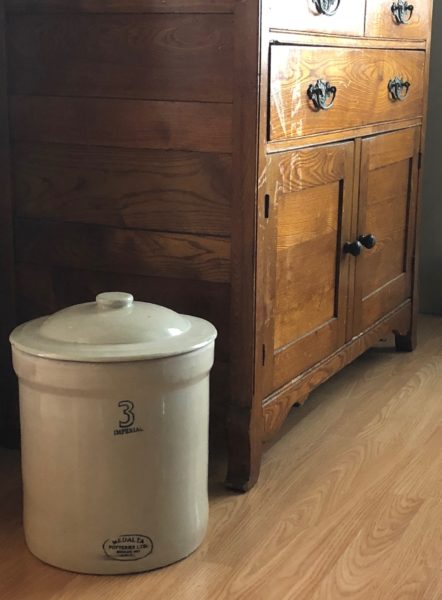
A stone crock that Sauerkraut will be made in.
A stone crock is a good investment for your homestead


I also love decorating with my crocks (one even holds our woodstove kindling). Here’s my 3 gallon stone crock alongside the dining room sideboard.

I’ll just borrow this one for a few weeks and start fermenting cabbage.


sliced cabbage ready for fermenting into sauerkraut
This easy sauerkraut recipe only requires salt and cabbage!


How to Make Homemade Sauerkraut – Instructions

Coarse salt with a measuring spoon in a bowl
Use coarse salt when packing the cabbage into the crock


For this homemade sauerkraut recipe, I need 6 tablespoons of coarse pickling salt for every 10 pounds of cabbage leaf. Some people use sea salt, but we always prefer the pickling salt. I don’t use table salt, because of the iodine.

If you have a fermentation crock and don’t know how much it will hold, the general rule is 5 pounds of food for every 1 gallon of crock capacity.

Our 3 gallon jug crock should hold 15 pounds of cabbage. So I need and measure out 9 tablespoons of the pickling salt. Depending on how much cabbage you have, you may have to ferment in batches.

The prep time to get it into the fermentation crock is about 30 minutes – it really doesn’t take long at all.

Preparing Cabbage for Sauerkraut

Large heads of cabbage on the counter ready to slice
Slice cabbage nice and thin before adding to the fermenting crock.
  1. Wash the cabbage, taking off the looser outer leaves of the cabbage. Start with a nice tight head of cabbage, then cut the cabbage in half.
  2. Do it again, so you have four wedges, and cut out the core from each.
  3. Shred cabbage (use your food processor to finely shred) or slice very thin, weigh it and then put a layer in the crock.

    thinly sliced cabbage sits in the fermenting crock
    Layer the shredded cabbage into the crock and add salt.
  4. I just slice our thinly with a good kitchen knife. You want very thin ribbons of cabbage. It doesn’t take long to get several heads of cabbage all ready for the crock.
  5. As the cabbage is layered, massage and compact it down firmly with your hand to remove as much air as possible. You could use a wooden spoon, but the bottom of a mug works very well too.
  6. On top of EACH layer, sprinkle some of the pickling salt, a couple teaspoons at a time. Don’t start with too much salt, as you’ll want to make sure there’s an even amount between each layer. Alternate Cabbage and the salt until your crock is almost full.
  7. Once my layers started getting higher, I used the bottom of a coffee cup to firmly pack the Cabbage down. I want as little air in there as possible. You can also use a wooden pestle like this one. REALLY squish that Cabbage down!


Fermenting the Sauerkraut

Once you’ve got your Cabbage and salt layered in the crock, tear some plastic wrap and place it on top, tightly tucking it down the sides if possible.

thin layer of plastic wrap sits on top of the cabbage
A thin layer of plastic wrap will help keep the cabbage seated in the crock.

If you have to, tear more plastic wrap and just jam it around the edge of the crock. Remember, you want zero air coming into contact with the Cabbage! No oxygen at all!


a ziplock bag full of water sits on top of the sliced cabbage
This will help keep the cabbage submerged and fermenting.


Now take a plastic freezer bag 3/4 full of cold water and set that directly on top of the plastic wrap. The bag will find any open areas and sit on top of it, hopefully removing ALL air at the top.

Put the lid on your crock and leave it alone at room temperature for a couple of weeks. I find this method easier than using smaller containers with an airlock on each.

There is no need to keep the fermenting cabbage in the refrigerator. Check it every few days – there should be no scum or anything resembling mold sitting on the top. If there is, take a spoon and carefully remove it.

Make sure you put fresh plastic wrap on top. After it’s finished the fermenting process, it will be ready for canning.

I’ve put a link below to my post all about how to do the canning of your Sauerkraut. For fermenting, you want a temperature of 68 – 72F or 20 – 22C.


Jars of home canned Sauerkraut sit on the counter
Sauerkraut is a great dish to make in large quantities and can at home to have delicious sauerkraut all year long!

Fermenting Kits for Sauerkraut in Small Batches

Try making some homemade sauerkraut for your family! You can use glass mason jars, if you don’t have a crock. You can use fermenting kits, like these, to make small batch sauerkraut.

To add some extra flavor, try incorporating ingredients like caraway seeds, juniper berries, ginger, or onion.

Don’t use anything metal and never mix fresh cabbage in with cabbage already fermenting. After it’s ready, you will probably want to read about how to water bath can Sauerkraut.

It is easy to do and great to have some jars on your pantry shelf! Just heat, seal, and store in the fridge to extend shelf life (especially once opened).


FAQs

What is sauerkraut?

Sauerkraut is a German dish made from finely shredded raw cabbage, which is fermented by lactic acid bacteria. Like other fermented food it has a distinctly sour flavor, partially from the lactic acid which ferments the sugars in the cabbage leaves.

This unique taste has made it one of Germany’s most iconic dishes.

Is sauerkraut good for you?

Absolutely, sauerkraut is rich in lots of vitamins and minerals. Specifically, it’s a good source of vitamins C and K, as well as calcium and magnesium. Sauerkraut is high in dietary fiber, folate, iron, and potassium.

When uncooked and unpasteurized, sauerkraut is rich in enzymes and because of live lactobactilli and beneficial microbes, it’s a great source of probiotics and beneficial bacteria which can improve digestive health and your immune system.

How should I eat sauerkraut?

It’s great on its own, especially as a side dish to a hearty main course of meat. Sauerkraut works as a great palette cleanser between bites of a more intensely flavored main dish.

Sauerkraut can also be used as a salsa, great to dip chips or use as a topping on tacos. Use it on salads, sandwiches, or as a topping for your favorite burger or hot dog.

You can add it to eggs or potatoes for breakfast, add it to avocado toast, or make a delicious and healthy rice bowl with a variety of other veggies.

What can I do with sauerkraut juices?

The brine that’s created as a byproduct of the fermenting process has some applications of its own.

This liquid can be taken directly as a gut shot that can aid in digestion, you can toss it into a salad splash over vegetables or meat, or even save it to use for the next batch of sauerkraut if you need more liquid.

You can even use it the same way you might use pickle juice in cocktails or pickle back shots.


Want to learn more about how to grow cabbage?

More Canning Recipes

  • Here’s how we make Pickled Asparagus – delicious!
  • How I use all our small Beets – I turn them into Pickled Beets.
  • You can read more about using iodized salt in Sauerkraut here.


Homemade Sauerkraut Recipe

Homemade fermented Sauerkraut in a jar

Homemade Sauerkraut Recipe

Yield: approximately 12 pints
Prep Time: 30 minutes
Fermentation Time: 14 days
Canning Time: 15 minutes
Total Time: 14 days 45 minutes

This recipe for fermented sauerkraut in a crock can be water bath canned after fermentation is complete. Store canned sauerkraut on your pantry shelves to use all year long.

Ingredients

  • 15 pounds Cabbage
  • 9 Tablespoons Pickling Salt

Instructions

  1. Wash the cabbage, taking off the looser outer leaves.
  2. Cut the cabbage in half.
  3. Cut it again, so you have four edges, and cut out the core from each.
  4. Shred cabbage or slice very thin, weigh it and then put a layer in the crock.
  5. As the cabbage is layered, massage and pat it down firmly with your hand to remove as much air as possible.
  6. On top of EACH layer, sprinkle some of the pickling salt, a couple teaspoons at a time.
  7. Don’t start with too much salt, as you’ll want to make sure there’s an even amount between each layer.
  8. Alternate Cabbage and the salt until your crock is almost full.
  9. Use the bottom of a coffee cup to firmly pack the Cabbage down.
  10. Tear some plastic wrap and place it on top, tightly tucking it down the sides if possible.
  11. Add a closed Ziplock bag with water to the plastic wrap, ensuring no air can get at the cabbage.
  12. Check the cabbage every few days. Taste it after 10 days; left continue to ferment if you want it stronger.

Notes

For instructions on water bath canning your homemade sauerkraut, read here: Canning Sauerkraut

Did you make this recipe?

Please leave a comment on the blog or share a photo on Pinterest

© Annie
Cuisine: American / Category: Recipes

Published November 2019, latest update September 2024.

Filed Under: Canning Tagged With: Sauerkraut

How to Make and Preserve Pickled Beets

By Annie

Learn how to make pickled beets! Can in mason jars to enjoy all year round.

Beets grow great in a northern garden. And they taste delicious. You can can them up to serve as a vegetable at dinner. You can cook them up to serve as a vegetable side dish at dinner. We also enjoy them as pickled beets too!

Want more articles about preserving food? Check out all of our Preserving Food posts here.

Preserve pickled beets open on a serving tray with garlic cloves and herbs.
How to make pickled beets – here’s the whole easy process to make your own.

We love pickles here and every year we preserve a few dozen jars of different types of pickles. We’ve enjoyed making (and eating!) Pickled Garlic Scapes, which we make in early July. We’ve also made homemade Pickled Fiddleheads and have a couple jars tucked away to enjoy later.

But now, I want to share with you how to make and preserve pickled beets. Here’s the complete process and recipe to make your own homemade pickled beets.

I’m going to show you exactly how to make home made pickled beets. But first, watch this video which shows the process and then keep reading for the full recipe!

I hope you’ll love this canned beets recipe. You can print the recipe off; it’s at the bottom of this post.

Pickled Beets in a mason jar
Click to save to your Pinterest board.


Beets are easy to grow and you can get a really large harvest from even one row of seeded beets.

Here’s where you can find everything you need to know about growing beets in your garden.


beets growing with lettuce and spinach in the garden
Beets, spinach and lettuces growing in our Spring garden

Beets can be planted in early spring and then thinned as they are growing. I like to seed heavily and then thin the beets later.

 I find seeding heavy helps to keep the weeds down as there isn’t much room for them to grow inside the rows.


a bag of harvested beets wait to be made into pickles
These homegrown beets are going to be made into pickles


Why you need to thin Beet plants

Here’s an interesting thing about growing beets. Beets grow in clusters from the seed, so even if you plant lightly, you will still need to thin. You will find several beet plants coming up from each single seed!

Graham just love beets and seriously cannot get enough of them. I always want as many beets as I can possibly get. And when the beets are still small,  I go into the garden to thin them.

I usually have 2 rows of beets planted and by thinning the small ones out, there is more room for the rest of them to grow larger.


Fresh picked baby beets in a basket
Freshly dug baby beets will be used to make pickled beets


I usually end up with my harvest basket full of thinnings after I work my way through the row of beets. After I cut and wash all the beet tops, I stuff them in the fridge.

We often end up with two huge plastic bags of greens! We use the leaves both for salads and steamed greens. Plus, we freeze leafy greens so later we can use them in smoothies or as a side dish!


A row of beets growing in the garden
Beet greens are delicious raw or cooked.

I like to leave thinning the beets until the roots are large enough to make Pickled Beets from them. Let your plants grow so you can benefit from both ends – leaves for greens and roots for pickling!

Open jar of easy pickled beets with spices
Click to save to your Pinterest board.

How to Make Pickled Beets:


Pickled Beets Recipe:

  • 10 cups prepared beets
  • 2 1/2 cups white vinegar
  • 1 cup water
  • 1 cup granulated sugar
  • 3 tbsp pickling spice


Cooking Beets for Pickling

Wash and scrub the beets well with a small brush. I usually rinse them a few times first to get any leftover dirt off of them.

I always leave the root on at the bottom and leave about 2 inches of greens above. This really helps lessen the bleeding that can happen while they are cooking.

Put the beets in a large saucepan, cover with water and bring to a boil. Boil beets until tender – drain them and then set them in a sink of cold water.


Pickling Spice Mixture


A pot of pickling spice, vinegar and sugar heating on the stove.
Pickling spice, vinegar and sugar heating on the stove


While the beets are cooking, get your liquid ready. Combine the vinegar, water, sugar and pickling spices in a pan and set on the stove.

Bring this mixture to a boil and then gently simmer 15 minutes.


Slipping the skins of baby beets
Slip the skins off the beets then trim the ends


Now it’s time to get the beets ready for the canning jars. The beets need to have their skins removed but this is a pretty easy task and you won’t have to peel them.

It’s easier to do this while you are holding the beet under water. Press lightly on the skin surface and it will begin to slide off.

You’ll find the tops just slip right off, and usually the tap root does too. Just slice it with a knife if you need to.


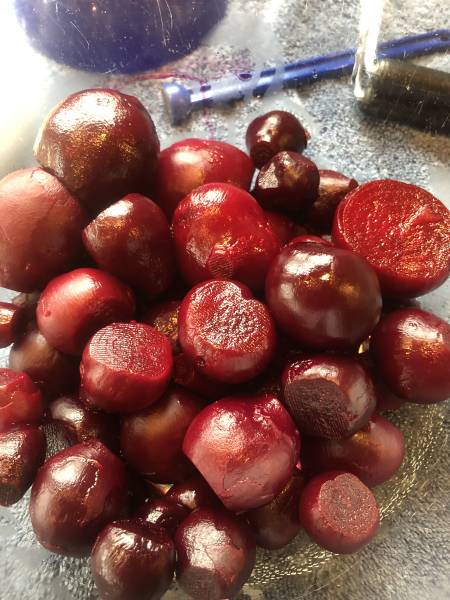
A bowl of beets ready to can in jars.
A bowl of beets ready to can in jars


Here’s a bowl of small beets after having their skins slipped. They are ready to go into canning jars for processing.

If you are using larger beets, just slice beets to fit in the jars.


Canning Pickled Beets:

Meanwhile put clean mason jars into your boiling water bath canner and let them sit in the boiling water for 15 minutes to sterilize the canning jars.

I like to use pint jars for Pickled Beets, as we can usually finish off an opened pint jar fairly quickly.

If I used quart jars, the opened jar may end up sitting for months in the fridge. Not that there is anything wrong with that – use whatever size jars you like.

If you have a large family, the quart size would likely work better for you.


Canning seals are sitting in a bowl of hot water prior to using.
Let your seals sit in hot water prior to sealing the jars


I heat water in the kettle and pour it over the canning seals, which I have put in a bowl. I put mine in tops and bottoms alternating.

This just makes it a bit easier to pick them up one by one as I need them. It’s important that the seals have been warmed up before setting them on top of the jars.


A jar full of beets sits waiting for the canning.
Using a canning funnel means less mess when filling the jars

Once I have the skins slipped from the beets, I put them into pint canning jars. If you use a funnel, it saves on drips.

Buy yourself a canning funnel – it has a very wide mouth and it will sit in pint or quart jars perfectly. It saves a lot of mess.

Herbs you may want to add

You can add additional herbs to each jar such as a teaspoon of one of:

  • dill
  • whole allspice
  • whole cloves
  • bay leaves
  • cinnamon stick
  • garlic cloves

Add the liquid vinegar mixture to each jar, leaving 1/2 inch headspace. Wipe the lid clean, put on a seal and a ring.

Put your jars into the boiling water bath for 35 minutes (for us, check your altitude). Canning time totally depends on your altitude – we add extra time because we are at 2800 ft.

Make sure the water is above the tops of jars! Add more water to your canner if you need to, then wait till the water is boiling again before you add the filled jars.

The jars must be fully submerged through the entire canning time.


Pickled beets sit on a towel on the counter
Leave the jars alone for 24 hours after canning


Removing the Jars from the Water Bath Canner

After the canning time is up, move the jars to your counter top and leave them alone for 24 hours. This is an important part of the canning process. The filled jars need to slowly cool down to room temperature.

Don’t move them around and don’t knock the seals, trying to see if they have sealed. Set aside a part of your counter top that you can put the jars and just leave them there.

No drafts, either, so if you have to have them near an open window, lay a towel over top of them to keep them out of the draft.

How to Tell if Canning Jars are Sealed

Soon after the jars have started to cool, you should hear a pinging sound. This is the lid sealing fully to the jar. Every jar should ping!

I used to count each ping, knowing how many jars I had put in the canner. I don’t bother doing that now.


Canned beets sitting on the counter
These beets are not pickled so they needed to be pressure canned for safety

What I do now is, after 24 hours is up, I tap lightly on each jar top. I can tell the sound of a sealed top and an unsealed top.

You will too, once you do more canning. The tops of sealed jars will curve downward, but do the tapping test and be sure.

If a jar hasn’t sealed, I can either reprocess it or just put it in the fridge and we enjoy them as refrigerator pickled beets!

This is an easy way to put some extra food in storage. Stock up your pantry with shelf-stable foods like this and enjoy them all year.

Another bonus of thinning the beets is, that come the end of summer, we will have lots of larger beets in the garden.

We can harvest those and pressure can jars of beets. Those beets in the photo above have been pressure canned.

They are delicious cooked along with a beef roast and other vegetables in the oven. Roasted beets are very tasty!


Now that you’ve learned how to make pickled beets, what kind of pickles will you make next?

Usually, if you make Pickled anything, you can use a water bath canner for the canning. If we want to have jars of beets on hand (Not pickled) then we need to pull out the pressure canner.

Never guess when it comes to canning. Always be sure before you start that you are using the right process.

Blue Ball book of Preserving cover
The BEST resource there is! Pick up a copy for your kitchen

Buy the Ball Book and follow the process and recipes. Enjoy!


a batch of pickled beets on the counter
Click to save to your Pinterest board.

Pickled Beets FAQ’s:

Are pickled beets good for you?

Pickle beets are a very healthy dinner option! Some of the benefits of eating beets include:

  • potentially lowering blood pressure
  • improved blood flow
  • can potentially reduce heart disease and possibility of stroke

What are the nutritional benefits of eating beets?

Beets are a great source of vitamins and minerals including:

  • iron
  • vitamin C
  • fiber
  • potassium
  • low in salt (sodium)
  • mineral benefits such as calcium


Now you know how to make pickled beets, so tuck a few shelf-stable jars away to enjoy all year!


Pickled Beets in jars ready for canning

Pickled Beets Canning Recipe

Yield: 5 pints (approx.)
Prep Time: 20 minutes
Cook Time: 35 minutes
Total Time: 55 minutes

Make pickled beets from small bite sized beets or slice larger beets before canning in pickling brine.

Ingredients

  • 10 cups prepared beets
  • 2 1/2 cups white vinegar
  • 1 cup water
  • 1 cup granulated sugar
  • 3 TBSP pickling spice

Instructions

Cooking Beets for Pickling

Wash and scrub the beets well with a small brush.

Trim, leaving the root on at the bottom and about 2 inches of greens above.

Put them in a saucepan and cover with water.

Boil until tender - drain and set them in a sink of cold water.

Slip the skins off the beets while you are holding the beet under water.

Press lightly on the skin surface and it will begin to slide off. Slice the root with a knife if you need to.

Add the small beets to the jars. If you are using larger beets, just slice beets to fit in the jars. Using a canning funnel makes this easier.

Add the liquid mixture to each jar, leaving 1/2 inch of headroom. Wipe the lid clean, put on a seal and a ring.

Pickling Spice Mixture

While the beets are cooking, get your liquid ready. Combine the vinegar, water, sugar and pickling spices in a pan and set on the stove.

Bring this mixture to a boil and then gently simmer 15 minutes.

Canning

Put clean mason jars into your boiling water bath and let them sit for 15 minutes to sterilize.

Set seals in a bowl and pour very hot water over the canning seals and let them sit till needed.

After filling jars, put them into the boiling water bath for 35 minutes (check your altitude). Canning time totally depends on your altitude - we add extra time because we are at 2800 ft.

Make sure the water is above the tops of jars! Add more water if you need to.

After the canning time is up, carefully remove the jars and leave on the counter top too cool for 24 hours. 

Notes

Optional: Add 1 tsp (to each jar) of fresh herbs such as dill, whole allspice, whole cloves, bay leaves, cinnamon stick, garlic cloves etc.

Nutrition Information:
Yield: 20 Serving Size: 1
Amount Per Serving: Calories: 81Total Fat: 0gSaturated Fat: 0gTrans Fat: 0gUnsaturated Fat: 0gCholesterol: 0mgSodium: 67mgCarbohydrates: 18gFiber: 2gSugar: 17gProtein: 1g

Did you make this recipe?

Please leave a comment on the blog or share a photo on Pinterest

© Annie
Cuisine: American
Pickled Beets Recipe to save to your Pinterest board.


originally published Aug, 2019; latest update September, 2022

Filed Under: Canning

Canning Cherries – Water Bath Canning

By Annie

Learn how to can cherries at home and start preserving fruit this year. This method works for all stone fruits.

When there is a great deal on fresh cherries at the local grocery store, I buy a flat. For canning cherries, water bath preserving is used. It makes for a pretty easy job. Want to learn about canning cherries at home? Read on!

Can cherries in a bowl on a table.
Learn how to can cherries and start preserving fruit to use all year.

We like to use sweet cherries for our canning. Some people prefer Morello cherries, which are sour cherries. I have not seen Morello cherries available here.

We will never bother with planting cherry trees here. We have planted apple trees and enjoy harvesting those every year. But cherry trees?

No! We have so many birds here, not only all the birds that come to the Valley to lay their eggs and teach their babes to fly, but also ravens.


Safely home can cherries in jars by using this water bath canning recipe. Easy to do; stock up your pantry. #canning #waterbathcanning #recipe #selfsufficiency #cherries #canningfruit #fruit


I don’t have time nor the inclination to spend putting nets over fruit trees here. And that includes cherry trees. So I am a buyer of grocery store cherries.

How to Can Cherries at Home

To get started canning cherries, fill a water bath canner with water and set on the stove on high heat, bringing the water to a boil.

Cherries in a sink of cool water.
Rinse and wash cherries well before canning.


Meanwhile, place cherries in cool water in the sink – I like to soak them for a little while. Then I let the water drain out,  fill the sink again and give them a final rinse.

When I’m happy with how clean they are, I start pulling off the stems.

Do you pit cherries before canning?

You can pit cherries before canning, if you like. Using a pitting tool like this one makes that job a lot easier. If you are canning cherries for cherry pie filling, you will need to pit the cherries first.

Many people prefer pitting cherries so they don’t have to eat around the pit and then discard it. It’s up to individual preference, so you make the decision.

Can cherries be canned with pits?

Yes! Cherries can be canned with pits; I do NOT pit the cherries before water bath canning them. We don’t find it bothersome to have to remove the pit when eating.

If you can cherries with the pits, you may want to prick skins on opposite sides of the cherries as it may prevent splitting. You can use a clean needle for this.

We have not done this and have not had problems with any cherries splitting through the canning process.


Stemless cherries in a bowl
Remove stems from clean cherries.

I put empty pint jars into the now boiling water in the canner. They get sterilized for at least 10 minutes. Meanwhile, I have a sugar syrup warming up in a large saucepan and I will add this liquid to the jars before canning.

I prefer using a hot pack method for cherries, as opposed to a raw pack method. Because of this, I will warm the cherries on the stove in this medium syrup before loading the jars.

Juices for Canning Cherries

Cherries can be canned in apple juice, white grape juice or in a light syrup or a medium syrup, depending on the sweetness of the cherries and your preference.

We prefer simply using a simple syrup and here are the ingredients and measurements that we use.

Simple Syrup Recipe

For the simple syrup, here are the measurements to make seven quart size jars:

  • 8 1/4 cups water
  • 3 3/4 cups sugar

Heat this on the stove on medium-high heat, stirring occasionally until the sugar is completely dissolved.

Once dissolved, you can heat the cherries in this mixture before placing in jars for canning.

Add enough syrup to each jar to completely cover the cherries, and leave 1/2 inch headspace. Remove any air bubbles using one of these bubble poppers, then wipe the rim of each jar. Add the seal and ring.

Boil in a water bath for 20 minutes; remove jars from the boiling water canner and let sit on a towel in a draft free place for 24 hours.

Do not touch the jars, just leave alone to seal and cool. After 24 hours you can check that your jars have all sealed then place in your food pantry.

If you have any jars that have not sealed you can can them again OR place the jar in the fridge and eat within a few days.

Tattler seals and rings sitting in warm water.
I like using Tattler seals and lids for canning.


Using Tattler Lids and Seals

You can of course, use the more common canning seals and rings, but here is some information about Tattler Canning lids and seals if you want to use them.

While my jars are being sterilized and the berries are warming, I get my Tattler lids and seals ready by immersing them in hot water for 10 minutes. 

If you’ve never used Tattler products, you should! These completely reusable lids and seals will last for years.

You will not be disappointed with your canning if you use their lids and seals; they are wonderful.


Wiping the rims of jars with a paper towel before sealing.
Wipe the rim of each jar clean before sealing.


Once the jars are sterilized, remove them from the canner and fill them with your warm cherries, leaving 1/2 an inch headroom.

Ladle the syrup over top and then wipe the rims of the jars.

How to use Tattler Canning lids and seals when water bath canning. And the full recipe for Canning Cherries too, with step by step instructions. #tattler #canning #preserving #waterbathcanning #recipe


Put the ring on the seal and place it on the jar. Read here for detailed instructions on how to use the Tattler lids, as the instructions are different than when using metal seals and rings.

Process the jars in your water bath canner for 15 minutes.


A Tattler lid and seal on a jar of cherries.
You can use regular canning seals or Tattler brand.


After the water bath canning:

If I have used the Tattler lids and seals, I immediately tighten them. Do this as soon as you remove the jars from your canner!

Read about the differences between regular lids and seals and Tattler lids and seals.

I leave the rings in place until at least 24 hours after canning. Since I can reuse the rings, I put my jars away sealed but without the rings.


Home canned cherries sit on a towel.
Let canned cherries sit on a towel on the counter for 24 hours.


Here is the finished result. Don’t they look beautiful? I did some pints but also some half pints. 

 They are great for Graham to take to work and snack on. They make a wonderful dessert and the juice is delicious over ice cream. We’ll be enjoying these cherries this winter.


Home canning cherries can be done quickly! Here's step by step instructions on how to can cherries. What to do when canning cherries. Canning recipe can be found here. #canning #food #preserving #cherries #recipe


The Ball Blue Book of Canning is a fantastic resource – whether you are a beginner or an expert with canning.

Grab a copy, read it through, find some great canning recipes and know you are canning safely.

Want to make your own Salsa? Read here – there’s a great Salsa recipe and the whole process for canning them. Then, try your hand at this delicious Jalapeno Plum Jelly!

Here's a recipe and step by step instructions to can your own cherries in jars. #preserving #homecanning #pantry #food #recipe


originally published 2012; updated May 2022

Filed Under: Canning

How to Make Pickled Garlic Scapes

By Annie

In this second installment on Growing your own Garlic, I’m going to share a fantastic Pickled Garlic Scapes recipe.

In the first post, I gave an overview about the process involved with growing Garlic. Garlic is one of the easiest garden vegetables to grow!

Here in the Cariboo, the Garlic Scapes come on hot and heavy in early summer around July. Since we have almost 300 garlic plants in the garden, we basically have almost 300 scapes!

Fresh garlic scapes in a bowl.
Here’s a Garlic Scape Pickle recipe you are going to love. Preserve garlic scapes to store them for year round use.

Every garlic plant sends one scape up and if you want the largest garlic bulbs possible, you have to cut the stems off.

The energy saved by not having the scape now goes into the bulb. This is a good thing. That makes the bulb grow BIGGER, which is what we want – the biggest, best bulbs we can grow.


Cooking Garlic Scapes

To cook the Scapes, just steam them for a few minutes if you like them still a bit crunchy or longer if you want to soften them. You can also lightly fry or grill them with a bit of sesame oil. Either way, they are delicious, with a strong garlic flavor.

We can only eat so many Scapes fresh with dinner so I looked around for something else to do with them. 

I found a recipe for pickling the scapes. I fiddled around with the ingredients and came up with this recipe.

You can print off the full Pickled Garlic Scapes recipe at the bottom of this post.


Pickled Garlic Scapes Recipe

  • 2 pounds garlic scapes
  • 1/4 cup canning salt (you can also use kosher salt in a pinch, but canning salt is better)
  • 2-1/2 cups white vinegar
  • 2-1/2 cups water
  • 1 tsp cayenne pepper, divided
  • <4 heads dill, divided
  • Pickling spice (optional)


  1. Trim ends off the garlic scapes. Combine salt, vinegar and water in a large saucepot. Bring to a boil.
  2. Pack scapes lengthwise into hot jars, leaving ¼ inch headspace. Add ¼ teaspoon cayenne pepper, and 1 head dill to each pint.
  3. Ladle hot brine over garlic scapes, leaving ¼ inch headspace. Remove air bubbles and adjust two-piece caps. Process pints and quarts 10 minutes in a boiling-water canner.

Yield: about four pints of liquid.

For some extra flavor, you can add ingredients like coriander seeds, red pepper flakes, black peppercorns, dill seed, bay leaves, garlic cloves, apple cider vinegar, or even some chili peppers.

Since we had fresh dill growing in the garden, I added that, along with a few very hot red and yellow peppers.

But first things first – I went down to the Garden and cut off all the Scapes I could find before retiring to the Porch to get started.

Fresh garlic scapes in a bowl.
Don’t these scapes look so green and beautiful?

I sat down with the bag of Scapes and first trimmed off just above the white bulb. Then I cut off the straight section of the Scape, leaving just the curled part. These went into separate bowls.

Trimmed garlic scapes in bowls.
You’ll want to trim them down so they fit in your jars.

I’m going to use fresh homegrown dill heads along with fresh homegrown hot peppers! They are going to add  great zingy taste to these Pickled Garlic Scapes.

Sterilizing Canning Jars

First, I need to get the water boiling as I need to sterilize the jars. Always sterilize your canning jars first when you are doing a boiling water bath!

sterilizing mason jars in boiling water.
All you need is a large pot and some boiling water to sterilize your jars.

Once the water is boiling (with enough water to fully cover the empty jars) I use tongs to submerse the jars and boil them for 10 minutes.

After cutting all the straight Scapes to a length to precisely fill the pint jars, I then cut the Curly Scapes into 2 or more pieces. These will go in separate jars.

At this point, I got the liquid mixture ready and put it on the stove to boil. I don’t like to do this too early in the process, as I find that it evaporates and I don’t have enough liquid to cover the Scapes in the jars.

Scapes in a colander in the sink.
As with any fresh produce, make sure you rinse them first.

Packing the Jars with Garlic Scapes for Canning

After the Scapes have had a good washing, I started packing them tightly into pint sized Mason jars.

Two mason jars fille with garlic scapes.
Don’t be afraid to really pack the scapes into the jars.

I cut the hot peppers into slivers, and included one of each color in each jar. These should really pack a punch, because those peppers are pretty hot.

tattler lids and rings.
I love my Tattler canning rings!


Using Tattler Lids and Seals

All this time, my canning seals and lids were sitting in scalding water waiting to be put on the jars. These are the Tattler lids and seals, which I love using.

I can easily recommend Tattler – using these lids and seals, you can get many many years of reuse from them. How nice not to have to buy new seals each year!

WIping down the rim of a jar.
Be sure to wipe down your jars before you finish up.

Adding Brine to Pickled Garlic Scapes

After filling the jars with Garlic Scapes, I poured the boiling liquid over top, leaving 1/4 inch of head space.

Before putting on the seal, I wipe each jar rim with a piece of clean paper towel. It’s important not to reuse the same portion of paper towel for the jars.

You don’t want to have lifted something off one jar, only to deposit it onto another. You want to make sure the rims are free of food and liquid.

Placing a rubber ring on the rim of a jar.
These rubber rings are super easy to use.

Time now to set a seal on the top of each jar. Just center the rubber seal on the rim. Once the top is put on, the seal will stay in place.

placing the plastic lid on top of the rubber ring.
Be sure everything is lined up nicely.

I add the the lid, then screw on the metal band.

Screwing on the Metal Band

Now here is where Tattler lids work differently than conventional canning seals and lids.

With the Tattler lids and seals, I need to screw the band on loosely and hold the lid in place with my finger while I finish tightening the band.

Then I need to turn the band BACK 1/4 inch. This is to allow the jars to vent while they are being processed.

Pickled garlic scapes and hot peppers in jars ready for home canning.
Look at how beautiful these scapes are all lined up!

Canning Pickled Garlic Scapes

Into the boiling hot water bath canner the jars go, and once the water is fully boiling, I set the timer for 15 minutes.

I need to add 5 minutes to the processing time, as I live at almost 3000 feet elevation. MAKE SURE you check your altitude before canning.

The elevation plays an important part of the canning process and you must be sure of how many minutes you need to process your food.

I often will have to remove water from the canner when I add the jars. You may need to as well, as the jar contents are heavier than the water.

You need enough water to cover the empty jars completely when sterilizing, but that may be too much water when you add the filled jars.

I keep a canning ladle and a large empty saucepan nearby so I can easily and safely remove some of the water while adding the filled jars.

Picking up a mason jar with tongs.
Using tongs to transfer your jars ensures you won’t get scalded or burnt.

Removing Jars from Water Bath Canner

After the 15 minutes are up, I use the canning tongs to remove the jars. I immediately tighten the metal bands on each jar.

Now I let the jars sit undisturbed for 24 hours. That means out of any drafts as well.

Then I wipe them down and put them away into the pantry or cold room. I can remove the metal bands now if I wish.

They serve no further purpose (sealed is sealed) and I can reuse the bands on other canning.

Right after I remove the band, I check the seal to ensure it is sealed. Just gently pick the jar up by the seal.

If the seal comes off, you can either put the jar into the fridge and use the contents within a week. You can also reprocess the jar in the boiling water bath.

Properly canned, these Pickled Garlic Scapes will last for years in your pantry.


Safe Home Canning

I have been canning food for well over 20 years. Canning is safe to do and safe to feed your family, but do NOT cut corners.

I cannot stress that enough. Do not go to all the trouble of preserving if you are not going to follow exact instructions.

They are in place for a reason – if you do not can safely and accurately, you run the risk of feeding your family spoiled food. This can cause very severe illness and even death. You can’t always smell the bacteria, so don’t rely on your nose!

Part 3 of Grow Garlic can be found here.

Now, start canning and filling your cupboard shelves with your own, freshly grown food. Water bath canning is easy, safe and can save you a lot of money. Do the work now while the harvest is here and you will enjoy that harvest right over Winter!


Other Uses for Garlic Scapes

Use your scapes to make a garlic scape pesto, which is great on burgers and sandwiches. You can also top salads with scapes for an aromatic garlic-y addition, or toss them in with your next stir fry.


Looking for more Pickle Recipes?

  • How about trying some Homemade Pickled Beets?
  • Pickled Asparagus Spears are great on a pickle plate or to add to a Caesar or Bloody Mary!
  • If you’ve got extra eggs on hand, try this Pickled Egg recipe.
  • Websites such as Simply Canning and Bernardin are great resources if you are new to canning.
Pickled Garlic Scapes with pickling spice being added to canning jars
Pickled Garlic Scapes are easy to make and have a wonderful zingy taste. Here’s a recipe to make your own Pickled Scapes at home.


Pickled Garlic Scapes in Canning Jars on wood counter

Pickled Garlic Scapes

Yield: 8 pints
Prep Time: 25 minutes
Cook Time: 15 minutes
Total Time: 40 minutes

These easy Pickled Garlic Scapes are a great way to preserve these short lived scapes.

Ingredients

  • 2 pounds garlic scapes
  • 1/4 cup canning salt
  • 2-1/2 cups vinegar
  • 2-1/2 cups water
  • 1 tsp cayenne pepper, divided
  • 4 heads dill, divided
  • Pickling spice (optional)

Instructions

  1. Fill water bath canner with water and turn on high heat.
  2. Add clean pint size mason jars to the water in the canner.
  3. Once boiling, set timer for 15 minutes to sterilize jars.
  4. Trim ends off the garlic scapes.
  5. Combine salt, vinegar and water in a large saucepot. Bring to a boil.
  6. Pack scapes lengthwise into hot jars, leaving ¼ inch headspace. Add ¼ teaspoon cayenne pepper, and 1 head dill to each pint.
  7. Ladle hot brine over garlic scapes, leaving ¼ inch headspace. Remove air bubbles and adjust two-piece caps.
  8. Process pints and quarts 10 minutes (depending on altitude) in a boiling-water canner.
  9. Remove jars when time is up, set on a thick towel on the counter out of the way and in a draft free place.
  10. Leave jars to seal and cool for 24 hours, before wiping jars and storing in your cupboard.

Notes

You can also use kosher salt in a pinch, but canning salt is better.

Nutrition Information:
Yield: 64 Serving Size: 1
Amount Per Serving: Calories: 6Total Fat: 0gSaturated Fat: 0gTrans Fat: 0gUnsaturated Fat: 0gCholesterol: 0mgSodium: 445mgCarbohydrates: 1gFiber: 0gSugar: 0gProtein: 0g

Did you make this recipe?

Please leave a comment on the blog or share a photo on Pinterest

© Annie
Cuisine: American / Category: Canning


Fresh garlic scapes in a bowl.
Here’s a Garlic Scape Pickle recipe you are going to love. Preserve garlic scapes to store them for year round use.


originally published 2011; last updated July 2022

Filed Under: Canning, Garlic, Garlic (4 Part Series), Grow Your Own Vegetables Tagged With: Canning, Garlic, Grow Vegetables, preserving, Tattler

  • « Previous Page
  • 1
  • 2
  • 3
  • 4
  • 5
  • 6
  • Next Page »

Connect With Us!

  • Email
  • Facebook
  • Instagram
  • Pinterest
  • Twitter

Search this site

Generic selectors
Exact matches only
Search in title
Search in content
Post Type Selectors
Search in posts
Search in pages

Our Most Popular Posts

Garlic cloves in oil

How to Preserve Garlic in Oil – and Other Ways to Store Garlic

a open jar of pickled brussel sprouts on a counter

Easy Pickled Brussels Sprouts Recipe (Water Bath Canning)

Privacy Policy

Read about our Privacy Policy

Disclosure

Please note that some of this site’s links are affiliate links, and CountryLivinginaCaribooValley.com is a participant in the Amazon Services LLC Associates Program, an affiliate advertising program designed to provide a means for us to earn fees by linking to Amazon.com and affiliated sites. At NO ADDITIONAL COST TO YOU, I will earn a small commission, if you purchase them. I recommend them as they are good products.

Theme Design By Studio Mommy · Copyright © 2026