Country Living in a Cariboo Valley

Homesteading in BC

  • How to Get Started
  • Vegetable Gardening
  • Preserving Food
  • Recipes
  • Homemade Wine Recipes
  • About Us
  • Work With Me
  • Shop
    • Vegetable Garden Planner Printable: Grow Your Best Garden Ever
    • Grow Enough Food for a Year
    • Delicious Dandelions: A Recipe Collection
    • Dirt to Dollars: Selling at the Farmers Market
    • 8 Pounds in 8 Weeks: Raising Chicks for the Dinner Table
    • Making Wild Wine
    • Build a Hanging Chicken Feeder
    • 15 Things to Know About Living in the Country

How to Plant Garlic Cloves – Growing Garlic Part 1

By Annie

Here are our best tips for how to plant garlic cloves in your vegetable garden!

Garlic is one of the easiest vegetables to grow in your garden or in containers. And it is wonderful to use in all kinds of cooking recipes, plus it’s also very healthy for us. 

Garlic doesn’t take up much room at all so you can either plant a bed of garlic cloves in a corner of your garden or tuck a dozen garlic plants in a pot and keep it on your deck.

Learn how to plant garlic cloves and hang garlic to cure
Our best tips for how to plant garlic cloves in your garden.

You can see we love to grow and harvest garlic! And because we live in a northern climate (Zone 3 Canada) we only grow a type of garlic called hardneck.

Hardneck garlic is a garlic variety that loves a cold winter; if you are in warm winter areas, grow softneck garlic instead, as softneck varieties are better in warmer climates.

How to Plant Garlic in the Fall

In our climate (cold winters) we plant our Garlic in the early Fall anywhere from around mid-September through to the middle of October. If you live in the South you plant in the early Spring.

Generally, you’ll want to avoid planting garlic where other garlic, onion, or any other member of the allium family has been planted recently.

This also includes plants like leeks, scallions, shallots, and chives. Rotating where garlic or other related plants are grown can help avoid allium pests or diseases.

Keep reading to see just how easy Garlic is to grow and then make sure you plant a few cloves!

How to Grow Garlic in a Raised Bed

Planting garlic cloves in a raised bed
Plant individual garlic cloves in a raised garden bed.

We plant garlic in our vegetable garden beds or in raised beds next door where we have lots of room. Add some good quality compost or well aged manure, blood meal, or fertilizer and dig it in well.

Rake the soil smooth and get ready for planting garlic cloves.

Planting Garlic Cloves

Here’s our Garlic Bed, ready for planting. We plant Garlic close together – you can see I have 4 beds separated by narrow walkways.

I take my box of keeper cloves (here’s how we decide which cloves to eat and which garlic cloves to use for planting) down to the garden.
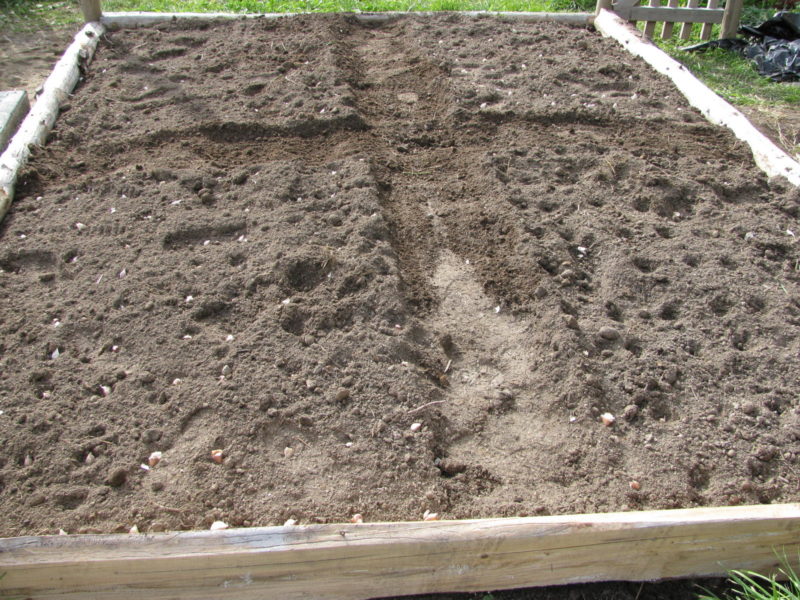
How to plant garlic cloves in a raised bed.
Plant Garlic cloves six inches apart in a pot or garden bed.

I plant the garlic cloves about 6 inches apart, with 8 inches between the rows. This ensures the garlic will get enough direct sunlight. Then, I push each of the cloves about 3 inches of depth below the soil surface.

 You can see the individual cloves in the picture above because I like to try and get the rows nice and straight, so I don’t push them down to seat them and put the soil on top of them until I am finished planting them all. I use the planted ones as markers for the rest of the cloves.

I was able to plant 288 cloves in that space! You can see it doesn’t take a lot of room to grow enough garlic for your family for the winter months.

Our 288 cloves is a LOT of garlic, but we love roasted garlic and we often have 2 whole heads of garlic between us at dinner time.

We also love making Bacon Wrapped Garlic Bites – so yummy as an appetizer!

If you cook the garlic, it is a lot milder than if you eat it raw and it’s so healthy for you! Lots of nutrients and flavor emerge when cooking.

After you plant garlic cloves, add mulch for winter.
After you plant garlic cloves, add mulch to protect them for winter.

How to Plant Garlic in Pots

If you don’t have room for a vegetable garden, you can easily plant garlic in pots, containers or grow bags. Grow some on your patio or balcony – just follow the same premise as for planting in a garden.

Plant your garlic six inches apart in good quality soil. These long rectangular flower pots work really well for growing garlic in a smaller space.

Since garlic doesn’t grow very deep, these pots are an ideal size.

How to Grow Garlic in a Flower Bed

Garlic plants are quite pretty and look nice when they are mixed in with perennial or annual flowers. If you’ve got a few empty spaces in your flower bed, plant some sprouting garlic cloves there!

Tuck three or four alongside any of your flowers or shrubs – they take hardly any room at all and will be easy to find when it’s time for harvesting garlic bulbs.

How to Plant Garlic Cloves
This guide explains exactly how to plant garlic cloves in a variety of locations!

How to Protect Garlic Cloves for Winter

It is a good idea to find a way to protect the garlic cloves for the winter months. Garlic is very hardy but if winter temperatures stay below zero, they really do need something to insulate them from the cold. 

How to Mulch Garlic

Mulch the whole bed with straw once the temperatures get down around freezing. Our temperatures are cold on Fall mornings and maybe close to freezing overnight.

We do not mulch right after planting. Wait until the temperatures go down; if you mulch too early the bed could be warmer than the garlic likes it.

Sometimes here, our garlic gets planted three weeks before we go out and cover with mulch.

adding mulch to cover a garden bed
Cover your garlic bed with straw or spent hay right before the snow flies.

I loosely add about three inches of straw on top of the bed. I don’t tamp it down at all; the rain and snow that is coming will do that. 

Once planted, all you have to do is weed it regularly during the growing season. One of the reasons I plant my Garlic tightly is that it reduces the weeds that come up.

So to get the Garlic in the ground and ready for Winter, it is just a matter of planting the cloves, covering them with soil, then covering them with a good layer of mulch later. You could use hay, straw, grass clippings or leaves.

During the Fall, your Garlic may start to grow and get a few inches of green leaf on them before Winter sets in. It’s OK…you don’t need to do anything to them – just wait for them to appear in Spring.

After planting garlic cloves, each clove will grow to become a garlic bulb.

In the Spring, you may need to remove some of the mulch, especially if you see garlic trying to poke through but not being able to.

If you see any yellow foliage, this is a good sign that the garlic needs more light.

Spring Growth for Garlic

In the Spring the Garlic bulbs will continue to grow. While the green leaves are growing above the soil, the Garlic bulb is growing below the soil. Water it every few days and keep any weeds out.

Garlic scapes growing from garlic plant.
The curled stems are Garlic scapes growing from the plant.

In early summer (think June and early July), you will see the Garlic Scape forming and coming out from the center of the growing stalk. Every Garlic plant will send out one Scape.

As they grow, they start to curl and they look great on the dinner plate cooked whole. Can you see the Scapes?

Garlic plants growing in a garden
Hardneck garlic sets out one scape per plant.

Before you know it, you’ll have lots of green shoots to harvest – just cut them off at the base of the Scape using a knife. I usually just snap them off, it’s much faster.

If you want nice big garlic heads, you MUST take the scapes off. This directs the energy into the bulb below ground, and it will then grow bigger.

Don’t just toss those Scapes onto your compost pile. They taste great!


How to Store Fresh Garlic

For garlic storage, you’ll want to find a place where the room temperature is on the cooler side and there’s good air circulation.

If you store garlic in the refrigerator, it may start to sprout in a couple of days.

Here are several different ways to preserve garlic in oil – including how to freeze garlic.

Now you know how to plant garlic cloves in the garden – plant some this Fall!

Garlic is very easy to grow and hardly takes any room at all. Every garden should have some garlic growing in it!

Freshly dug Garlic tastes nothing like the store bought Garlic you see in the produce section at the supermarket.

You can find good healthy Garlic by buying some at your local Farmer’s Market – ask if it was grown locally.

Just remember you need 1 clove per plant, so buy accordingly. There are roughly 6 – 8 cloves on one head of garlic. You can also buy hardneck garlic bulbs here online.


More Garlic Posts

  • Part 2 of the Garlic series is called “How to Make Pickled Garlic Scapes” 
  • Here’s how you can store garlic in olive oil – plus more ways to store garlic bulbs.
  • Wondering how to roast a garlic bulb? Find out here
  • This Feta Cheese Garlic Spread is a family favourite!


Published 2012, updated July 2022

Filed Under: Garlic, Garlic (4 Part Series), Grow Your Own Vegetables Tagged With: Garlic, Grow Vegetables

How to Save Pea Seed for Planting Next Year

By Annie

You can easily save pea seed to plant next year! Here’s how…

Who doesn’t love to eat fresh garden peas? There’s nothing like snapping a ripe pea pod right off the vine, opening the pod and grabbing a handful of peas to eat.

Peas are so easy to grow and it’s also really easy to start seed saving to sow the following year. 

Save pea seed by shelling and drying
You can save pea seed from any of your pea pods!

We grow lots of sweet peas so we will have lots for eating later on; they are one of our favourite vegetables. And that’s what you should grow too – your family’s favourite vegetables!

Anything from green beans and tomatoes to snap peas and snow peas! Fresh veggies are great for soups, salads, stir fries, and other meals.

You can even grow your own herbs for fresh flavors in your favorite dishes. That way you won’t have to buy them during the winter months. But we like peas especially!

Blanching and then freezing bags of garden peas to enjoy during the winter is a great way to preserve peas. The peas will have that freshly picked flavor even in the dead of winter.

Here’s another great idea – saving your own sweet pea seeds. So whether you grow enough peas only for fresh eating or lots of rows of garden peas so you can preserve some for later, always remember to grow extra pea plants so you will have enough to save pea seed at the end of the gardening season. Here’s how to never buy pea seed again!


How to Save Pea Seed

First, be sure you use heirloom seed. You can buy heirloom seeds online, through an online garden nursery or at the local garden center. Plant your peas (here’s everything you need to know about how to grow peas) in good soil.

Peas are a great choice if this is your first attempt at seed savers, since peas will produce their seed the same season they’re planted and are also largely self-pollinators! No need to worry about potential cross-pollination. Plus, peas are easy to take care of and can also fix nitrogen levels in the soil.

You will need to have trellis, fencing or something like this garden netting for them to grow up as they love to send out little tendrils to grab onto whatever they can find, in order to grow taller. You can also use chicken wire.

After your pods fill with peas and you have started harvesting, just leave some pods on the vines to keep growing. These will become your seed for next year.

What’s the Best Way to Dry Pea Seed?

Save pea seeds drying in a shallow tray
It’s so easy to grow and save your own peas!

There are a few ways to dry pea seed. The very best way is to do it naturally. The ideal thing would be to just let the peas dry naturally on the vine in your garden.

They can stay on the pea shoots for months. When they become dry and brown, carefully pick off the mature pods into a small bucket or basket.

Transfer to a paper envelope, seal and store in a cool place until next year. Remember to label them with the variety name.

Tip: Keep an eye on the pods! You don’t want them to mature so far along that the pod starts to split and the peas begin to spill on the ground.

Garden peas growing along a fence.
Blooming pea vines grow up the garden fence.

Sometimes letting them dry on the vine just won’t work for your situation. Maybe you’re trying to free up garden space. Maybe a later maturing vegetable needs to go in right in the spot where the peas were growing.

Peas are such a nice early season veggie that you CAN easily plant something after the pea harvest.


Can I Dry Fresh Peas?

Yes you sure can! When we aren’t able to just leave the vines on the pea fencing,  here’s how we save our seed. I pick all the pods that look fairly dry and also pick some that are still green but starting to dry out.

Pea pods drying on a tray
Some of these pods are dryer than others, but all of these will be saved for seed.

I bring them in the house and spread the pods out on cookie sheets. Then I give them a stir with my fingers when I walk by. Instead of cookie sheets, you could just use a shallow bowl or even a basket.

Find something to use where you can spread the pea pods out without them piling on top of each other. Keep the pea pods in a single layer to help keep the pods away from each other. You don’t want them touching each other.

Dried pea pods ready for shelling
These dried pea pods are ready now for shelling.

Days later, here is what those pea pods look like. You can see how dry the pods are getting. Just keep letting them dry until the pods are completely dry.

Then, shell the pods. I just do this by hand, but if you had a lot to shell, why not thresh them instead? Just put the pods in a pillow case and smack it against a wall. This will help separate the peas from the pod. Remove the pods and save the seed.

Shelled dried peas on a tray
These partially dried peas won’t be store away for another week, when they are completely dried.

Just because the pea pods looked dry, that doesn’t always mean the actual peas inside are thoroughly dried enough to put away for storage.

Here are the peas after threshing; they are not dry enough yet. So, I will leave them here on the cookie sheet longer and let them dry more.

This could take a couple of weeks and you are always better to let them sit out longer rather than a shorter amount of time. It’s OK if they are very pale green or even, no longer green at all.

Storing Pea Seed

Then they get put into a seed envelope, labelled with their name and the year the seed was gathered. I keep my seeds downstairs in the cool basement. Next year, I bring them up and plant them in the garden!

Chicken dinner with garden peas
Japanese Chicken is a special treat for us along side garden peas.

Want to learn how to blanch and freeze garden vegetables? We love having garden peas alongside our Japanese Chicken – delicious!

This variety of shell pea is called Bounty and they taste wonderful, whether eaten fresh or frozen. Never buy pea seed again – save your own pea seed instead! The only thing to remember is to buy heirloom seed in order to start saving your own seeds.


More Helpful Posts

  • Looking for more Gardening Tips – plus links to our vegetable gardening articles!
  • Everything you want to know about How to Grow Peas in Containers or Garden is right here. Finally! A Food Garden Planner that has everything you need!


Start to save pea seed this year and never have to buy more again!

Stop buying seed - save your own pea seed. Here's how to save heirloom seed. #gardening #seed #heirloomseed #DIYgardenideas
This quick and easy guide will get you started on growing and saving your own pea seeds in no time!

Originally published 2017; last updated October 2022

Filed Under: Grow Your Own Vegetables

8 Ways to Use and Preserve Rhubarb

By Annie

Looking for ways to use and preserve Rhubarb? I’ve got delicious recipes for you!

Spring on a northern homestead, what a wonderful time of year! In many gardens, the first small harvests begin to happen. Along with Asparagus and Jerusalem Artichokes, another early plant in our gardens is Rhubarb, which we usually start picking in June. Read on to find lots of great rhubarb recipes.

Want more articles about preserving food? Check out all of our Preserving Food posts here.

Rhubarb stalks sit beside home canned Rhubarb jam and fresh strawberries.
Delicious Rhubarb recipes for baking, cooking and preserving.

And Rhubarb is a beautiful plant too, so you can easily tuck it in a corner of any flower bed. With its gorgeous huge green leaves, it makes a great backdrop for flowering plants in front.

Mid Spring is peak season for harvesting Rhubarb – whether you grow it in your garden or buy it at the farmer’s market, here are several ways to preserve rhubarb for using later.

Here are 8 great ways to use and preserve Rhubarb (with help from some of my awesome gardening friends).


Harvested stalks ready to use and preserve Rhubarb.

8 Ways to Use and Preserve Rhubarb


Rhubarb growing in the garden
Established Rhubarb bed in the lower garden

Growing Rhubarb

If you haven’t grown Rhubarb before, you may want to know more about how to plant and take care of Rhubarb. Here’s an article I wrote years ago about how to grow Rhubarb. Since it is a perennial, you just plant it once and watch it return every single year.

Diced Rhubarb sits below Rhubarb stalks and leaves


How great is that? Not only is it an inexpensive plant, you get to harvest Rhubarb every spring.

If picked yearly, the plants will live for decades. And you’ll be able to use Rhubarb in delicious recipes like the ones below.


how to make rhubarb wine
Homemade Rhubarb Wine – you’ll find the recipe link below.


Some of you know that we really enjoy making a batch or two of Rhubarb Wine each year. Isn’t it a pretty colour?

We also blend Rhubarb with berries such as Raspberries and Honeyberries, and end up with a tasty Bumbleberry wine.

We use some of our harvest in crisp, cobblers or pies, mixed with berries to add some delicious sweetness. There are a lot of other great ways to use it too. Here are lots of delicious recipes from some gardening friends! Enjoy!

How to Use and Preserve Rhubarb

How to Freeze Rhubarb

Freezing Rhubarb is a great way to preserve it! And it’s easy to do; pick the stalks by grabbing low to the base and then twist to break it off. This is much better than cutting the rhubarb stalks.

Wash stalks, then cut into smaller pieces. Since we like to use frozen rhubarb in our fruit crisps, I dice the stalks into small pieces, then put the rhubarb pieces into a freezer bag or an airtight freezer container.

Most of our fruit crisp recipes call for 4 cups of fruit. Since we like to mix rhubarb with a berry to make crisp, I measure out the diced rhubarb into 2 cup measures before adding to the freezer bag.

Seal the bag, pop into the freezer. When it’s time to use it, we just pull out a bag of frozen rhubarb, let it thaw, then bake or cook with it.

If you like, cut the rhubarb larger, into 1-inch pieces, place in a single layer on baking trays, then pop them in the freezer.

Once frozen, you can transfer them to an container with a tight fitting lid.

We love the flavor of the mixture of rhubarb with strawberries, raspberries or honeyberries.


how to can rhubarb


Pressure Can Rhubarb

Want to learn how to pressure can Rhubarb so you can enjoy it all year long? Home canned rhubarb is a really good way to use some of the harvest, especially if you have large plants that need to be picked. Process pints for use all year round.

We like to use a pint jar for canning Rhubarb but if you have a large family, you may want to can Rhubarb in quart jars instead.

This winter, you’ll be able to grab a jar or two from your pantry and bake a rhubarb crisp or a pie. Or grab a couple of quarts of rhubarb to make a pie.

(Courtesy of Back to Our Roots)


rhubarb recipes

Rhubarb Crisp

Why not bake a delicious Rhubarb Crisp? You can use all Rhubarb for the recipe or mix it up with blueberries or strawberries! Makes a delicious dessert topped with some ice cream!

(Courtesy of Better Hens and Gardens)


rhubarb sauce in a jar

Rhubarb Sauce

Or think of whipping up some yummy Rhubarb Sauce you can use for desserts or an evening treat? Wouldn’t this Rhubarb Syrup be great over ice cream, pancakes or waffles?

Or pour some over homemade cakes, loaves or your morning yogurt.

(Courtesy of Learning and Yearning)


Rhubarb ice cream in a bowl

Rhubarb Ice Cream

Speaking of ice cream, have you ever tried Rhubarb Ice Cream, anyone? I am definitely trying this one! Get the kids to help make it, then grab a big bowl!

(Courtesy of Yearning and Learning)


Rhubarb loaf on a cutting board

Rhubarb Juice

How about some canned Rhubarb juice? This is so refreshing when mixed with ginger ale – perfect on a hot summer afternoon. And the pretty pink colour!

(Courtesy of Grace Garden and Homestead)


rhubarb on a table

Fermented Rhubarb

How about some Fermented Rhubarb? Probiotic Rhubarb Lemonade anyone? Great for your health and tastes a lot like regular Rhubarb. Use some in muffins!

(Courtesy of They’re Not Our Goats)


rhubarb cooking on the stove

Strawberry Rhubarb Jam

Want to make some jam so you can stock your pantry shelves? Try this easy Strawberry Rhubarb Jam!

Making this jam uses a water bath canning method, so you can safely store your extra jars for winter (or anytime, really). Recipe makes about 6 pints of jam.

(Courtesy of Simply Canning)


Try one (or more!) of these 8 ways to use and preserve Rhubarb.

Even one Rhubarb plant will give you a nice big harvest every year. If you have a family, you may want two plants. But pick up some Rhubarb plants this year and start growing! You’ll be glad you did.


More tips for growing Rhubarb 


Everything you want to know about how to grow Rhubarb

Tips for how to harvest Rhubarb in spring

What to do with the Rhubarb flower stalk and the big Rhubarb leaves

Updated tips for making Rhubarb Wine


Rhubarb loaf and ice cream on a table


8 different ways to use Rhubarb


published May 19 2017, updated Jun 2022

Filed Under: Canning, Grow Your Own Fruit, Grow Your Own Vegetables

How Big of a Container Does a Pepper Plant Really Need?

By Annie

Ever wondered what size of container for pepper plants is the best?

We enjoy growing peppers in our greenhouse. We plant some in the vegetable garden but we also grow peppers in containers. If you’re wondering what size of container for pepper plants is the best for growing thriving plants, here’s the ideal.

Choose a pot that is at least 8 inches; a 2 gallon pot is the right size. If possible, though, bump that up to growing pepper plants in a 12 inch pot; this size will give the roots plenty of room to grow. 

Want more articles about gardening? Check out all of our Food Gardening posts here.


What size container for pepper plants. These orange peppers grow in a 12 inch pot

What Size Container for Pepper Plants?

Do Peppers Grow Well in Containers?

They sure do! Peppers are the perfect choice for growing in containers, planters, pots or in a grow bag; they are not a huge bushy plant and you will be surprised at how many peppers will grow on just one plant!

All kinds of sweet bell peppers and hot peppers will do well in containers or in raised beds in the garden.

How Big of a Container does a Pepper Plant Need?

As mentioned above, the ideal container size for growing peppers is 12 inches. But you can grow peppers in smaller containers, they just won’t grow as big or have as many peppers to pick.

How deep should a container be for peppers?

Pots for growing peppers should be at least 10 inches deep. So a pot 12 wide and 10 deep is perfect.

How many pepper plants can I put in a container?

That ideal pot size is meant for growing one pepper plant. If you want to plant two or more, you will be better off choosing a larger pot.


Container size for pepper seeds are these medium styrofoam coffee cups.
Styrofoam coffee cups (reusable!) are the perfect container size for pepper seeds to be started.


How to Grow Pepper Seedlings in Pots, Indoors

We start our peppers from seed in Styrofoam cups (that we reuse many times – I just be sure to wash them out well). I sow seeds into the cups at the beginning of April, then set them in seed trays under a grow light in our basement.

The photo above was taken May 6 (five weeks later), when I moved the pepper seedlings upstairs to set them in a south-facing window. This shows you just how slow growing pepper plants are. So be patient when growing pepper from seed.

I like to let to let the young plants get nice and root bound in the cups before transplanting them into larger pots.


For in depth information on how to grow peppers from seed and things like germination times, click over to read the full article!


Sometimes, we transplant the peppers right into the ground in the greenhouse. This depends on the outside temperatures as our Greenhouse is unheated.

Where we live, in a northern climate, our growing season is not as long  – maybe five months. Also, our nightime temperatures are quite cool, too cool for pepper plants out in the open air.

Additionally, we can’t even go by our “last frost date”. Here, we have seen frost in July (surprise!) which has killed back our potato plants. For all these reasons, we usually only grow peppers in our unheated greenhouse.


Peppers in small containers ready to be transplanted in the greenhouse
These peppers have been growing in these small containers and are now ready for transplanting into larger pots.

Here are healthy peppers waiting to be transplanted into the greenhouse. We’ve got a mix of Sweet Peppers, Bell Pepper plants and Hot Peppers. We will often grow a great mix of pepper varieties including Orange Habaneros, and Jalapenos to use in our easy homemade salsa recipe (which we then water bath can!).

How to Transplant Pepper Plants into Larger Pots

Before transplanting your pepper plants into larger containers, be sure to water them well. This will help reduce shocking the plants when moving them.

Fill your larger container 2/3 full with a mix of rich potting soil and compost (or other amendment). Water this soil before transplanting.

Tip the pepper plant upside down, with your fingers on either side of the main stem and give the container a knock with your hand. This helps loosen the soil around the edge of the pot.

Remove the plant and plant it in the larger pot, adding soil around the pepper plant. Hold it with one hand and add potting mix with the other, pressing down slightly (don’t overpack).

If the roots are rootbound from the smaller pot, carefully open the roots a bit with your fingers. This will be easier if the rootball has been watered.


Hot and Sweet Peppers growing in Pots
2 gallon pots are perfect for growing pepper plants – lots of room for their roots.

These peppers have been transplanted from the cups into 2 gallon size pots. Lots of room for these compact plants to grow nice and big! Every plant is labelled with the variety.

If you feel the plant needs it, add a stake to the pot and loosely tie the plant to the stake.

I stick little pieces of biodegradable styrofoam peanuts in the drainage holes. Excess water can still get out, but I find a lot less dirt washes out with the draining water.


peppers in smaller pots on the porch
You can plant two peppers into one pot but know you will likely get smaller plants with fewer peppers.


I like to have a few pepper plants on our decks as container plants, because the foliage is so beautiful when they’re nice and healthy. These pots are smaller than a 2 gallon container, but there is room for 2 peppers to grow.

You can see that peppers can be put into containers of all sizes. You can do one pepper in a pot 12 inches wide. If you’ve got large circular pots, plant 3 pepper plants together in there.

How Much Sun do Peppers Need?

Peppers crave full sun and heat, so be sure to put them outside in those conditions. If you’ve got a concrete retaining wall, walkway or patio, put a few pots of peppers on the concrete.

They will love and appreciate the extra heat being soaked up by the sun hitting the concrete.

They can also take some shade, but they really do love the sun.


peppers growing in containers


Our Best Tips for Growing Peppers in Containers

Once you figure out what size container for growing pepper plants is the best, it’s time to think about the soil you will be planting in. 

What soil is best for Growing Peppers?

Use a rich potting soil as a great base soil for growing peppers in pots. You don’t want the soil to be heavy and compact; light and airy is the way to go. Then add some natural fertilizers like these:

What fertilizer should I use for my Pepper plants?

While there are a number of name-brand fertilizers on the market, it is so easy to provide your plants with fresh, natural, organic fertilizers – and for a lot less money. And, you can make your own fertilizer for peppers!

Some of the best natural fertilizers for growing peppers in pots are:

  • compost
  • aged animal manure
  • fish fertilizer

Use Compost for Fertilizing

Nothing beats a great compost pile for providing all the fertilizer you might need for your garden. It’s the ultimate way to recycle your fresh, organic waste like eggshells, vegetable and fruit trimmings, coffee grounds, and more.

Mix it in a pile with yard waste and let it age, turning it and mixing it periodically as it breaks down, then add your compost to your containers of peppers. If you have lots of compost, you can plant your pepper plants in 100% compost instead of mixing it with soil.

Use Well Aged Animal Manure for fertilizer

Many gardeners prefer animal manure above everything else. After all, if you also raise animals, you have plenty of it available, right? Just make sure you let it age in a nice pile for a few months before using it so that it won’t be too rich for your plants. Mix some in with potting soil before planting you pots of peppers.

Fish Emulsion fertilizer

If your soil is nitrogen deficient, a great source of nitrogen is Fish Emulsion. You can order it online here or find it at your local garden shop or hardware store, and you’ll want to dilute it in water before using it.

However, be a bit careful with this one. If your plants get too much nitrogen, they’ll look green and healthy and put out lots of leaf growth, but produce a lot less food.


Growing Pepper Plants in containers
Same Pepper plants a few months later – loaded with Peppers!

Do Pepper Plants like Epsom Salts?

Peppers (along with tomatoes) love Epsom Salts. Peppers and tomatoes grow best when they have enough Magnesium, a mineral that is often deficient in garden soil.

Epsom Salt is a natural mineral compound that includes 10% Magnesium. Highly soluble, plants absorb it easily when Epsom Salt is added directly to the soil.

But your plants will absorb it even easier when you spray it directly on their leaves. Simply mix two tablespoons of Epsom Salts into a gallon of water and spray it on your plants as you water. 

Not only will your pepper plants grow better, but they will also produce more. Bonus – your peppers will taste even better!

(Note: Keep in mind that while Epsom Salt is a wonderful supplement to your Pepper and Tomato plant care, it is not meant to take the place of a great organic fertilizer.

All of your garden plants – including your peppers and tomatoes – need a good source of nutrition to grow large, healthy, and be at their most productive.)

Do you Keep Plants in Plastic Pot?

Yes, heavy plastic pots can definitely be used for growing peppers in containers – we grow ours in plastic pots right through to the end of the season.

Do Peppers grow Bigger in Bigger Pots?

Optimally, peppers are happiest when they have a little room to spread their roots. A container that is at least 12 inches across is ideal for growing peppers and should allow your pepper plant to grow large with lots of delicious peppers for your family to enjoy.

You can grow two to three nice peppers together in a 10-gallon bucket.

However, peppers are surprisingly adaptive to their environment, as I came to learn! 

What Happens if I Plant Peppers in a Tiny Pot?

Well, really you can grow peppers in tiny pots and I have got to show you this! Let me explain what happened. One year, I ran out of room putting peppers in the ground in the greenhouse.

We had so many plants I also used up all the 2 gallon pots I had. After planting, I still had a few Styrofoam cups with pepper plants left over. These are the original reused coffee cups that I had started the seeds in.

I left them on the greenhouse shelf, until I could scrounge up more containers to transplant these peppers into.

But…life happened and I didn’t get around to it.

I just kept watering the seedling cups every day while I was checking out the rest of the veggies. Here’s a picture of the end result!


Small size container for pepper plants
Extreme small size pots for growing Peppers – but look at those Peppers!


There’s 3 peppers on each of those plants and they even turned colour! Look at the size of those peppers in these tiny cups!

Ideally, remember to grow one pepper to a pot of at least 12 inches. But remember, when it comes to what size container for pepper plants, a small pot will work! If you live in an apartment with a balcony, you could easily grow some peppers in pots or containers.

This year, we are determined to grow and harvest a lot of peppers. The peppers will be preserved by dehydrating, pickling and maybe even turning into jelly.

No matter what size container for pepper plants, as long as you take care of them they will grow.

For in depth information on how to grow peppers from seed, click over to read the full article!

When you get your pepper harvest, why not make some of this delicious Jalapeno Plum Jelly? It’s a favorite here.


More Gardening Info for you

Here are some of our weird ways we upcycle used containers for seed starting!

Is your garden neglected? Have you moved into a home with an unkept yard? Here’s how to rejuvenate a tired garden and yard.

Got heavy clay in your garden area? Here’s how to improve the quality of heavy clay soil – it’s what we do on a regular basis here and it’s easy!

All about how to get rid of Poison Ivy naturally! Yes, you can

More info about growing Peppers


Originally published 2014; latest update April 2025

Filed Under: Greenhouse, Grow Your Own Vegetables

Top Gardening Tips for Beginners

By Annie

 These top gardening tips for beginners can be a guide on
what to consider before buying any plants.

If you are a beginner gardener or new to gardening, you may have already been tempted to visit your local garden center to load up with beautiful flowers, fruit trees or vegetable seedlings, right?

Hold up a minute….do you know those particular plants and shrubs will thrive in your yard? I mean, you can always take the chance. It might work, but the odds might be against it.

Gardening tips for beginners to grow vegetables
These gardening tips for beginners will help you grow your best garden ever!

Gardening Tips for Beginners

Not every plant included in your gardening zone will thrive in every single yard! It depends on several things – read on for some of our easy gardening tips for beginners to learn when it comes to creating a beautiful yard.

And further down, you’ll find links to many of the relevant articles here about:

  • growing vegetables
  • planting flowers
  • creating flower beds
  • how to build a small greenhouse
  • and even more!

When it comes to gardening, you are better off to begin with a plan in order to save time, money and unnecessary heartache in the future.

Once you figure out a few things about your particular yard, you will have a much better idea of what shrubs, perennials and annuals you should spend your money on.

You’ll also be more confident that whatever you do purchase has a good chance of surviving in your own yard. Not every yard is the same, as we will see!

Here are our best 5 tips new gardeners should keep in mind before running off to the garden store:

Gardening Tips for Beginners


What Are Your Neighbours Growing?

That being said, take notice of what your neighbours are growing. This is a great initial source of proven suggestions for the new gardener.

If your neighbours grow buddleia, hebe, lilac, their hydrangeas are blue and their Japanese acers are grown in pots, then there’s a very good chance that their soil is alkaline.

This is a good “tell” that your native soil is also probably alkaline. A simple soil pH meter will confirm this, but trust your eyes as a first impression.

Alkali-loving plants will not grow well at all in acidic soil (and vice-versa) after a few years, so don’t waste your money but…

A naturally acid garden bed can contain neutral/alkaline areas or vice-versa. Just amend the soil in that particular bed to change the pH of the soil there.

You just need to know where these spots are and keep a written garden plan for future reference! 

A soil test will tell you for sure – invest in a test kit!


Work with Nature

It is always cheaper and lower maintenance to know your garden area and create your garden based upon what nature has already provided.

If you don’t work with nature, there will likely be a lot of importing of soil, rock, drainage material etc.

An extreme example of this is to have a site with a high water table and the gardener who wishes to grow cacti or Mediterranean herbs.

The only way to succeed would be to grow all the plants in containers and not the natural ground. Otherwise, you would be buying replacement stock every year!

In order to save money, try your best to work with what you already have. If money isn’t an issue, amend your soils with lots of healthy compost and organic fertilizer.


Raised Garden Beds growing vegetables
Using raised beds is a great alternative when you have poor soil.

Raised Beds are Perfect for Gardening in Poor Soil

It is quite common to have raised beds containing soil and a level of drainage that is very different from the rest of the plot. This enables very different plants to grow that would not be successful growing in the ground.

Many gardeners choose this method, especially if their native soil is terrible, full or rocks or pure sand. Instead of doing all the work to bring the soil up to good health, they work with what they have.

Which is nothing good (in the soil) – so consider planting in containers instead and fill those pots with healthy compost and soil.

A raised bed has the added advantage of bringing the plants to a more accessible level that makes gardening much easier. This works perfectly for older people who love gardening and raised beds are not hard to make.

In areas with high winter rainfall, it’s easy to add a seasonal cover to a raised bed to protect more tender plants from frost too much rain.

Want to keep track of everything you do in your garden this year, so you’ve got a perfect record to use next year?

Look at this Vegetable Garden Planner!

Vegetable Garden Planner Printable: Grow Your Best Garden Ever

Design Your Garden with 3D in Mind

Don’t forget the third dimension! Plant a clematis or honeysuckle beneath a shrub or climbing up a tree to provide extra interest at trunk height. 

If this plant flowers in mid-summer, add a pair of climbers that flower early and late summer for added colour throughout the season – and they will occupy the same ground space!

Don’t forget! Not all clematis and honeysuckle are climbers. Clematis hendersonii is a purple/blue ground cover clematis, while Lonicera involucrata should be treated as a herbaceous bush with its double-barrelled flowers of red and yellow.

Want to lead the eye to a certain garden spot? Tall, narrow conifers can make ideal natural frames for your path or a view.

Know Your Soil Temperature

A soil thermometer is a very useful device. You can leave one in the ground to tell you when to take out your borderline tender plants in the autumn and when to plant out in spring. A ground thermometer can also explain why your more tender plants are not surfacing!

Even with warm spring temperatures, it takes awhile for the soil to warm up. The soil has been resting over the colder winter and it may take longer than you think to warm up enough for perennials to pop up again.

Questions for Beginner Gardeners to Ask Themselves

Before you go and buy any trees, shrubs or perennial flowers, ask yourself these questions? Find out the answers and make some notes. 

  • In which direction does your garden face?
  • From which direction does your prevailing wind come from in summer? What about in winter?
  • What are the expected seasonal temperatures in your front and back yard? Are they different?
  • Can you describe your soil? Is it clay? Shale? Sand? Is it light? Heavy?
  • Is your yard well drained? Where are any areas that collect water in the winter that won’t drain away.
  • Is your ground acid, alkaline or neutral?

So, now you know some of the best tips for beginner gardeners to keep in mind and start figuring out. Where do you want to go from here? 

Here are links to some of our best vegetable gardening, fruit gardening and flower gardening posts. You’ll find lots of gardening tips for beginners in these articles! Here’s how to use less water in the vegetable garden.


Freshly harvested vegetables
Read these articles with more tips for beginning gardeners.

Vegetable gardening tips for beginners:

How to Grow Potatoes – learn our hack for growing 3 pounds of potatoes from 1 single potato.

How to Grow Peas – plant them along a fence line to save having to string up netting.

Grow All My Food for a Year – serious about growing vegetables? You want to read this….

How to Grow Rhubarb – Call it a vegetable, call it a fruit…Rhubarb is the perfect perennial for cold weather climates.

How to Grow Beans – we grow pole beans in a greenhouse – these tips work for wherever you will grow pole or bush beans.

Our Vegetable Garden Plan – Here’s how we decide what to grow and how much to grow.

How to Grow Carrots – Seed them a little thicker, then thin and eat baby carrots till the others grow big!

How to Grow Peppers – Sweet or hot, in pots or in the ground, here’s all you need to know.

How to Grow Onions – If you grow them from sets, it saves a lot of time!

More Articles about How to Grow Vegetables

How to Grow Garlic – This 4 part series covers planting, growing, harvesting and curing garlic.

How to Grow Beets – use them small for pickling beets or let them grow bigger for side dishes.

Vegetable Garden Planner and Journal – Everything you need to keep you on schedule from seeding to harvest!

How to Grow Cabbage – Start to grow cabbage from seed then transplant into the garden.

How to Grow and Transplant Tomatoes – Yes, here’s why you always need to transplant tomato seedlings.

The 8 Fastest Growing Vegetables – yup, you’ll be eating these within 25 – 60 days!

How to Grow Zucchini – You may only need a couple plants, but there are some growing hacks you really need to know.


strawberries growing on plants
Read these articles to learn gardening hacks for growing fruit.

Learn how to grow fruit:

How to Grow Strawberries – Big, juicy strawberries – our hacks for growing big strawberries

How to Grow Honeyberries (Haskap Berries) – So healthy and delicious in smoothies or baking.

Berries in the North – We can grow ’em big here!

How to Grow Raspberries – and how to maintain and control those wild Raspberry canes!

Transplant a Saskatoon Bush – native to our area but sometimes we want to move them over a few feet!

How to Plant Fruit Trees – We planted apple trees; these hacks work for any kind of fruit tree.


Serious about growing food this year? Look at our book and start planning!
 

Grow Enough Food for a Year


A bunch of pretty blooming tulips.
Read these articles for more flower gardening tips for beginners.

Flower Gardening Tips for Beginners

How to Plant Flower Bulbs – plant in Fall, enjoy pretty flowers every Spring!

Learn to Grow Hops – Beautiful to look at, but there’s something you need to know before planting!

Create a New Flower Bed – Sun loving perennial flowers take center stage.

Perfect Plants for Shady Areas – great for side yards or anywhere with low light.

How to Grow Valerian Herb – So fragrant, this perennial will become a favourite.


pruning shears
More gardening tips and articles for you

More Gardening Tips

Pruning Tips – for shrubs and fruit trees

DIY Recipes for Homemade Rooting Hormone – use these to start new shrubs

How to Rejuvenate an Old Overgrown Garden – great ideas for restoring a beautiful yard

How to get rid of Canada Thistle in your yard

A Pretty Winter Garden – these shrubs add winter interest and colour!

Gardening Hacks to Get the Most from a Small Garden – grow an amazing garden in a tiny space

Gardening Gifts for Hardcore Gardeners – Love a Gardener? Here you go…

Putting the Garden to Bed – Garden season’s over? Do these things before you take a rest.

All Natural Weed Killer Recipe – even works on poison ivy!

How to Improve Heavy Clay Soil – plant this and you’ll see a big improvement

Plant Clover instead of Grass – Bring amazing benefits to your garden by using clover, here’s why.

More Gardening Resources for you


Hopefully these top gardening tips for beginners have helped! Get your garden growing today!


Gardening for beginners with flowers and vegetables

Filed Under: Flowers, Gardening, Grow Your Own Fruit, Grow Your Own Vegetables

  • « Previous Page
  • 1
  • 2
  • 3
  • 4
  • …
  • 10
  • Next Page »

Connect With Us!

  • Email
  • Facebook
  • Instagram
  • Pinterest
  • Twitter

Search this site

Generic selectors
Exact matches only
Search in title
Search in content
Post Type Selectors
Search in posts
Search in pages

Our Most Popular Posts

Garlic cloves in oil

How to Preserve Garlic in Oil – and Other Ways to Store Garlic

a open jar of pickled brussel sprouts on a counter

Easy Pickled Brussels Sprouts Recipe (Water Bath Canning)

Privacy Policy

Read about our Privacy Policy

Disclosure

Please note that some of this site’s links are affiliate links, and CountryLivinginaCaribooValley.com is a participant in the Amazon Services LLC Associates Program, an affiliate advertising program designed to provide a means for us to earn fees by linking to Amazon.com and affiliated sites. At NO ADDITIONAL COST TO YOU, I will earn a small commission, if you purchase them. I recommend them as they are good products.

Theme Design By Studio Mommy · Copyright © 2026