Country Living in a Cariboo Valley

Homesteading in BC

  • How to Get Started
  • Vegetable Gardening
  • Preserving Food
  • Recipes
  • Homemade Wine Recipes
  • About Us
  • Work With Me
  • Shop
    • Vegetable Garden Planner Printable: Grow Your Best Garden Ever
    • Grow Enough Food for a Year
    • Delicious Dandelions: A Recipe Collection
    • Dirt to Dollars: Selling at the Farmers Market
    • 8 Pounds in 8 Weeks: Raising Chicks for the Dinner Table
    • Making Wild Wine
    • Build a Hanging Chicken Feeder
    • 15 Things to Know About Living in the Country

How Big of a Container Does a Pepper Plant Really Need?

By Annie

Ever wondered what size of container for pepper plants is the best?

We enjoy growing peppers in our greenhouse. We plant some in the vegetable garden but we also grow peppers in containers. If you’re wondering what size of container for pepper plants is the best for growing thriving plants, here’s the ideal.

Choose a pot that is at least 8 inches; a 2 gallon pot is the right size. If possible, though, bump that up to growing pepper plants in a 12 inch pot; this size will give the roots plenty of room to grow. 

Want more articles about gardening? Check out all of our Food Gardening posts here.


What size container for pepper plants. These orange peppers grow in a 12 inch pot

What Size Container for Pepper Plants?

Do Peppers Grow Well in Containers?

They sure do! Peppers are the perfect choice for growing in containers, planters, pots or in a grow bag; they are not a huge bushy plant and you will be surprised at how many peppers will grow on just one plant!

All kinds of sweet bell peppers and hot peppers will do well in containers or in raised beds in the garden.

How Big of a Container does a Pepper Plant Need?

As mentioned above, the ideal container size for growing peppers is 12 inches. But you can grow peppers in smaller containers, they just won’t grow as big or have as many peppers to pick.

How deep should a container be for peppers?

Pots for growing peppers should be at least 10 inches deep. So a pot 12 wide and 10 deep is perfect.

How many pepper plants can I put in a container?

That ideal pot size is meant for growing one pepper plant. If you want to plant two or more, you will be better off choosing a larger pot.


Container size for pepper seeds are these medium styrofoam coffee cups.
Styrofoam coffee cups (reusable!) are the perfect container size for pepper seeds to be started.


How to Grow Pepper Seedlings in Pots, Indoors

We start our peppers from seed in Styrofoam cups (that we reuse many times – I just be sure to wash them out well). I sow seeds into the cups at the beginning of April, then set them in seed trays under a grow light in our basement.

The photo above was taken May 6 (five weeks later), when I moved the pepper seedlings upstairs to set them in a south-facing window. This shows you just how slow growing pepper plants are. So be patient when growing pepper from seed.

I like to let to let the young plants get nice and root bound in the cups before transplanting them into larger pots.


For in depth information on how to grow peppers from seed and things like germination times, click over to read the full article!


Sometimes, we transplant the peppers right into the ground in the greenhouse. This depends on the outside temperatures as our Greenhouse is unheated.

Where we live, in a northern climate, our growing season is not as long  – maybe five months. Also, our nightime temperatures are quite cool, too cool for pepper plants out in the open air.

Additionally, we can’t even go by our “last frost date”. Here, we have seen frost in July (surprise!) which has killed back our potato plants. For all these reasons, we usually only grow peppers in our unheated greenhouse.


Peppers in small containers ready to be transplanted in the greenhouse
These peppers have been growing in these small containers and are now ready for transplanting into larger pots.

Here are healthy peppers waiting to be transplanted into the greenhouse. We’ve got a mix of Sweet Peppers, Bell Pepper plants and Hot Peppers. We will often grow a great mix of pepper varieties including Orange Habaneros, and Jalapenos to use in our easy homemade salsa recipe (which we then water bath can!).

How to Transplant Pepper Plants into Larger Pots

Before transplanting your pepper plants into larger containers, be sure to water them well. This will help reduce shocking the plants when moving them.

Fill your larger container 2/3 full with a mix of rich potting soil and compost (or other amendment). Water this soil before transplanting.

Tip the pepper plant upside down, with your fingers on either side of the main stem and give the container a knock with your hand. This helps loosen the soil around the edge of the pot.

Remove the plant and plant it in the larger pot, adding soil around the pepper plant. Hold it with one hand and add potting mix with the other, pressing down slightly (don’t overpack).

If the roots are rootbound from the smaller pot, carefully open the roots a bit with your fingers. This will be easier if the rootball has been watered.


Hot and Sweet Peppers growing in Pots
2 gallon pots are perfect for growing pepper plants – lots of room for their roots.

These peppers have been transplanted from the cups into 2 gallon size pots. Lots of room for these compact plants to grow nice and big! Every plant is labelled with the variety.

If you feel the plant needs it, add a stake to the pot and loosely tie the plant to the stake.

I stick little pieces of biodegradable styrofoam peanuts in the drainage holes. Excess water can still get out, but I find a lot less dirt washes out with the draining water.


peppers in smaller pots on the porch
You can plant two peppers into one pot but know you will likely get smaller plants with fewer peppers.


I like to have a few pepper plants on our decks as container plants, because the foliage is so beautiful when they’re nice and healthy. These pots are smaller than a 2 gallon container, but there is room for 2 peppers to grow.

You can see that peppers can be put into containers of all sizes. You can do one pepper in a pot 12 inches wide. If you’ve got large circular pots, plant 3 pepper plants together in there.

How Much Sun do Peppers Need?

Peppers crave full sun and heat, so be sure to put them outside in those conditions. If you’ve got a concrete retaining wall, walkway or patio, put a few pots of peppers on the concrete.

They will love and appreciate the extra heat being soaked up by the sun hitting the concrete.

They can also take some shade, but they really do love the sun.


peppers growing in containers


Our Best Tips for Growing Peppers in Containers

Once you figure out what size container for growing pepper plants is the best, it’s time to think about the soil you will be planting in. 

What soil is best for Growing Peppers?

Use a rich potting soil as a great base soil for growing peppers in pots. You don’t want the soil to be heavy and compact; light and airy is the way to go. Then add some natural fertilizers like these:

What fertilizer should I use for my Pepper plants?

While there are a number of name-brand fertilizers on the market, it is so easy to provide your plants with fresh, natural, organic fertilizers – and for a lot less money. And, you can make your own fertilizer for peppers!

Some of the best natural fertilizers for growing peppers in pots are:

  • compost
  • aged animal manure
  • fish fertilizer

Use Compost for Fertilizing

Nothing beats a great compost pile for providing all the fertilizer you might need for your garden. It’s the ultimate way to recycle your fresh, organic waste like eggshells, vegetable and fruit trimmings, coffee grounds, and more.

Mix it in a pile with yard waste and let it age, turning it and mixing it periodically as it breaks down, then add your compost to your containers of peppers. If you have lots of compost, you can plant your pepper plants in 100% compost instead of mixing it with soil.

Use Well Aged Animal Manure for fertilizer

Many gardeners prefer animal manure above everything else. After all, if you also raise animals, you have plenty of it available, right? Just make sure you let it age in a nice pile for a few months before using it so that it won’t be too rich for your plants. Mix some in with potting soil before planting you pots of peppers.

Fish Emulsion fertilizer

If your soil is nitrogen deficient, a great source of nitrogen is Fish Emulsion. You can order it online here or find it at your local garden shop or hardware store, and you’ll want to dilute it in water before using it.

However, be a bit careful with this one. If your plants get too much nitrogen, they’ll look green and healthy and put out lots of leaf growth, but produce a lot less food.


Growing Pepper Plants in containers
Same Pepper plants a few months later – loaded with Peppers!

Do Pepper Plants like Epsom Salts?

Peppers (along with tomatoes) love Epsom Salts. Peppers and tomatoes grow best when they have enough Magnesium, a mineral that is often deficient in garden soil.

Epsom Salt is a natural mineral compound that includes 10% Magnesium. Highly soluble, plants absorb it easily when Epsom Salt is added directly to the soil.

But your plants will absorb it even easier when you spray it directly on their leaves. Simply mix two tablespoons of Epsom Salts into a gallon of water and spray it on your plants as you water. 

Not only will your pepper plants grow better, but they will also produce more. Bonus – your peppers will taste even better!

(Note: Keep in mind that while Epsom Salt is a wonderful supplement to your Pepper and Tomato plant care, it is not meant to take the place of a great organic fertilizer.

All of your garden plants – including your peppers and tomatoes – need a good source of nutrition to grow large, healthy, and be at their most productive.)

Do you Keep Plants in Plastic Pot?

Yes, heavy plastic pots can definitely be used for growing peppers in containers – we grow ours in plastic pots right through to the end of the season.

Do Peppers grow Bigger in Bigger Pots?

Optimally, peppers are happiest when they have a little room to spread their roots. A container that is at least 12 inches across is ideal for growing peppers and should allow your pepper plant to grow large with lots of delicious peppers for your family to enjoy.

You can grow two to three nice peppers together in a 10-gallon bucket.

However, peppers are surprisingly adaptive to their environment, as I came to learn! 

What Happens if I Plant Peppers in a Tiny Pot?

Well, really you can grow peppers in tiny pots and I have got to show you this! Let me explain what happened. One year, I ran out of room putting peppers in the ground in the greenhouse.

We had so many plants I also used up all the 2 gallon pots I had. After planting, I still had a few Styrofoam cups with pepper plants left over. These are the original reused coffee cups that I had started the seeds in.

I left them on the greenhouse shelf, until I could scrounge up more containers to transplant these peppers into.

But…life happened and I didn’t get around to it.

I just kept watering the seedling cups every day while I was checking out the rest of the veggies. Here’s a picture of the end result!


Small size container for pepper plants
Extreme small size pots for growing Peppers – but look at those Peppers!


There’s 3 peppers on each of those plants and they even turned colour! Look at the size of those peppers in these tiny cups!

Ideally, remember to grow one pepper to a pot of at least 12 inches. But remember, when it comes to what size container for pepper plants, a small pot will work! If you live in an apartment with a balcony, you could easily grow some peppers in pots or containers.

This year, we are determined to grow and harvest a lot of peppers. The peppers will be preserved by dehydrating, pickling and maybe even turning into jelly.

No matter what size container for pepper plants, as long as you take care of them they will grow.

For in depth information on how to grow peppers from seed, click over to read the full article!

When you get your pepper harvest, why not make some of this delicious Jalapeno Plum Jelly? It’s a favorite here.


More Gardening Info for you

Here are some of our weird ways we upcycle used containers for seed starting!

Is your garden neglected? Have you moved into a home with an unkept yard? Here’s how to rejuvenate a tired garden and yard.

Got heavy clay in your garden area? Here’s how to improve the quality of heavy clay soil – it’s what we do on a regular basis here and it’s easy!

All about how to get rid of Poison Ivy naturally! Yes, you can

More info about growing Peppers


Originally published 2014; latest update April 2025

Filed Under: Greenhouse, Grow Your Own Vegetables

How to Grow Runner Beans in the Greenhouse

By Annie

Incredibly versatile and super delicious, runner beans can be a great veggie to add to your plate. Here’s how you can grow them in your greenhouse! 

We love green beans, and usually grow pole beans (also called runner beans) every year. I try to can up at least four dozen pint jars of beans every year to store in our Cold Room.

Because I want to be able to put up as many jars as possible, I look for plants that will give us the highest yields in a small growing space. Even though I look at different varieties of runner beans,  I usually end up planting Scarlet Runner pole beans. I’ll get a much higher yield growing these beans as opposed to bush beans.

chopped runner beans
Growing runner beans is always a great idea! You can get large harvests of green beans from a few plants in a small area of your garden.

How to Sow Runner Beans in a Greenhouse

They are the same bean, but the bush bean stays small and the pole beans, well, they climb poles! Since our temperatures can fluctuate so much from morning to night, we decided to not take any chances and plant the beans in our homemade Greenhouse. Beans do NOT like a frost.

greenhouse
Growing runner beans in a greenhouse is actually easier than you’d think!

Our Greenhouse has served us really well and we have been able to grow lots of common beans, tomatoes and peppers. 10 mm poly is recommended for covering Greenhouses, but we used regular  Builder’s Poly (6mm) that we had left over from building projects. 

We built our greenhouse right over the manure and compost piles, saving us a lot of time and ensuring great soil. Here’s how we built a simple DIY Greenhouse for under 200!

greenhouse gardener's companion book
An excellent book to get your hands on if you’re exploring greenhouse gardening.

If you’re thinking of building your own greenhouse (and why not?) here’s a great book to get some ideas from. I bought it the year before we built ours and had the chance to read it over several times. There are a lot of great tips and hints in the book.

garden
Runner beans can be grown outdoors too, but you’ll need to be careful about the frost.

Can I Grow Green Beans in a Greenhouse?

Yes! You absolutely can grow green beans in a greenhouse or a hoop house. If you have a soil floor in the greenhouse, you can just plant beans seeds (or bean seedlings) right into the ground. 

If you have a small garden or a small greenhouse, I would recommend growing these climbing beans with some kind of cane or wigwam support structure as you get much larger harvests in a small space.

Runner beans growing around supports in a greenhouse
Gardening tips for growing beans in a greenhouse.

Is a Greenhouse Necessary to Grow Green Beans? 

No, not all. You don’t need a greenhouse to grow beans. 

People can grow beans outside here in Zone 3, but remember that beans are a heat loving plant and cannot take any frost. Whether you can grow them outside in your garden depends on your night time temperatures.

When I do grow beans in the vegetable garden, I grow bush beans. Then I cover the leaves with Remay cloth every evening and remove it every morning.

This can get to be quite a pain on the daily chore list and if I even forget ONE time to put the cover back on, I may pay the price. It depends on how cool it gets that same evening.

The beans may be fine in the morning or they could be frosted over – they can never come back from that. Mulch can also help protect them. You don’t want slugs or snails getting to your beans!

fresh new runner bean plant
Growing beans in your greenhouse can minimize the risk of frost damage, and will in turn, increase your yield!

Tips & Tricks to Grow Runner Beans in a Greenhouse

One of the best parts is the fact that planting pole beans in the greenhouse minimizes the risk of frost damage and boosts up the harvest potential. It’s toasty warm in there all day long, and I make sure to water at least twice a day.

With it as hot as it is right now here, I’ve been watering three times a day. Usually when we have a larger garden planted we use a lot of water timers and soaker hoses, but I didn’t do that this year.

It is important to remember that runner beans need a lot of soil moisture, which is why, growing them in a greenhouse is actually perfect. 

garden
You can choose to hand water the plants or use an oscillating sprinkler.

The main garden is small enough this year to handle with one oscillating sprinkler. The Berry/Garlic Bed has another sprinkler set up, so this year, it’s just a matter of turning the tap on and off.

When to Plant Runner Beans in Greenhouse in Canada?

If you live on the coast in Canada, you’ll be able to plant bean seeds in the ground much earlier than we can. We are in Zone 3 and we need start our beans in the house as seedlings.

Beans like a warmer soil temperature – beans like 10 C which is about 50 F. And it takes a while for our soil to warm here in the spring. So we get a head start and plant bean seeds in the house under growing lights. It’s often most efficient to start indoors a few weeks before the last frost.

Later we transplant them into the garden (if they are bush beans) or into the greenhouse (if they are climbing beans). The beans plants are usually transplanted around mid-June or any time in the late spring to early summer.

black bottles with plants
Using black bottles can help grab warmth and collect heat. Making them is pretty easy too! 

Using Black Bottles for Heat in a Greenhouse

We use these bottles as heat collectors during the season. That’s why they are sitting inside the teepees; we fill them with water and spray paint them black. This will help them get nice and hot when the sun is shining and release that heat late in the evening when the temperatures go down.

During the Winter, those bottles are tied onto the tarp that we put over the greenhouse. The bottles weigh down the tarp, in case of winds.

We’ve been using this system ever since we first built the greenhouse. It’s an inexpensive way to get more heat to the plants and protect the greenhouse in winter.

How to Support Pole Beans – Bean Trellis

Before you go ahead and get started, remember to first find the right support to grow the beans and support their lanky frame. 

Grow pole beans using tree branches for support in the greenhouse.
You can also use tree branches as teepees to support the runner beans!

We used Alder branches to make the runner bean teepees. Easy to get and easy to hammer them into the ground. I like to plant 2 or 3 bean seeds around each of the teepee poles. As long as my teepee supports are thick, they can hold a lot of bean vines without any problems.

You can see I stapled a layer of Remay cloth all around the inside of the Greenhouse. It adds about 2 degrees and when the temperatures dip here, those 2 degrees can make the difference of having food or not. I’ll take what I can get.

How to Get Pole Beans to Grow Faster

  • Runner beans need regular watering. Don’t let the soil dry out too much.
  • Climbing beans like well drained soil so make sure your soil is not too heavy (like clay soil) to promote faster germination.
  • Keep picking beans off the plant. If you let bean pods get too mature, it signals the plant to slow down production.
growing runner beans
The runner beans grab on to any kind of support they find and grow around them.

Now the scarlet runner beans have grown up past the top of the teepees, and the flowers are forming. Don’t those plants look healthy?

They will just keep growing and wrapping themselves around anything that can support them.

Should I pinch out runner beans?

One the plants are as tall as you like, pinch out the top of the plant. This will encourage more beans to start growing and the bean plant will start sending out more shoots.

Mid to late summer, we pinch out the top of every plant. This sends more energy into setting bean pods – plus, our evening temperatures are starting to dip down, so it’s time for the plant to stop growing bigger and start putting everything it has into growing the bean pods bigger.

What is the ideal soil temperature to grow green beans?

Beans love soil that is between 50 – 85F. Because of this, you need to be sure to have some way to cool your greenhouse when temperatures get too hot.

I spray the outside roof and walls of our greenhouse on the days when outside temperatures are above 85; this cools the inside temperature very quickly. 

That we have open vents at the tops of the greenhouse helps a lot, as does the open weave door. You can also get automatic greenhouse vents, so you don’t have to worry about overheating.

chicken wire protecting plants
Bees can still make their way into the greenhouse, but this mesh door helps keeps larger pests away.

Since the greenhouse door is framed with wood and covered with chicken wire, it keeps the pests out I want to and it doesn’t make it too difficult for the bees to get in there. We have a roll up poly door that we can roll down each evening to keep the cool air out.

Scarlet runner bean flowers
The flowers on the Scarlet Runner bean plants looks so pretty! 

Think about growing runner beans under cover, especially if you live in an area where the nights are quite cool!

Scarlet Runner bean flowers are so pretty. They’re edible and they also tend to attract hummingbirds and bees. It shouldn’t be long till I am pressure canning beans, and hopefully I will be canning a LOT of them!

Here’s how to pressure can beans safely. After canning I store them in the cold room until we are ready for them.


More Gardening Articles

  • Want a Greenhouse? See how we built our own Greenhouse for under $200!
  • Want to see how I go grocery shopping without ever leaving my house? Come along with me on a weekly trip!
  • All kinds of great gardening tips.


Growing green beans in a greenhouse


Published in July 2013; latest update August 2022

Filed Under: Greenhouse, Grow Your Own Vegetables

Preparing the Greenhouse for Planting

By Annie

We built a greenhouse in our second year here. The amount of food we can harvest from growing in the greenhouse is definitely worth it. We can’t grow tomatoes in the garden here without this extra protection. Preparing the greenhouse for planting is one of the first things we do in the Spring.

Each season, there is some greenhouse maintenance that has to be done. Here’s what we do to open the greenhouse for the growing season (and also how we protect it for the winter).


Pepper plants growing in pots in a greenhouse.
Save this article to your Pinterest board!


Preparing the Greenhouse for planting

Each Spring, there is work to do in order to get the Greenhouse open and ready for vegetable seedlings. The tarp we put on for extra protection in late Fall needs to be removed, folded up and stored for the season.


Greenhouse covered with tarp for wind and snow protection.


We save and recycle used bleach jugs for a couple of reasons. We fill them with water (not quite full) and tie them to the tarp. This gives us the extra weight we need to make sure the tarp doesn’t come off in the winds of fall.

So in the spring, they have to be untied. Now we are going to use them inside the Greenhouse for the coming growing season.

Cracked jugs (from cold winter weather) get thrown out and the others get a new coat of black spray paint.


Small bean plants grow next to pole for climbing.
Plant several bean plants around each pole.


Then they get refilled and placed right alongside the new transplants. This way the water warms up in the daytime from the sun.

At night it releases that warmth and helps to keep the transplants warm. Here we have pole beans growing in the greenhouse.


Preparing greenhouse soil for transplanting bean plants.
Cleaning up the greenhouse beds before transplanting beans.


After the tarp is taken down and the jugs taken care of, I open up the greenhouse door and take a look to see how it fared over winter.

Amending the soil

Cleanup gets done, unless it had been completely done in the Fall (not usually). Any native plants that got in there after we closed the greenhouse up, are dug out and composted. Then I dig and loosen all the soil. We have pretty good soil in here because it gets amended.

Improving the soil is an important part of preparing the greenhouse for planting.


A red trailer full of compost with a shovel, ready for amending greenhouse beds.
Add lots of compost to the greenhouse beds before transplanting.


This load is all composted manure – each year I add more to these beds. I use one trailer load of well composted manure and shovel it onto the beds in the Greenhouse.

Then I lightly dig it into the existing soil and the ground is ready for planting. I always make sure to water the beds heavily before planting; this soil is very dry and it can take a couple days of watering before it is ready for plants.


Hardening off transplants

Since we don’t heat our Greenhouse, we don’t use it as a place for starting seedlings – but it is a great place for hardening off some plants.

I can tuck the Peppers and Tomatoes in here a week or so before they need to go in the soil. It frees up a fair bit of room in the house, so I can get the last batch of seedlings out of the basement.


Pepper plant seedlings in cups ready for transplanting.
These healthy pepper seedlings are ready for transplanting.


We started these Peppers in our basement seedling room. Now they have been hardening off here in the Greenhouse for 3 days.

I have been covering them with Remay cloth in the evenings, as it is still pretty cool here overnight. There’s a nice mixture of Red and Green Sweet Peppers and lots of Hot Peppers.

We should get a great harvest to use in making our homemade Salsa and pickles.


Transplanted peppers in larger pots on a greenhouse shelf.
These larger pots are perfect for these growing peppers.


Some of the Peppers are transplanted into large pots. They can spend the next few months growing right here on the long shelf.

We can probably fit about 2 dozen large pots on this shelf. It adds a lot of growing room. Plus, it gives me a handy spot for doing seeding or transplanting.

The rest of the Peppers are planted in the ground directly underneath. Since the plants don’t grow very tall, there is lots of room for them under here. And it gets full afternoon and early evening sun, even under the shelf.


A new door made of chicken wire and wood
Almost finished getting the greenhouse ready for summer.


Last minute maintenance for preparing the Greenhouse for planting

And Graham built a new sturdy door – it has chicken wire laid over it. We needed a new door, but it  has to be “open” enough so bees can get in. Using the chicken wire allows that!

This new door will keep our free ranging chickens out, plus keep our cat, Ginger. She seems to like curling up in the corner in the warmth of the sun. We want her to stay out and spend her time down at the Barn chasing mice. And leave our plants alone!

Since we dug a water line and put in a tap right there at the Greenhouse door, we can just turn the water on. As soon as the weather is willing and the transplants are strong enough, we can start planting into the ground inside. We usually water by way of a drip system or a long soaker hose.


Peppers and pole beans growing in a greenhouse
Lots of healthy peppers growing in pots in the greenhouse.


Preparing the greenhouse for planting is an important part of beginning the gardening season here. We know that if we do the regular maintenance we have a much better chance of success in getting a large harvest of tomatoes, peppers and beans.


More Greenhouse and Gardening articles:

Want to read about how we built our Greenhouse on the cheap?

Read about how we grow pole beans in the Greenhouse! We like to grow Scarlet Runner beans because we always get a heavy yield.

Here’s how to pressure can green beans – we can about 4 dozen every year. This way, we can grow them cheap and eat them all winter. We save hundreds (maybe thousands) of dollars every year by preserving our own food. No need to buy fresh vegetables in the winter when the stores raise their prices so much.

Here are several ways to preserve food – try one or more of these options and save money at the grocery store.


Spring maintenance for the Greenhouse. Get your greenhouse ready for garden season. Here's what we do to get our Greenhouse ready for Spring. #gardening #greenhouse #DIYbackyard
Save this to your Pinterest boards!


Filed Under: Greenhouse Tagged With: corn, greenhouse, grow tomatoes, peppers

How to Build a Greenhouse Cheap

By Annie

Want to find out how to build a greenhouse cheap? This guide is full of great tips for constructing your own greenhouse on a budget!

A DIY vegetable greenhouse is a great way to extend your growing season. You could even possibly grow vegetables year-round if you ensure your little greenhouse is heated through the cold months.

Since we live in a fairly cold climate, we NEED to grow tomatoes and peppers under covers and a greenhouse works perfectly for us. Although we can’t grow enough tomatoes to preserve a lot of tomato sauce, we can fit enough plants in here for fresh eating.

A cheap poly greenhouse sits in a backyard beside blooming iris plants.
Save this to your Pinterest Garden board!

There’s nothing better than picking cherry tomatoes right off the vine and popping them into my mouth!

How to Build a Greenhouse Cheap (Outdoor Greenhouse DIY)

DIY greenhouses are surprisingly affordable and offer lots of options. Our greenhouse is unheated and it’s usually used from April to October.

And we’ve outlined just how we built it below, to give you some free greenhouse plans that will work for you! But first, here’s some general important greenhouse information you should know.

Is it cheaper to build a greenhouse?

In our case, yes it was definitely a LOT cheaper to build our DIY home greenhouse instead of buying a full greenhouse kit. Keep reading to see exactly how we built ours for some greenhouse ideas for your yard!

What is the best direction for a greenhouse to face?

Try to site your greenhouse so it faces south or southeast. This holds true if you live anywhere in the Northern Hemisphere. The reason for this is to allow as much possible sunlight in, which is especially important of course in the winter months. 

Siting your structure properly will allow that winter sun in, even in January and February.

Small greenhouse in a backyard
Small greenhouse in backyard

Do I need a permit to build a greenhouse in my yard?

Well, that all depends on where you live. Many areas do require a building permit for any structure over a certain amount of square feet. 

Call your local town office and speak to the building department. It could be you don’t even need one, or it could be that the finished project can only be 10 x 10.

You won’t know unless you just ask how big a backyard garden shed or greenhouse can be before you need to apply for a permit.

What is a Cold Frame Greenhouse?

Cold frame describes a clear and insulated outdoor structure that can be used to shelter plants during the colder months. Instead of using gas or electric heaters, a cold frame garden depends on light from the sun to create solar heat.

They’re great for creating a more consistent environment, especially if you live in a climate where the weather can be unpredictable.

This kind of greenhouse allows you to start planting earlier and harvest later without having to worry about frosts, sudden dips in temperature, storms, or any other unexpected obstacles that gardening in colder weather may bring.

Cold frame greenhouses will typically offer a space that’s 5 to 10 degrees warmer than the temperature outside but also offer options for ventilation.
A cold frame garden is also a great option for transitioning any herbs or seedlings that may have been planted indoors but now have to come outdoors.

The environment it offers is stable and more controlled, which will allow your plants to adjust to the outdoors. They can then be transitioned to another garden, transplanted in grow bags for your patio or deck, or left in the greenhouse.


Here’s How to Build a Greenhouse 

You already know that a greenhouse is a fantastic addition to any home and it can be built cheaper than you think.

We built ours stick frame but you can easily build hoop greenhouses, which would be less trouble constructing than the one we built.

Ours is very durable however and we are glad we went with stick frame. Our winters are severe enough here we need a steep roof on the greenhouse, so the winter snows will slide off.

Since hoop houses don’t shed the snow as easily, we thought it was best to go with the steeper roof.

Temporary Greenhouse ( One Season)

diy greenhouse in a backyard.
We love the way our greenhouse adds to our yard.

The picture above is a temporary greenhouse that Graham made soon after we moved here. That year, we grew squash, beans and cucumbers under that cover.

For the permanent greenhouse plans, Graham wanted to reuse those roof panels that you see in the picture.

roo panelling for a greenhouse made of wood and plastic sheeting
It doesn’t take much to make functional roof panels for a greenhouse.

The roof panels were in two pieces. When it came to deciding where to site the permanent greenhouse, we had some thinking to do.

In the end, we decided to build the new greenhouse right on top of the oldest compost pile. Why create extra work for ourselves?

This way it would be easy to rake out, take away the excess, and leave some really awesome soil underneath the plants.

Right next to the site, we had a second pile of well composted manure. Nice and easy to move into the new greenhouse!

DIY Cheap Wood Greenhouse Equipment List

You’re obviously going to need the very basic tools to build a greenhouse, such as:

  • hammer
  • tape measure
  • nails
  • screwdriver and bits
  • drill
  • screws and bolts
  • brackets, if needed and other hardware

But there are additional tools that you will need, or at the very least will make this backyard project a lot easier. These include:

  • a miter saw
  • a circular saw
  • greenhouse plastic


DIY Greenhouse Lumber List

Use this list to estimate your lumber costs, depending on the size of greenhouse. Ours is 12 feet long.

Your costs will vary, of course, depending on the finished size and lumber costs in your area.

  1. 4 – 12 foot 2×4
  2. 16 – 8 foot 2×4
  3. 6 – 12 foot 2×2 (for roof panel)
  4. 1 roll polyethylene sheeting
  5. staples, nails, screws & the rest of the obvious!


Building a DIY Vegetable Greenhouse

The frame for the first side of the greenhouse.

 First, we framed up the one wall.

Finished frame for a greenhouse.
Here’s what the basic finished frame looks like!

Then another and another and voila. The basic frame was ready.

Reinforced greenhouse frame.
We reinforced the frame with some more wood for stability.

Next, we worked on framing in the walls.

greenhouse frame around a compost pile
Using logs as reinforcements was a great and free way to make the structure even safer.

Can you see where we laid logs inside where we needed to level the site out? You know why logs are good? Because they are FREE.

Then I started raking smooth all the compost and also adding the great soil from the pile in the back. The compost that wasn’t quite ready, I just shoveled onto the other compost pile. Siting the greenhouse right here was a LOT less work in the end.

Of course, we had put the piles in a good spot to begin with! Nice and close to the garden and far enough to the edge of the lawn that they weren’t under the trees.

You can really see the lay of the land we were working with. See the slope? And that middle hump inside the greenhouse is the left over pile of finished compost.

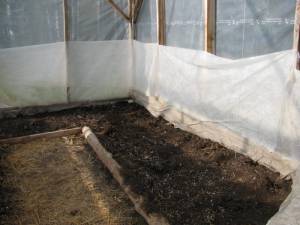
Over time, I raked that over to the edges to fill out the raised beds inside.

logs layered as reinforcement for a greenhouse frame.
This was a great way to make sure the frame was even and level.

Here’s a better picture of the log details.

installing roof panels on a greenhouse frame.
Though we used roof panels from a previous greenhouse, it’s easy to construct your own!

Once that was done, we started working on putting the roof panels in place. Graham added a ridge beam from timber we had here, then attached the panels to that.

Graham put a great pitch on the roof and it should hopefully be able to withstand all the snow in the winter.

Adding Plastic Poly to DIY Greenhouse Roof and Walls

Later, we stapled the plastic poly around the sides. We stapled it very well, so the wind couldn’t catch the plastic sheeting and start lifting it off.

For the greenhouse covering, , instead of buying the special plastic, we just used 6mm plastic off a roll that we had laying around for a building project. Some people prefer to get greenhouse weight plastic.

installing plastic sheeting on the greenhouse frame
Plastic sheeting is a cheap way to line your greenhouse frame.

Since the bottom areas of the front had open spaces, I played around with building rock faces on either side. Easy and FREE!

image of a greenhouse next to a shed.
The updated greenhouse has an even cleaner look and is just as functional, if not more so!

And here’s what it looks like from the porch – we are very happy with the way it turned out. It was a fair bit of work, but it will add a LOT to our homestead. And no tutorials or instructables were necessary; the structure was simple and easy to put together!

This greenhouse project has enabled us to grow peppers and tomatoes. If you live in a northern climate, you really can’t go wrong building a backyard greenhouse.

Using basic tools, you save a lot of money building your own, as opposed to buying a new greenhouse.

Build your own greenhouse for about $300, including electricity – extend your growing season, start your own seeds and grow your own organic food!

The cost for ours was well under $200, even if we would have had to buy that roll of greenhouse weight plastic.

A small DIY greenhouse with an open door and plants growing inside.
With a little bit of hard work, you can construct a DIY cold frame greenhouse in your own backyard!

What if the Greenhouse gets too hot?

Sometimes, in the heat of the summer sun, it does get really hot in the greenhouse, even though we have there is no plastic up close to the gables. You can see that in the photo.

If this happens with your greenhouse, you have a couple of choices, one being to install a greenhouse fan. Even if your greenhouse doesn’t have electricity, you could always run an extension cord from the outside of the house and run a fan.

You can also install greenhouse vents, the automatic vents make the most sense, because you don’t even need to be there to open and close them.

Or check out these solar greenhouse vents and fans!

What we do though, is we water the greenhouse – on the outside! I just hose down the clear roof and walls from the outside. If you do this, make sure your hose has been sitting in the shade. 

Or, run the house for awhile so all the hot water inside it runs out. You don’t want to be adding hot water from a sun baked hose to the already hot greenhouse.

I spray it down a few times a day in the heat of summer and it helps a lot.

Framing the walls for a home made greenhouse
Framing part of the construction of a small greenhouse.


Other Ways to Build a Greenhouse

There are a number of other materials you can employ when putting together your DIY greenhouse plans.

PVC pipe is a fairly inexpensive material, and the piping is especially great for a mini greenhouse, for adding internal structure, or for cold frame gardening.

If you’re particularly handy, sometimes old windows can be upcycled and used in your greenhouse. This may also be more easy to work with on a smaller scale. Here’s a beautiful greenhouse made from old windows.

Build a CD case greenhouse! Believe it or not, CD cases can also be helpful for planting. Making a small greenhouse out of the plastic cases is a great way to repurpose them if you have CDs lying around that you’re no longer using.

You can also buy CD cases in large quantities. The sturdy plastic is a reliable material for planting, and would be great for DIY cold frames.

Plastic bottles in excess can make a fantastic outer shell for a greenhouse. Check out this guide for more detailed instructions on making a plastic bottle greenhouse.


More Articles about Growing in a Greenhouse

  • Here’s how we get the Greenhouse ready for the growing season (Spring maintenance tips)
  • Find out why I always transplant tomato plants before planting them again into the greenhouse.
  • Ever wondered just how small of a pot is needed to grow peppers that actually set peppers?
  • Want to read all our posts about growing in a greenhouse?


originally published 2017; latest update Dec 2024

Filed Under: Greenhouse, Grow Your Own Vegetables Tagged With: EBooks, greenhouse, Grow Vegetables

Come Into the Greenhouse

By Annie

These last weeks, it has been pretty busy around here. Hoping I get a chance now to put up some posts on what we have been up to. Here’s our Greenhouse – I’ve been spending quite a bit of time in there the last couple of days.

greenhouse, country living in a cariboo valley, tomatoes, peppers, northern greenhouse


This photo was taken last summer. In my Cold Room Inventory post, I wrote about hunting around downstairs only to find we had no green beans left in storage. I have got to plant lots this year.

Since we’re not planting a lot of tomatoes or peppers this year, I figured I would plant green beans throughout the greenhouse this summer. We have been having wonderfully warm days, but the nights are still very cool here. Too cool certainly, to plant bean seeds in the main garden. I’ll wait another week at least before planting them out there, and even then, will be covering them with Remay cloth.


greenhouse, country living in a cariboo valley, tomatoes, peppers, northern greenhouse

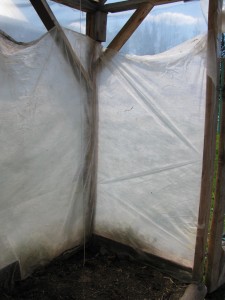
Thinking of how I could increase the temperature in the unheated Greenhouse, a thought occured to me. Why not staple up Remay cloth around the inside perimeter? This should increase the temperature by 2 or 3 degrees and I could get an earlier start with planting beans in there.


greenhouse, country living in a cariboo valley, tomatoes, peppers, northern greenhouse

While I was stapling it up, I realized I could just attach it half way up for now. That should help keep it even warmer. That’s what I did and later on, after the plants are all up and established, I should be able to staple the Remay up the rest of the Greenhouse walls.

After finishing with the cloth, I started watering the beds. I also laid a layer of compost over the whole area. I watered well several times a day for 3 days, digging down with a trowel to see how far down the moisture was going. It is amazing how dry the soil is when you first start watering it. It takes several repeats to get the soil moist enough for planting.

This morning, I brought my few tomato and pepper plants out to the Greenhouse.


greenhouse, country living in a cariboo valley, tomatoes, peppers, northern greenhouse

I have 5 Sweet Green Peppers that have been planted into the pots and they will sit on the shelf there.


greenhouse, country living in a cariboo valley, tomatoes, peppers, northern greenhouse

This morning, I stapled up the Remay in the one front corner, in preparation for planting Tomatoes.


 greenhouse, country living in a cariboo valley, tomatoes, peppers, northern greenhouse

After I dig the hole, I pound in the stake that this plant will need to hold itself up. Always have a stake or some type of support for your tomatoes, the plant ends up heavy and you don’t want branches snapping off, once the fruit is setting.

Then I put in the plant, usually taking off the lowest branches in order to plant the tomato deeper in the ground than it was in its growing pot. Deeper is always better for tomatoes. Then right away, I use a couple of velcro ties to hold the stem to the stake.


greenhouse, country living in a cariboo valley, tomatoes, peppers, northern greenhouse


I love these ties – I bought a roll probably 5 years ago and it’s still going strong. As the tomato plant now settles in and starts growing, I will add more ties, securing the plant to the stake. By the harvesting season, I could well have 6 or more ties on each plant. Sometimes, depending on how much fruit is on the plant, we also need to use string. We hang it from the Greenhouse ceiling and then tie the tomato branches to it.

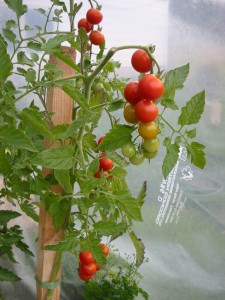
These plants have already set their first flowers. Hopefully in a few months, the plants will look like this.


 Are you growing in a Greenhouse? Would you like to? We sure do love using ours! If you want to read more about growing in a Greenhouse, just click the link.

Filed Under: Greenhouse, Grow Your Own Vegetables

Connect With Us!

  • Email
  • Facebook
  • Instagram
  • Pinterest
  • Twitter

Search this site

Generic selectors
Exact matches only
Search in title
Search in content
Post Type Selectors
Search in posts
Search in pages

Our Most Popular Posts

Garlic cloves in oil

How to Preserve Garlic in Oil – and Other Ways to Store Garlic

a open jar of pickled brussel sprouts on a counter

Easy Pickled Brussels Sprouts Recipe (Water Bath Canning)

Privacy Policy

Read about our Privacy Policy

Disclosure

Please note that some of this site’s links are affiliate links, and CountryLivinginaCaribooValley.com is a participant in the Amazon Services LLC Associates Program, an affiliate advertising program designed to provide a means for us to earn fees by linking to Amazon.com and affiliated sites. At NO ADDITIONAL COST TO YOU, I will earn a small commission, if you purchase them. I recommend them as they are good products.

Theme Design By Studio Mommy · Copyright © 2026