Country Living in a Cariboo Valley

Homesteading in BC

  • How to Get Started
  • Vegetable Gardening
  • Preserving Food
  • Recipes
  • Homemade Wine Recipes
  • About Us
  • Work With Me
  • Shop
    • Vegetable Garden Planner Printable: Grow Your Best Garden Ever
    • Grow Enough Food for a Year
    • Delicious Dandelions: A Recipe Collection
    • Dirt to Dollars: Selling at the Farmers Market
    • 8 Pounds in 8 Weeks: Raising Chicks for the Dinner Table
    • Making Wild Wine
    • Build a Hanging Chicken Feeder
    • 15 Things to Know About Living in the Country

Raising and Butchering Weaner Pigs

By Annie

Raising and butchering weaner pigs takes only 8 months and is a great way to grow your own meat!

Raising and butchering your own pigs is a great way to achieve self-sufficiency and control the food you put on your table. This post is great for homesteaders and small-scale farmers. Learn how to raise healthy pigs, maximize your pasture use, and get tips for raising your pigs beofre it is time for butchering and putting food on the table. 


A small weaner pig getting petted by his farmer.

For several years we have raised weaner pigs here on our property. Raising and butchering pigs for your family is not hard to do.

It’s a great way for us to know what is in the meat we are eating.

Raising and butchering pigs for your family saves you so much money, especially if you can have the pigs on pasture for most of their lives.

Next year, we may be back to raising a couple of weaners.

They are called weaners (and it IS spelled weaner, not weiner cuz that’s what you put in a hot dog!) because these little piglets have recently been weaned from their mother’s milk.

Raising and Butchering Pigs for your Family

Why Buy and Raise Weaner Pigs?

Buying weaner pigs saves us not only a lot of money, but a lot of time and inconvenience as well. Since we buy piglets a couple of months old, we don’t have to be responsible for keeping a sow. 

A pregnant sow must be watched and fed carefully to ensure she is in good health. We don’t have to be concerned with any of these items:

  • the whole reproduction part – keeping a boar, or bringing one in to service the sow
  • possible lactation problems with the sow’s milk
  • weaning difficulties
  • rectal prolapse from birthing
  • no responsibility for any part of weaner production
  • any other general health challenge the sow may face


How long does it take to raise a pig to slaughter?

Not long. That’s why pigs work perfectly for us here. We like to work seasonally; that is, we don’t usually keep animals all year round.

Ideally, what works best for us is to raise animals from early March into December.

Figure out what works best for you and your family! Can you raise pigs all year long? Do you want to?

It will be a big help if you plan your yearly goals ahead of time. Not just for raising animals, but for gardening, building projects and the like.

Pigs grow quite quickly – to give you an idea, we receive piglets around the end of March.

When we get them, the young piglets weigh maybe 25 or 30 pounds. They are adorable at that age too!

As soon as we get them settled, we spend time with them every day so they get to know us. Pigs love a good scratching and are friendly too. Socializing with the pigs is an important part of their transition to life here on our farm.

Dry Feed for Pigs – Our Feeding Strategy

We do feed our weaner pigs dry feed, which is grain we buy at the local feed store. We also give them a change of diet by feeding them a lot of vegetables as the season goes on. 

Here, we do not allow free feeding of grain. We watch the pigs feed intake by giving only a couple of cups of grain per pig per day. We drop this grain into the feeder in their pen.

(The bonus of feeding some grain is that you can use it to “call them”. If they get out of their enclosure, shaking a bucket of grain will bring them running, because they are trained to that bucket of grain!)

By September, the pigs are growing large and are eating a lot, including the pasture they live on here. We grow a LOT of their feed ourselves! They actually get a huge garden full of root crops and leafy greens too.

Read about how to grow animal feed – you will see exactly how we feed the pigs.

We butcher them in very late October or early November of the same year. It’s a bonus that we don’t have to overwinter them.

By the point of slaughter, each pig will dress out at about 250 pounds.


Four pigs together in a pasture of grass


They are not as adorable when they get bigger. They have to be trained to electric fence, if you want to pasture them. Raising your own pigs on pasture is fantastic, if you can do it.

Pasturing is the best way to raise pigs as they will till up the pasture, eating pretty much anything they find and growing bigger while doing it.

This decreases their feed cost by quite a bit and that is always a good thing.


three pink pigs together in a pen


Where to Put the Pigs

Do you have a future garden plot all staked out? Do yourself a favour and put a couple of weaner pigs in there the year before you plant.

They will do all the tilling and fertilizing for you! These pigs above are busy rooting through the dirt.

Meanwhile they are digging up next years garden for us.

Here are more articles we have posted on this site about raising and butchering pigs

Decide for yourself if it is something you think will work at your place.

Aside from training them to electric fence, they are not hard to have around and provide a lot of laughs.


2 large pigs on pasture on a sunny day


Having two pigs will definitely provide enough meat for a family of four for one year.

Once you get a couple of sides of butchered pork in your freezer you will be glad you raised them.

They are fun to raise as well. Pigs are very social animals, which is why we recommend raising more than one at a time. A pig on its own can get lonely.

They are also pretty smart. They can be trained and you will see them interact and protect each other.


Pigs drinking from a water hose


Often, we sit on the porch on a sunny afternoon, beer in hand and watching the pig races, as we call them.

Or the pig channel, if they are not running around in circles at the time.

We’ve even been known to place a wager on a certain pig to win the pig race. We make our own fun here in the Valley, and fun we do have!

Problems with Weaner Pigs

Some of the potential medical problems with weaner pigs are as follows:

  • Lesions, including:
  • tail lesions
  • body lesions
  • ear lesions
  • Diarrhoea
  • Gut health issues

You can find lots of information about health treatments for weaner pigs here at this article.

Butchering Pigs

Fast forwarding to after the slaughtering process; here is part of the butchering process.

Butchering simply means the cutting up of meat into things like chops, steaks, roasts, etc.

Here is our go to book on butchering any type of livestock or wild meat.

This is only part of one half of a pig, so keep this in mind when you read through the rest of the information.


Pork chops on a cutting board


Pork Shoulder Steaks. Look how nice that meat looks!

A nice layer of fat and great looking pork – these will be great when we make Turmeric Garlic Pork Chops! We also really enjoy these Cornbread Stuffed Pork Chops with apples.


Slabs of unsliced bacon from a butchered pig


Sides of Bacon ready for brining and smoking. Normally, we cut these into slabs of about 2 pounds, wrap them and then freeze them.

Later in the year when we have more time, Graham will take out some packages, thaw them and put them into a brine for smoking.


A pork loin after it has been sliced into pork chops.


Loin chops ready for wrapping. Remember that this is only one half of a pig.

It is such a great feeling to cut and wrap meat that we raised ourselves.

It looks (and tastes) so healthy compared to some of the grocery store meat.


A cooler filled with butchered and papered pork cuts.


A cooler full of butchered and wrapped homegrown pork. This cooler is ready to go off to friends in exchange for lamb and goat.


The Possibility of Bartering Pork

Who doesn’t love bartering? In your neighbourhood, you may find bartering works. It can certainly make it easier for everyone.

One family raises beef, another raises pigs, and another raises chickens.

This means the livestock setup is only needed for one particular animal, instead of all the fencing and housing requirements for all kinds of animals.


A large hind quarter from a pig


Here is one of the hind quarters. It’s pretty much just one big ham but we did cut it into smaller hams.

Freeze them individually and then brine them later if you want to smoke some of them!


Butchered and papered cuts of meat from pigs.


Here are the results of butchering one half of a pig. Click on the picture if you want to see the cuts we wrapped.

The bowl in the top left of the picture is full of the trimmings.

Is raising and butchering pigs for your family looking like a better idea now?

The other bowl with all the organs (heart, liver, kidney) is not in the picture.

All these organ meats and trimmings get cooked up, then pressure canned. This becomes meat for our dog.


a garden grown specifically for pigs full of leafy greens and root vegetables


Remember that you have the option to plant a garden full of veggies just for the pigs.  Read about what vegetables we feed our pigs and you may want to plant a garden for your pigs too.

It saves a lot of money and that is a large part of what raising your own meat is all about. Of course, the added knowledge of just exactly WHAT you feed them helps to feel secure about what your family is eating.

This is the end result of a few months spent raising a weaner pig.Raised on a bit of grain, lots of fresh-from-the-dirt garden veggies and pasture, these pigs have had a wonderful life.
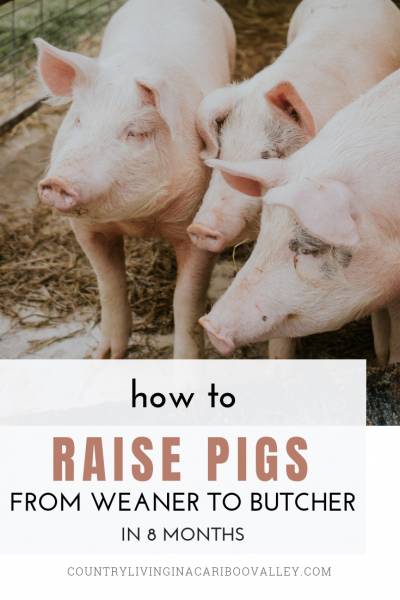
 

3 pink pigs in their outdoor run

But What About Commercially Raised Pork?

Think about the way we have raised our pigs, then read this comment left by Patty and think about the difference.

Those pigs she’s talking about are raised commercially. That is the pork you buy in the supermarket!


“Your pigs have lived a life of luxury with all they want to eat, fresh air, sunshine, good grubs, etc. Here in the Peace Country, as you may or may not know, we have a number of Hutterite colonies – and we have 4 right here in our own county, which is about 1600 square miles.

Hutterite pigs are kept in very high-tech CFO barns. People are not allowed in without suiting up, HAZMAT-type masks, booties, etc.

These porkers never see the light of day from the beginning, to just before the end when they’re loaded into trailers and shipped God knows where for slaughter.

So, all things considered, if I was a pig, I’d rather have been yours than a factory pig.

Now think about what all that offal is contributing – food down the line for your chickens, da Wolf, and your garden.

It’s not a bad thing. I hate to quote “The Lion King”, but it’s all part of the circle of life, hey?

Just enjoy your nice, juicy pork chops when they’re on the plate with some parsley and mushroom sauce!!! “

This is what a commercially raised pig looks like in her pen – yes, when you buy pork chops at the grocery, remember that this is how your pig spent her life!


A pig confined in a very small cage

Think about raising and butchering pigs for meat

Consider raising and butchering pigs for your family next Spring. I say “a couple” because pigs are such social animals.

Raising just one would be very lonely. Grow some healthy nourishing meat for your family. Know what you are feeding your children!


pigs eating pasture in the sun


How to Grow Your Own Livestock Feed – Yes you CAN!

How to Store Animal Feed from the feed store

Before adding all your pork to the freezer, read here about the fastest way to defrost any freezer!


A large pig coming out the door of his pig house

Thinking of raising meat birds?

Here’s how we fill our freezer with chickens.

8 Pounds in 8 Weeks: Raising Day Old Chicks for the Dinner Table here!


originally published August 2016; latest update September 2022

Filed Under: Raising Pigs

Natural Insect Repellant That’s Probably in Your Pantry!

By Annie

June has been very rainy here this year. It’s actually been hard to get into the garden because the soil is so wet and I really don’t like walking on it when it’s like that.

A couple of days of sunshine and a bit of wind goes a long way to start drying it out enough.

I have to be out in the garden every minute I can, but we are being bombarded with bugs this year. Is it because it has been so wet?

So bugs and growing weeds are pretty much what I am dealing with here now.


A June Evening in the Cariboo
Early days of Spring bring out the bugs


I don’t know, but it does seem to me that the black flies and no see ums are simply awful this year.

Thank goodness they don’t stick around all summer. We hardly have any bugs come August and September, but now is the time I am needed to be outside weeding, thinning, planting and harvesting greens.

I really can’t stand to use bug spray. I find the idea of the repellant well….simply repelling!

Who wants to spray that all over their body?


Natural insect repellant in a bottle of Cider Vinegar
Got this in your pantry?

Natural Insect Repellant – Cider Vinegar

I use Cider Vinegar and it really works.

I put the cider vinegar on a paper towel and wipe my whole face, back of my neck, ears and hands with it. Then I put it on the brim of my hat and head outside.

I haven’t been bitten since. I smell like a pickle, but I haven’t been bitten.

So give it a try as a natural insect repellant, especially if you have kids. It’s a great alternative to store bought bug sprays.


Filed Under: Product Reviews

It’s Rhubarb Time in our Northern Garden…

By Annie

Northern gardeners who have rhubarb growing in their gardens are likely picking it already or just about to. Plants should be tall with healthy thick stalks along with many smaller stalks.

Pick those big fat ones first and let the others grow for awhile longer. And remember…


Leave the Small Stalks on the plant


Always leave some small stalks on your plant. If you want your rhubarb to keep growing, do not pick it clean.

That bit of top growth will keep your plant sending up stalks. Here’s everything you need to know about growing rhubarb.


fruit pie

Graham loves to bake a Rhubarb pie.

We like mixing the rhubarb with another type of fruit – either raspberries, blueberries or saskatoon berries.


Homemade Rhubarb Wine


Make a batch of Homemade Rhubarb Wine. It’s quite delicious and is wonderful with light summer meals.

Since we freeze ours before turning it into wine, I don’t go to the trouble of dicing the rhubarb. Bigger chunks works just fine.

I bag them up and just toss them in the freezer until we are ready to deal with it.


Cutting rhubarb for wine


For using in pies or other baking, I dice the rhubarb quite small. Since a pie needs 3 lbs of fruit, I just bag them up in 1 or 2 lb batches.

It makes it easy to make a two fruit pie or a four fruit pie!


What’s your favourite rhubarb recipe? It’s quite versatile – from jams to pies, stewed to baked!


Filed Under: Grow Your Own Fruit

How to Transplant Tomatoes into a Greenhouse

By Annie

Check out this handy guide to learn how to Transplant Tomatoes into a Greenhouse!

Why Should I Be Transplanting Tomato Plants?

To put it most simply, planting tomatoes in a greenhouse extends their growing season. Most popular greenhouse setups allow for things like temperature control, more control over the irrigation system, and ability to monitor things like air circulation and humidity level.

Transplanted tomatoes in greenhouse with stakes and ties
Newly transplanted tomatoes in the greenhouse.

Growing tomatoes in a controlled environment will allow you to tend to them outside of their natural growing season in your climate. It can also prevent disease and infection ensure you end up with the healthiest tomato fruits possible! But there are some things to consider for growers of tomato transplants, so let’s get into it.


Want read about how to build a greenhouse for your back yard?


Our Tomato Plants

Because of our cooler nights, we start many of our vegetables inside the house. Right now, I have beans, corn and zucchini busting out all over the living room.

We have much better luck transplanting rather than direct seeding any of the heat loving vegetables that we grow.

Our elevation means cooler temperatures and so we get them started early inside and pop them into the garden towards the end of May.

Transplant Tomatoes into a Greenhouse from their seedling cups.
Once your tomatoes start getting a little too big for their containers, it’s usually a good sign they need to be moved.

Although I would love to be doing that this weekend, it is still just too cold out there. What happened to all that sunshine and heat we were having just a week or two ago?

It’s not stopping me though; I’ve just moved into the Greenhouse. I spent some time cleaning it out and then started watering it. It takes several days of good watering to moisten the soil enough to transplant tomatoes into a greenhouse.

My tomatoes are getting a bit leggy although they do have nice thick stems for their size. If I don’t get them planted in the greenhouse I would have to transplant them into even larger pots.

Transplanting Tomatoes into Larger Pots

These tomatoes have been transplanted into a larger pot.
You may need to transplant tomatoes into a larger pot before planting in the ground.

Most years, I have to transplant tomato seedlings from their starter pots into larger pots. You can read about why it is important to do that; it is especially important for people living with short growing seasons.


Transplant Tomatoes into a Greenhouse starting with putting stakes in place.
Ensure that the tomatoes have ample space and stakes or trusses to latch onto as they grow.

My tomato trusses all in place. You can see I just go out in the bush and saw off some limbs to use as stakes. What are the black jugs for?

De Wit Garden Tools in the greenhouse soil
Invest in high quality garden tools, you won’t regret it!

I’ve got some fantastic hand garden tools this year – a serrated trowel and a 3 tine cultivator from De Wit Garden Tools.

I am looking forward to using these quality tools for many years to come.

Once the greenhouse soil is nice and moist, I pound the tomato stakes into the soil, spacing the stakes as needed so the plants have room to grow.

Transplanted Tomatoes in the greenhouse ties to stakes
Here’s what they look like right after being transplanted.

I’ve got three different kinds of greenhouse tomatoes this year planted and later I’ll be adding my pepper plant seedlings alongside.

Make a well to hold water when transplanting tomatoes
Give them plenty of water in the beginning to make sure they have everything they need to adjust to the new environment.

How to Transplant a Tomato Plant

Here are some general tips on how to replant a tomato plant:

Choose a spot in the greenhouse that gets lots of sunlight. If possible, check the soil to ensure it’s rich in nutrients like nitrogen, calcium, magnesium, and potassium, or enrich it with soil or potting mix. Also, you can use a PH test kit like this one, to check that pH levels are optimal–you don’t want the soil to be too acidic.

When I transplant tomatoes I always remove the bottom set of leaves and tend to any side shoots that grow off the main stem. Then I plant deep into the hole so more of the stem is covered.

If you like, you can also use organic fertilizer, compost, manure, or another nutrient-rich growing medium to further promote growth. Apply the fertilizer at the time of transplanting, and then once more just before fruiting if you like.

This will help the plants grow strong with sturdy stems to support the weight of the tomatoes. Velcro ties are used and these will be checked and adjusted as the season goes on.


Growing Tomatoes in a Greenhouse
Learn how to grow tomatoes in a greenhouse.

Watering Transplanted Tomatoes

When transplanting tomatoes, I create a well around the plant to hold onto the water. For the next several days I will keep them well watered to help them settle in. After they’re settled, tomatoes typically don’t need huge amounts of water. Overwatering can actually be harmful for them, so be mindful of water application to prevent disease and other harm from affecting your plants.

For the rest of the season I will be checking the Greenhouse every day – if it needs watering, it will get it. The hotter the days become, watering every day is a must – we may even set up a drip sprinkler on a timer in here.

Note: When watering tomatoes, try to not get the leaves wet! This is why soaker hoses or drip sprinklers work well in a greenhouse.

Greenhouse Tomato Crop
Pruning your tomatoes regularly is a great way to ensure you have beautiful plants that are growing and fruiting efficiently.

In a few months, it should be looking more like this and we can’t wait. Harvests are a highlight of the summer when we can pick and eat these right off the vine and have baskets of delicious tomatoes!


What is the Best Way to Transplant Tomatoes?

A simple answer to this is to plant the tomato in good soil, remove the lower side shoots and then bury the stem as deep as possible. This will enable roots to grow laterally from the stem. You need to ensure that your tomatoes are able to take hold of their new environment, and the best way to do that is give the stem and roots lots of opportunity.


What Tomato Variety is Best for a Greenhouse?

When picking out your tomato seeds or tomato seedlings, it’s important to consider your climate and the type of tomato. There are two major kinds: determinate tomatoes (bush tomatoes) and indeterminate tomatoes (or cordon tomatoes).

In most cases, you’ll probably want to go for indeterminate varieties if the climate allows it, as this variety continues to grow throughout the growing season and continually grows fruit throughout the entire season. They’re also called vining tomatoes.

Types of Indeterminate Tomatoes

  • Beefsteak
  • Big Boy
  • Brandywine
  • Sungold
  • Sweet Million
  • Early Girl (one of our favorites)
  • Gardener’s Delight

Types of Determinate Tomatoes

  • Glacier
  • Legend Tomato
  • Roma
  • Better Bush
  • Sunrise Sauce
  • Cappricia


When is a Good Time to Plant Tomatoes?

This may require some planning, but you’ll want to sow tomatoes seeds indoors in January or so, then transplant to your greenhouse in April or May. Depending on the climate, you may even be able to move the tomatoes as early as late February or early March. Pay attention to the last frost date in your area–past this point, you’ll be able to transplant tomatoes into a greenhouse.


Transplanted tomato plants in a greenhouse.
Save to your Pinterest board.


How to Prevent Pests from Ruining Your Tomatoes

There are a number of insects and other animals that could pose a threat to your tomatoes. Aphids, flea beetles, whiteflies, cutworms, and nematodes are all possible, though aphids and whiteflies are the most common.

For the most part, removing infected parts of the tomato plant is often enough to stop the pests. In extreme cases, you may have to resort to sticky traps or pesticides. We don’t use pesticides here, so we only use natural ways to get rid of pests.

Generally, keeping a good eye on your plants and taking good care of them is a great way to shore them up against pests.


How to Ensure Proper Pollination of Tomatoes in a Greenhouse

You’ll also want to make sure that bees are able to access your plants for pollination. Bees are the opposite of pests! But in some greenhouses, this won’t be possible. Especially if you don’t have a lot of good natural airflow.

One way to distribute the pollen yourself to ensure proper fruiting is to use tools like electric toothbrushes or other kinds of electric vibrators to spread the pollen. For only a few tomato plants, you can also be more precise with a cotton swab or small brush.

More articles about growing Tomatoes

Read here to find out how to ripen green tomatoes indoors fast!

Want to make your own home made Tomato sauce? Here’s my recipe! Canning instructions included too!


Now that you know how to transplant tomatoes into a greenhouse, grow some tomatoes this year!


Originally published 2016; latest update November 2022

Filed Under: Grow Your Own Vegetables

Chicken Questions and Answers

By Annie

Got chicken questions? Here are common questions and answers about backyard chickens.

Want to start raising chickens? Wondering how to get started? Here are a few chicken questions and answers to help you decide.

Chickens are a fantastic addition to your backyard or homestead. Backyard chicken eggs taste so much better than store bought, especially if your chickens are able to free range outside their coop.

Common chicken questions include breeds like this Buff Orpington
Chicken questions include those of breeds, like this Buff Orpington chicken.

If your city doesn’t yet allow backyard chickens, consider getting involved in the growing movement to change council’s mind.

While I can understand urban areas not allowing roosters, I am definitely in favor of allowing a certain number of hens per household.

Chicken Questions and Answers

Here’s some information about keeping hens in your backyard to lay eggs that you may be wondering about. If you want to know about raising baby chicks for meat or for egg production, please head here to How to Get Ready for Day Old Chicks. 

You can also read about how we raise chicks for meat in only 8 weeks – we do this every summer here!

Chicken Terms to Know

Pullet – is a young female chicken who should start laying eggs around 20 weeks. If you ONLY want eggs (and not baby chicks) you can buy only females (pullets).

Hen – female chicken 12 months or older.

Cockerel – a young rooster 12 months or younger.

Rooster – male chicken over 1 year. Roosters will develop wattles and combs.

Chick starter – This is special starter feed for day old chicks that is mashed as opposed to crumbles

Pets – pretty much any chicken you bring home!

Chicken Lady – Well this is me and it could become you, if you’re not careful. Chicken keepers are notorious for adding to their flock, talking to their hens and making them warm oatmeal on a very cold winter morning!


A flock of chickens on hay
Click to save to your Pinterest board.

Breed of Chicken

There are many different chicken breeds, including commercial meat birds (Cornish Cross or Giants and White Leghorn).

Heritage chicken breeds include:

  • Buff Orpingtons
  • Rhode Island Reds

There are many great reasons to have a heritage flock of chickens!

If you want easter eggers (pretty colors of eggs), white eggs, green eggs or brown eggs, look to the breed of chicken to determine the egg color.

The color of the chicken does not determine the color of the egg! That comes from the breed.

You can learn more about them here at Raising Heritage Chickens.

How do you get chicks used to you so they won’t run or get scared when you come around?

When chicks are brand new, enter the brooder area slowly and softly. What we actually do is start humming or talking in a low voice outside the brooder room.

This helps alert the chicks that you are close by. When you go in the room, do it gently. Don’t go rushing in freaking them out!

Have your feed can in your hand and give it a few shakes. Very soon, they will relate that sound to “Oh, good, here comes the food!” 

Very soon you will find that they will start coming to you.

Remember, they are like little babies. We don’t go around freaking out little babies, so we don’t do it to little chicks either.

Read here to find out how we built our brooders and got everything ready for the chicks to arrive.

If you would rather buy a chick brooder, there are many available on Amazon. These Brinsea chick brooders have great reviews.


Fencing keeps chickens out of the gardens, a common chickens questions
We fenced our vegetable garden to keep the chickens out during the growing season

When you put them into your garden area, what keeps them from eating all your good plants?

You can’t. The ONLY time our chickens are allowed in the garden is after the veggies are harvested.

Some people say to keep the chickens out until the veggie plants are well established, then they won’t hurt the plants.

I am a skeptic when it comes to this. I have seen my hens get into my flowerbeds, and before I know it, there are uprooted plants lying on top of the soil.

Temporary fencing to keep chickens contained yet out on grass are common chicken questions.
Temporary fencing keeps chickens more contained but still out free ranging

What we do is build temporary fencing using T posts and wire fencing. It’s easy to set up, easy to move and easy to remove. 

All you need is a few of these T posts and wire. Run it up to a building or a fence post, etc., so you can reduce the number of T posts needed. Check out this post for more information on temporary fencing.

I like to give my girls a large amount of room to run around and forage for plants and bugs. However, I want to keep them away from my flower beds and veggie gardens.

So, we give them as much free range as possible, but with limitations….hmmm, kinda like raising teenagers!


Shaking a bucket of grain will help train your chickens to come to you

More Chicken Questions

I want them to free range, but how do I get them back into the chicken coop?


Flock of chickens on grass outside
Click to save to your Pinterest board.


I bet 98% of chickens will return to their hen house on their own, once dusk comes. Chickens don’t like being out in the dark!

They want to feel safe at home, locked in their chicken coop, away from predators.

If you have trouble getting them to come home, shake that ol’ feed can for them, while calling them. “Here, chicka, chicka, shake shake shake” goes a long ways!


Chicken questions about how to bring them home
Transport chickens in a tote or box with hay on bottom to protect their feet


Also, if you bring home grown chickens, take them out of the carrying cage INSIDE the coop.

Then leave them locked inside the chicken coop for a few days. This will reinforce to them that the coop is home.

After a few days, open up a door to their outside run. Leave that door open so they are free to go in and out.

Don’t let them out of the run for several more days. This will further reinforce to them that the coop and run are home.


chicken questions about birds eating garden greens
Chickens love eating garden greens and weeds


How do I catch one of my chickens if I need to?

If you need to get hold of one of your chickens for any reason, wait till dark. Once they are in their coop, you simply pick them up off their roost.

When it happened here for the first time, I groaned thinking about all the other times I had tried to pin one down.

If you need to catch one for emergency purposes during the day, use one of these chicken catchers.

Otherwise, a fish net or one of these works great. Works on piglets too! I’m unsure whether it works on teenagers.


Chicken questions about clipping birds wings.
Click to save to your Pinterest board.


What will keep them from flying away or into the neighbors yards?

A good pair of scissors does a lot. Cut the flight feathers off ONE side only.

This prevents them from flying and if they do get off the ground, they will go in circles, ha!

A 42 inch fence should hold them in, IF the flight feathers are cut off. Don’t cut the feathers of both wings, just one.

If the feathers are not cut, I think they could get over that height of fence.

Even More Chicken Questions

Can I add new chickens to my existing flock?

Yes, it is possible to add new chickens to your backyard poultry flock. There are several things to keep in mind, if you do this:

Chickens have a pecking order; that is, there is always a leader, even amongst hens. There’s a “top dog” and then other chickens are below that, usually in a certain order. 

When you bring new layers home, for example, don’t just add them to your existing coop right away. It will work best if you can have the new chickens right next to the existing ones.

That is, if possible run another outdoor run right alongside the existing one. This way, during the day, they can see each other and get used to each other.

Ideally, at night the new layers will have their own coop. It doesn’t need to be anything special, just something they can be in for a couple of weeks before being put in with the others.

We have used a truck canopy set on bales of straw for this (inside a run). Anything you can work up that is predator proof will do.

Chicken questions include breed of chicken like this heritage chicken.
Heritage chickens are hardy and well suited for cold winters.

What do chickens need on a daily basis?

A chicken coop or other kind of chicken house needs to be secure from predators. Make sure entry points can be completely sealed and chicken runs or outdoors spaces tightly and securely fenced.

A family of raccoons or a fox can make quick work of a flock of chickens!

Inside the coop, chickens need:

  • nesting box
  • feeder with 16% protein feed, preferably with oyster shell mixed in to provide calcium (needed for egg production)
  • grit – necessary once chickens have access to other feed (eg. bugs) to help with their gizzard in digesting food
  • ​Buy a bag of scratch to provide a treat for your chickens!
  • hay  or straw for floor of coop, which they can also fluff up to make themselves a nest


chickens in a garden with purple flowers
Click to save to your Pinterest board.

Got more chicken questions? Need more answers?

Here’s Part 2 –  having chickens on your homestead

Included in Part 2:

  • What should you NOT feed chickens?
  • Are chickens any good at controlling ticks around the yard?
  • Why do chickens peck feathers of other chickens?
  • Can chickens be taken by hawks, owls and other predators during the day?
  • Does a rooster really protect his chickens?
  • Molting and growing new feathers

Want to know how to tell the difference between roosters and hens? Check it out.

My Top 10 things I just LOVE about chickens

Perfect gifts for chicken lovers!

More information on having chickens!


book about raising chickens for meat in 8 weeks
Everything you need to know to raise day old chicks to 8 weeks old, butchering time

Want to read about how we raise out meat birds to 8 pounds in 8 weeks? It’s a great way to fill your freezer fast!


originally published 2016; updated June 2022

Filed Under: Raising Chickens

  • « Previous Page
  • 1
  • …
  • 41
  • 42
  • 43
  • 44
  • 45
  • …
  • 53
  • Next Page »

Connect With Us!

  • Email
  • Facebook
  • Instagram
  • Pinterest
  • Twitter

Search this site

Generic selectors
Exact matches only
Search in title
Search in content
Post Type Selectors
Search in posts
Search in pages

Our Most Popular Posts

Garlic cloves in oil

How to Preserve Garlic in Oil – and Other Ways to Store Garlic

a open jar of pickled brussel sprouts on a counter

Easy Pickled Brussels Sprouts Recipe (Water Bath Canning)

Privacy Policy

Read about our Privacy Policy

Disclosure

Please note that some of this site’s links are affiliate links, and CountryLivinginaCaribooValley.com is a participant in the Amazon Services LLC Associates Program, an affiliate advertising program designed to provide a means for us to earn fees by linking to Amazon.com and affiliated sites. At NO ADDITIONAL COST TO YOU, I will earn a small commission, if you purchase them. I recommend them as they are good products.

Theme Design By Studio Mommy · Copyright © 2026