Country Living in a Cariboo Valley

Homesteading in BC

  • How to Get Started
  • Vegetable Gardening
  • Preserving Food
  • Recipes
  • Homemade Wine Recipes
  • About Us
  • Work With Me
  • Shop
    • Vegetable Garden Planner Printable: Grow Your Best Garden Ever
    • Grow Enough Food for a Year
    • Delicious Dandelions: A Recipe Collection
    • Dirt to Dollars: Selling at the Farmers Market
    • 8 Pounds in 8 Weeks: Raising Chicks for the Dinner Table
    • Making Wild Wine
    • Build a Hanging Chicken Feeder
    • 15 Things to Know About Living in the Country

Raising and Butchering Weaner Pigs

By Annie

Raising and butchering weaner pigs takes only 8 months and is a great way to grow your own meat!

Raising and butchering your own pigs is a great way to achieve self-sufficiency and control the food you put on your table. This post is great for homesteaders and small-scale farmers. Learn how to raise healthy pigs, maximize your pasture use, and get tips for raising your pigs beofre it is time for butchering and putting food on the table. 


A small weaner pig getting petted by his farmer.

For several years we have raised weaner pigs here on our property. Raising and butchering pigs for your family is not hard to do.

It’s a great way for us to know what is in the meat we are eating.

Raising and butchering pigs for your family saves you so much money, especially if you can have the pigs on pasture for most of their lives.

Next year, we may be back to raising a couple of weaners.

They are called weaners (and it IS spelled weaner, not weiner cuz that’s what you put in a hot dog!) because these little piglets have recently been weaned from their mother’s milk.

Raising and Butchering Pigs for your Family

Why Buy and Raise Weaner Pigs?

Buying weaner pigs saves us not only a lot of money, but a lot of time and inconvenience as well. Since we buy piglets a couple of months old, we don’t have to be responsible for keeping a sow. 

A pregnant sow must be watched and fed carefully to ensure she is in good health. We don’t have to be concerned with any of these items:

  • the whole reproduction part – keeping a boar, or bringing one in to service the sow
  • possible lactation problems with the sow’s milk
  • weaning difficulties
  • rectal prolapse from birthing
  • no responsibility for any part of weaner production
  • any other general health challenge the sow may face


How long does it take to raise a pig to slaughter?

Not long. That’s why pigs work perfectly for us here. We like to work seasonally; that is, we don’t usually keep animals all year round.

Ideally, what works best for us is to raise animals from early March into December.

Figure out what works best for you and your family! Can you raise pigs all year long? Do you want to?

It will be a big help if you plan your yearly goals ahead of time. Not just for raising animals, but for gardening, building projects and the like.

Pigs grow quite quickly – to give you an idea, we receive piglets around the end of March.

When we get them, the young piglets weigh maybe 25 or 30 pounds. They are adorable at that age too!

As soon as we get them settled, we spend time with them every day so they get to know us. Pigs love a good scratching and are friendly too. Socializing with the pigs is an important part of their transition to life here on our farm.

Dry Feed for Pigs – Our Feeding Strategy

We do feed our weaner pigs dry feed, which is grain we buy at the local feed store. We also give them a change of diet by feeding them a lot of vegetables as the season goes on. 

Here, we do not allow free feeding of grain. We watch the pigs feed intake by giving only a couple of cups of grain per pig per day. We drop this grain into the feeder in their pen.

(The bonus of feeding some grain is that you can use it to “call them”. If they get out of their enclosure, shaking a bucket of grain will bring them running, because they are trained to that bucket of grain!)

By September, the pigs are growing large and are eating a lot, including the pasture they live on here. We grow a LOT of their feed ourselves! They actually get a huge garden full of root crops and leafy greens too.

Read about how to grow animal feed – you will see exactly how we feed the pigs.

We butcher them in very late October or early November of the same year. It’s a bonus that we don’t have to overwinter them.

By the point of slaughter, each pig will dress out at about 250 pounds.


Four pigs together in a pasture of grass


They are not as adorable when they get bigger. They have to be trained to electric fence, if you want to pasture them. Raising your own pigs on pasture is fantastic, if you can do it.

Pasturing is the best way to raise pigs as they will till up the pasture, eating pretty much anything they find and growing bigger while doing it.

This decreases their feed cost by quite a bit and that is always a good thing.


three pink pigs together in a pen


Where to Put the Pigs

Do you have a future garden plot all staked out? Do yourself a favour and put a couple of weaner pigs in there the year before you plant.

They will do all the tilling and fertilizing for you! These pigs above are busy rooting through the dirt.

Meanwhile they are digging up next years garden for us.

Here are more articles we have posted on this site about raising and butchering pigs

Decide for yourself if it is something you think will work at your place.

Aside from training them to electric fence, they are not hard to have around and provide a lot of laughs.


2 large pigs on pasture on a sunny day


Having two pigs will definitely provide enough meat for a family of four for one year.

Once you get a couple of sides of butchered pork in your freezer you will be glad you raised them.

They are fun to raise as well. Pigs are very social animals, which is why we recommend raising more than one at a time. A pig on its own can get lonely.

They are also pretty smart. They can be trained and you will see them interact and protect each other.


Pigs drinking from a water hose


Often, we sit on the porch on a sunny afternoon, beer in hand and watching the pig races, as we call them.

Or the pig channel, if they are not running around in circles at the time.

We’ve even been known to place a wager on a certain pig to win the pig race. We make our own fun here in the Valley, and fun we do have!

Problems with Weaner Pigs

Some of the potential medical problems with weaner pigs are as follows:

  • Lesions, including:
  • tail lesions
  • body lesions
  • ear lesions
  • Diarrhoea
  • Gut health issues

You can find lots of information about health treatments for weaner pigs here at this article.

Butchering Pigs

Fast forwarding to after the slaughtering process; here is part of the butchering process.

Butchering simply means the cutting up of meat into things like chops, steaks, roasts, etc.

Here is our go to book on butchering any type of livestock or wild meat.

This is only part of one half of a pig, so keep this in mind when you read through the rest of the information.


Pork chops on a cutting board


Pork Shoulder Steaks. Look how nice that meat looks!

A nice layer of fat and great looking pork – these will be great when we make Turmeric Garlic Pork Chops! We also really enjoy these Cornbread Stuffed Pork Chops with apples.


Slabs of unsliced bacon from a butchered pig


Sides of Bacon ready for brining and smoking. Normally, we cut these into slabs of about 2 pounds, wrap them and then freeze them.

Later in the year when we have more time, Graham will take out some packages, thaw them and put them into a brine for smoking.


A pork loin after it has been sliced into pork chops.


Loin chops ready for wrapping. Remember that this is only one half of a pig.

It is such a great feeling to cut and wrap meat that we raised ourselves.

It looks (and tastes) so healthy compared to some of the grocery store meat.


A cooler filled with butchered and papered pork cuts.


A cooler full of butchered and wrapped homegrown pork. This cooler is ready to go off to friends in exchange for lamb and goat.


The Possibility of Bartering Pork

Who doesn’t love bartering? In your neighbourhood, you may find bartering works. It can certainly make it easier for everyone.

One family raises beef, another raises pigs, and another raises chickens.

This means the livestock setup is only needed for one particular animal, instead of all the fencing and housing requirements for all kinds of animals.


A large hind quarter from a pig


Here is one of the hind quarters. It’s pretty much just one big ham but we did cut it into smaller hams.

Freeze them individually and then brine them later if you want to smoke some of them!


Butchered and papered cuts of meat from pigs.


Here are the results of butchering one half of a pig. Click on the picture if you want to see the cuts we wrapped.

The bowl in the top left of the picture is full of the trimmings.

Is raising and butchering pigs for your family looking like a better idea now?

The other bowl with all the organs (heart, liver, kidney) is not in the picture.

All these organ meats and trimmings get cooked up, then pressure canned. This becomes meat for our dog.


a garden grown specifically for pigs full of leafy greens and root vegetables


Remember that you have the option to plant a garden full of veggies just for the pigs.  Read about what vegetables we feed our pigs and you may want to plant a garden for your pigs too.

It saves a lot of money and that is a large part of what raising your own meat is all about. Of course, the added knowledge of just exactly WHAT you feed them helps to feel secure about what your family is eating.

This is the end result of a few months spent raising a weaner pig.Raised on a bit of grain, lots of fresh-from-the-dirt garden veggies and pasture, these pigs have had a wonderful life.
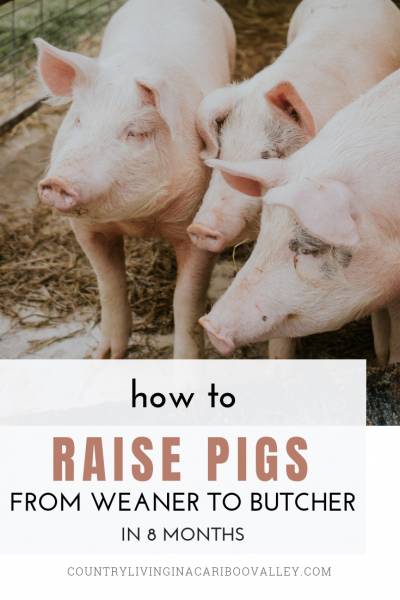
 

3 pink pigs in their outdoor run

But What About Commercially Raised Pork?

Think about the way we have raised our pigs, then read this comment left by Patty and think about the difference.

Those pigs she’s talking about are raised commercially. That is the pork you buy in the supermarket!


“Your pigs have lived a life of luxury with all they want to eat, fresh air, sunshine, good grubs, etc. Here in the Peace Country, as you may or may not know, we have a number of Hutterite colonies – and we have 4 right here in our own county, which is about 1600 square miles.

Hutterite pigs are kept in very high-tech CFO barns. People are not allowed in without suiting up, HAZMAT-type masks, booties, etc.

These porkers never see the light of day from the beginning, to just before the end when they’re loaded into trailers and shipped God knows where for slaughter.

So, all things considered, if I was a pig, I’d rather have been yours than a factory pig.

Now think about what all that offal is contributing – food down the line for your chickens, da Wolf, and your garden.

It’s not a bad thing. I hate to quote “The Lion King”, but it’s all part of the circle of life, hey?

Just enjoy your nice, juicy pork chops when they’re on the plate with some parsley and mushroom sauce!!! “

This is what a commercially raised pig looks like in her pen – yes, when you buy pork chops at the grocery, remember that this is how your pig spent her life!


A pig confined in a very small cage

Think about raising and butchering pigs for meat

Consider raising and butchering pigs for your family next Spring. I say “a couple” because pigs are such social animals.

Raising just one would be very lonely. Grow some healthy nourishing meat for your family. Know what you are feeding your children!


pigs eating pasture in the sun


How to Grow Your Own Livestock Feed – Yes you CAN!

How to Store Animal Feed from the feed store

Before adding all your pork to the freezer, read here about the fastest way to defrost any freezer!


A large pig coming out the door of his pig house

Thinking of raising meat birds?

Here’s how we fill our freezer with chickens.

8 Pounds in 8 Weeks: Raising Day Old Chicks for the Dinner Table here!


originally published August 2016; latest update September 2022

Filed Under: Raising Pigs

How To Start a Homestead

By Annie

Have you been used to buying your groceries at the supermarkets? Never raised animals or had a garden?

Are you  trying to figure out how to get started on the path to providing for your family? Have you thought about starting a homestead?

It can certainly feel overwhelming just to get started. So think about getting started, but doing it on a small level.

Trying to do too much too quickly can be a recipe for burnout and frustration.

Here’s what we did when we first move here in 2006. Learn from our mistakes and keep an open mind. And have fun – never forget to have fun!


sel sufficiency, homesteading, country


How to Set up a Homestead


Starting small will not only get you on the path to providing for your family, but it will teach you a lot. As your confidence grows and time goes by, you can implement another activity on your homestead (or in your backyard).

Let’s start with a garden.


Planting a Garden


What kind of vegetable seems to on your family’s plates the most often? That’s a good one to plant this year.

For us it is potatoes. So, it’s important for us to be sure to grow lots of potatoes this year.

The bonus with potatoes is you can feed them off to animals, once you are sure you have enough to store for winter eating for your family.

Other veggies we eat a lot of include green beans (so 2 double rows get planted), beets (3 or 4 rows) peas (so plant these up the fence that runs around the garden perimeter.


If you don’t have much experience with veggie gardening, it will take a few years before you can closely figure out how much to plant, in order to put enough by so there is food for your family over the winter.

Just get a start this year, and this fall you can count up your jars of canned beans, then figure out if you need to grow more next year.

Take a look at our 5 Easiest Vegetables to Grow and just start small!

Keep notes and start a garden journal to record this kind of information.

Next year, when it comes to ordering seed, you’ll have a good idea of how much seed you will need.


Raising Chickens

Looking to add animals into the mix? As far as I am concerned, #1 are chickens. Wonderful, you just feed them and water them – every day (almost) they will pay you back. We started with 4 hens, the next year we were up to 15.

EVERY time you have an extra dozen, (after you have put a couple dozen away for your family) sell the eggs. Keep the egg money in a separate jar. Once you get an egg customer, call them each week and see if they are in need of another dozen.

Pay for your chicken feed OUT of the jar. Find another customer (or as it often seems to happen, your one customer will find you the next one)….rinse and repeat.


Over time, you will have enough money in your jar to pay for their feed and still more money in the jar.

Got an extra $15 in there? Next time you are at the feed store, pick up a couple of T-posts or pick up a roll of chicken wire.

I am a big fan of T-posts and chicken wire. Temporary fencing can be set up wherever you need it and for however long you need it.

Put the chickens in there in the afternoon, and let them find their own food of bugs and grass.

Don’t let them scratch right down to the ground. Before that happens, pull out the T-posts and set your fencing up somewhere else that needs a good grazing.

Setting up fencing against existing buildings or fence posts reduces the number of T-posts you need.

Chickens like to work! Bored chickens get unhealthy and start picking on each other, just to give themselves something to do.

Harness that energy and put it into something that will help you. Chickens allowed to free range and graze will lower the feed bill, and that’s what you want.

Meanwhile, your family is enjoying the eggs, extras can be sold, and the money saved up for feed and the “next thing on the farm list”.


raising chickens, hens, layers


If you have access to fresh manure, set up temporary fencing around the manure pile, and let the girls in.

Within days they will have eaten all the small seeds they find and any bits of leftover grain.

They’ll also scratch and fluff up that manure pile for you. Let Them do the work! Then move the fencing.

Once the manure has sat for a month or two, you can wheel it over to use on your veggie garden.


Raising Chicks for Meat

Meanwhile, you’re saving your egg money in the jar. Over time, say you end up with an extra $50 in there (after the feed, that you are now able to buy in either bulk or buy multiple bags so you have them on hand).

An extra $50 will buy you some meat birds (in season of course). Here in BC, $50 will probably get you 20 birds, by the time you take shipping into consideration.


How many meat birds can your family eat? Averaging about say 5.5 lbs, 20 chickens will enable your family to have chicken every 2 1/2 weeks or so.

It’s possible to get 4 meals off a chicken (including the soup at the end). See how all this is adding up over time?


Yes, the first year you will have to put out money for meat bird feed, however, time it right for your season.

Raise the birds when you hardly have to supplement their heat after the first 2 weeks.

During the spring, summer and fall, if you let your laying hens free range of graze in temporary coops, you won’t be spending as much money on their feed.

Use the money instead to buy feed for the meat birds (20% protein). Keep selling eggs – rinse and repeat.

Another easy way to offset your laying hen’s feed bill (while collecting their eggs) is to feed them veggies and greens from the garden during the growing season.

You can feed greens to meat birds too, but you’ll always have to buy them their special feed.

Meat birds are bred to gain weight FAST, and they just won’t do it living off of garden greens.

Read how we manage to raise 8 pound meat birds in just 8 weeks.

Eight weeks later, butcher your meat birds. Still have your one or two egg customers?

Do yourself a favour (and them) and give them one bird, all dressed out. Thank them for buying your eggs and hand over a chicken.

Let them know you’re going to do meat birds the following year. If they should want some, they can order some.

In addition, you’ve just been given a LOT of fantastic manure from those meat birds.

Let it compost, then add it to your veggie gardens – rinse and repeat.


Meanwhile, you’re making sure you spend any egg money on feed. If you have leftover money, keep buying T-posts or wire or veggie seeds.

Every time, put the money BACK into either your garden or your animal needs.

You will see, over time that you can add slowly to your homesteading – every little bit helps.

Concentrate first on what your family needs are, sell any excess.


Keeping Goats for Milk

Does your family drink a lot of milk? Think about saving towards a goat. You can supply milk and cheese for your family.

Goats like to eat brush and scrub, so if you have areas like this that you want to clear off for future pasture or gardens, put the goats in there.

You’ll need stronger fencing tho than T-posts, you know what they say about goats!

If you have small trees that need to be spaced, you can cut the trees down and use them for fence rails.

You can also take the branches off and use them for bean or pea supports in your veggie garden.

The idea is to spend as little as possible in the beginning. Over time, keep plowing your monies back into your barnyard and gardens.

Feed ANY weeds you pull to your laying hens. When you finish harvesting parts of your veggie garden, move the T-posts in to section off part of the garden, then put some hens in there.

They’ll work your soil, eat the bugs, and add manure all at the same time. Better for you that They do the work.

When you cut the grass, give the clippings to both the laying hens and the meat birds.

If you have excess, start putting it down between the veggie garden rows to keep the weeds down. It will also add to improving your garden soil.


One more thought – for goodness sake, don’t underprice your eggs!

That is the Worst thing you can do – any customers that are wanting to buy farm fresh eggs or veggies are willing to pay at Least what the supermarket charges.

It should be more, because of your attention to growing as naturally as possible. People are willing to pay a premium for this.

Don’t overcharge, but jeez, don’t undercharge. That’s totally shooting yourself in the foot, plus you are messing up any other farmer’s plans to try to recoup their original costs.

Note I’m not including hay in the above, the way we work here, we do not overwinter any animals except for laying hens.

We may get a beef cow in the future, once we start rejuvenating our pastures and putting aside our own hay to feed them over winter.

You’ll need to have some hay or straw or something on hand for on the floor of your chicken coop.

No reason you can’t grow the grass long, then cut it down and use that.

Or straw, leaves or anything else you can think of that is no cost. Your hens will not mind!


Begin to think of your farm or backyard as a cycle. Everything has a season and as much as possible needs to be returned to the land to increase soil fertility.

Put things in (cover crops, green manure, composted manure) and take things out (the meat, eggs, vegetables).


chickens, pigs, goats and a garden in the country


Focus on improving your soil and the health of your family as cheaply as possible.

I’m willing to wager that in the next couple of years, you will be eating a LOT healthier for a lot less money.

Start small, but get started! You can do it!

Your family will eat healthier, eat fresher, you’ll save money and hopefully in a year or two, all your animals will be self-sustaining.

Think about how you can get started on the path to providing for your family.

Filed Under: How To, How to Get Started, Raising Chickens, Raising Meat Birds, Raising Pigs Tagged With: chickens, chicks, Grow Vegetables, hens, How To:, laying hens, Potatoes, Raising Meat Birds, self sufficiency

Connect With Us!

  • Email
  • Facebook
  • Instagram
  • Pinterest
  • Twitter

Search this site

Generic selectors
Exact matches only
Search in title
Search in content
Post Type Selectors
Search in posts
Search in pages

Our Most Popular Posts

Garlic cloves in oil

How to Preserve Garlic in Oil – and Other Ways to Store Garlic

a open jar of pickled brussel sprouts on a counter

Easy Pickled Brussels Sprouts Recipe (Water Bath Canning)

Privacy Policy

Read about our Privacy Policy

Disclosure

Please note that some of this site’s links are affiliate links, and CountryLivinginaCaribooValley.com is a participant in the Amazon Services LLC Associates Program, an affiliate advertising program designed to provide a means for us to earn fees by linking to Amazon.com and affiliated sites. At NO ADDITIONAL COST TO YOU, I will earn a small commission, if you purchase them. I recommend them as they are good products.

Theme Design By Studio Mommy · Copyright © 2026