Country Living in a Cariboo Valley

Homesteading in BC

  • How to Get Started
  • Vegetable Gardening
  • Preserving Food
  • Recipes
  • Homemade Wine Recipes
  • About Us
  • Work With Me
  • Shop
    • Vegetable Garden Planner Printable: Grow Your Best Garden Ever
    • Grow Enough Food for a Year
    • Delicious Dandelions: A Recipe Collection
    • Dirt to Dollars: Selling at the Farmers Market
    • 8 Pounds in 8 Weeks: Raising Chicks for the Dinner Table
    • Making Wild Wine
    • Build a Hanging Chicken Feeder
    • 15 Things to Know About Living in the Country

How to Grow Carrots

By Annie

Learn how to grow carrots in your vegetable garden or in containers.

It’s not hard to grow carrots in raised beds in your vegetable garden. You can also easily grow carrots in pots on your patio. We’ve got all our best tips to grow straight carrots in this comprehensive guide.

Enjoy fresh carrot greens throughout the season and enjoy an early summer harvest of beautiful carrots for dinner. By late summer, you’ll be eating carrots as often as you like!

We’ve got the information you need to grow straight carrots (emphasis on straight!) and we’ll also share great tips for how to prepare carrots for long term storage in your cold room or root cellar. 

Plus, we’ll show you how to save carrot seed from this year’s plants to save for planting the next year.

Fresh harvested carrots on a counter after learning how to grow carrots.
Everything you want to know to grow carrots in the garden!

Aside from classic orange carrots, you can also plant other carrot varieties like yellow or purple carrots for some color variety and some subtly different flavors.

How to Grow Carrots

If your family loves carrots, you will find it’s well worth to plant some this year. They do need a few simple things (more on that below) but once they get growing, the maintenance becomes much easier.

Carrots love to grow in cool weather so they can be seeded as soon as you can work your soil in early Spring. Carrots love cold climates (although of course they also grow in more temperate climates); don’t be afraid to get your seeds in early. Once your soil can be worked, your are good to go.

You’ll be able to harvest fresh carrots from mid summer right through fall and into the beginning of winter is some gardening zones. Keep reading for specific tips and tricks we use every year here in our carrot patch.

What’s the Trick to Growing Carrots?

There are a few simple tricks and tips to growing carrots and we’ve listed them below for you!

How do Home Gardeners Grow Straight Carrots?

The number one tip of all our tricks is this:

You NEED rock free soil in the bed.

Growing healthy carrots also takes great soil, but you can never grow straight uniform carrots in soil that has lots of rocks and pebbles. If there are rocks, your carrot plants will find a way to fork around them and you will end up with some funky looking carrots.

So, before you seed, do the best job you can of removing any rocks!

Harvested carrots in a wicker basket.
Easier to grow straight carrots if your soil is loose and rock free.

What Month to Plant Carrots?

When to plant carrots depends on where you live and the last frost date for your area. You can sow seeds roughly 2-3 weeks before your last frost date. 

Soil temperature should not be a large concern, if you use the above information to guide you.

Check your seed packet for any specific information for the variety of seed you have. 

What Kind of Soil Do Carrots Love to Grow in?

Check to make sure the soil has a fairly neutral pH and low levels of nitrogen (you don’t want too much nitrogen); opt instead for soil rich in potassium and phosphate by using lots of organic compost or organic fertilizer.

You may also consider mulching the soil after your plants are up, to help retain soil moisture and also provide some weed protection. Another good layer of protection is some kind of fencing or row covers, which will block rabbits and other pests like insects who will find the carrots and dig down to eat them.

Carrots like to grow in full sun in loose fertile moist soil, that is well-draining. So work to provide a a spot with loose soil to about a foot deep, then sow your Carrot seed in there. In about 70 days you can pull up beautiful long carrots, depending on the variety.

a handful of harvested carrots from the garden
Here’s the one tip you need to grow large carrots.


Sowing Carrot Seed

Plant carrots by sprinkling seeds about 2-3 inches apart, then cover with soil. You can use your hand to cover the seed or do as we do. Just hand sprinkle a garden bed of carrot seed, then very lightly drag a rake across the bed. We then throw a little extra soil on top.

If you do it this way, you may find it helpful to mix your carrot seed with some fine sand, which helps with distributing the seed.

Germination and Weeding of Carrots

Remember that Carrots take awhile to germinate, so don’t worry if you cannot see a sign of germination for 10 days or so.

We sometimes seed a few Radishes in the rows as well. Radish germinates quickly, so we can tell where the Carrot leaves will come up.

This is very helpful when we are trying to do early weeding. Carrots (more than any root vegetable) are a bit of a pain to weed the seedlings. I find it turns into spending some time in the patch on my hands and knees, but the end result is worth it.

How to Thin Carrots

Thin the patch once the carrots roots are big enough to nibble on as baby carrots. Enjoy the foliage in salads.

As the season progresses, just keep harvesting carrots by thinning them, always removing those that are growing too close together.

The last carrots in the garden will have wonderful root growth, nice and thick and great for storing long term to eat over winter.

how to grow carrots, vegetable gardening
You can see here how closely the carrots can grow!

Planting Carrots in Beds Instead of Rows

Here’s about 10 rows of Carrots that were planted last year. We scattered seed, instead of planting strictly in rows. We find planting wider beds instead of rows results in harvesting more carrots.

I just make sure we can reach across the bed for weeding, without stepping in it. And we stay on top of thinning the carrots, removing those too close together.

By the way, if you are wondering what is growing above the carrot bed, that is Buckwheat that has just come up. We find a great way to improve garden soil is to use Buckwheat! You can read more about that if you’re interested in building fertility.


carrots sitting on a counter.
Look how beautiful and vibrant these carrots are!

An early harvest of Carrot thinnings and Lovage. Lovage is a wonderful herb and we have a perennial plant, so it keeps returning every year. Each Spring, I cut lots of stems so I can dry Lovage, as well as other herbs.

By the time mid-Summer rolls around, we are able to harvest carrots fresh for our dinner table. We have also used them to make our own homemade Carrot wine!

But we always grow lots so that we can keep some over Winter. I have canned carrots before to eat over winter, but we prefer them fresh or stored in our root cellar.

How to Store Carrots for Winter Use

storing carrots in a bucket with layers of soil.
This is the best way to keep carrots fresh and great-tasting through the winter. Just be sure to wash before eating!

Although we’ve eaten lots of carrots during the season, along comes the fall harvest. We pull up the remaining carrots from the garden for long term storage.

In the picture above, you can see how we store the Carrots. I take a bucket or a heavy plastic tote like this one down to the garden, and put a layer of soil in. This cold room storage method keeps the carrots fresher for longer, rather than storing them in a refrigerator.

Then I use my gardening pitchfork to carefully pry up soil around the carrots. Don’t try to pull them by hand unless you have very loose soil.

It is very easy to snap the greens off the top and then you are left with the root still stuck in the ground.

After getting the Carrots out of the ground, I trim the greens. Do NOT trim them right down, just leave an inch or so. Then put a layer of Carrots into the bucket. Add another layer of soil. Then add another layer of Carrots.

Keep going until your storage bucket is full. Make sure the top layer is soil, enough to completely cover the Carrots. Now they are ready to be stored in the Cold Room or your basement, wherever you can keep the temperature between 32 and 40F.

We do this every Fall and come January, the carrots we get from the Cold Room are just as delicious, firm and sweet as the day we harvested them in October or November.

How to Save Carrot Seeds

blooming carrot leaves.
Carrots can also make a beautiful addition to your garden.

If you grow an Heirloom type of Carrot, why not leave one or two in the ground over Winter? Choose a few carrots and once really cold weather hits, cover the tops with a good layer of mulch to help protect the plant.

The following Spring, remove the much and soon enough, you will see some new growth coming from the Carrot tops. Leave the Carrots alone until the Fall.

You will see your Carrots  start to bloom then flower. When they are finished flowering, they will produce seeds on the top. Gather these and plant them the following year.

You won’t need to buy Carrot seed the next year – you can start planting your own. Do this every year with a Carrot or two and you will never need to buy Carrot seed again.

So, grow carrots this year. They are a great source of Vitamin A, which you need for good eye health and most people like them. Why not plant a row or two this year?

Some Varieties of Carrots

Read seed packets for information specific to the variety such as length of time to maturity, mature size, days to harvest time and more.

  • Nantes – cylindrical and sweet with a crisp texture
  • Red Core Chantenay – sweet with a unique red color
  • Royal Chantenay – a great variety for juicing
  • Danvers – a classic heirloom carrot that’s suited for heavy soil and has a rich dark orange color
  • Imperator – this variety keeps its sweetness and crunch in storage
  • Thumbelina – also called Paris Market, this variety produces round and bite-sized carrots
carrot leaves growing in a garden.
Follow this guide for delicious and crisp carrots!


More Articles You’ll Love

  • How to grow big Potatoes – everything you need to know.
  • Want to grow awesome Onions? Here you go…
  • Zucchini are really easy to grow and you will get huge harvests! Here’s how to grow just enough Zucchini.


originally published 2011; latest update March 2026.

Filed Under: Grow Your Own Vegetables Tagged With: Carrot

How to Make Carrot Wine

By Annie

Ready to try something different? Here’s how to make Carrot wine!

Ever tried making Carrot Wine? If you have had a really good harvest this year, why not give it a try? Here’s how to make carrot wine! And you can read here about all the different wines made from our gardens.

2 glasses of carrot wine sit on a dinner table.
Learn how to make homemade Carrot wine at home.

This recipe is to make 1 gallon of wine. If you make less than that, make sure to decrease the amounts of ingredients properly. Get yourself the wine making equipment (you can get them all on Amazon or eBay) you will need and then get started.


Freshly dug carrots sit on a porch in front of the vegetable garden.
Lots of fresh carrots here to make homemade Carrot Wine.

Since we grow all of our own carrots for the year and have extras, we have plenty! Carrots are one of our most prolific root vegetables we grow.

Carrots being warmed up to make wine.
Simmer carrots on the stove.

How to Make Carrot Wine

Wash 5 pounds of Carrots really well, then bring them to a boil, reduce the heat and let them simmer them in about a gallon and a half of water (the water measurement isn’t precise. Remember you will lose some liquid each time you rack down your wine) for about an hour. When the roots break easily and the carrots are tender, they are ready for the next step.

If you like, you can slice the carrots before putting them on the stove to boil. Some people prefer thin slices of carrot for making wine.

Chopped raisins added to crock of carrot wine during fermentation.
Take the time to chop the raisins.

Using a slotted spoon, remove the carrots carefully. Add half a pound of finely chopped golden raisins to the liquid. (I find chopping raisins is a bear of a job….but it must be done.)  Add the juice of two oranges and just a little bit of the orange zest. Be sure you don’t add pith, you want just the peel. Simmer for about another hour.

Some recipes I have seen call for lemons instead of oranges but we have not made it that way. I have also heard of adding honey, which would add a nice flavor.

Fermenting Carrot Wine

Put 2 1/2 lbs of white sugar into a large bowl or crock. You can also use a fermenting bucket, if you have one. Pour the simmered mixture over the sugar and stir it well. Make sure all the sugar is dissolved. Sprinkle 1 tsp. of yeast nutrient on top and cover, leaving it for 3 days. This will start the fermentation and get the brew bubbling.

You can also add the yeast by the following method:

After sugar is dissolved, take off 2 cups of the hot liquid. Mix it with 2 cups of cold water. Add your yeast to this, stir it well and leave for half an hour or so. Then pour it into the crock and cover.


A carboy full of carrot wine after fermenting.
Keep your wine covered; we just wrap a towel around it to keep out of the light.

After three days, rack the wine into a secondary fermenter, using a wine siphon hose. You can use a straining bag if you like.

This is where we use a carboy as our secondary. So we rack the wine and strain liquid into a carboy or a demi-john. Use a bung and an airlock to close the carboy; you need to have some type of fermentation lock.

Leave it in a warm place for six weeks or a couple of months. We rack it down one final time, then let it sit in the carboy two more weeks, before bottling. This step will help clear the wine and any sediment left will have settle to the bottom, and we can avoid it when bottling. This Carrot Wine should then stay in the bottle for at least six months before drinking. Enjoy!

More Wine Making Recipes:

Here’s how to make Homemade Strawberry Wine

Try this delicious homemade Dandelion Flower Wine

This Saskatoon Raspberry Wine will be a favorite for red wine lovers

Got Rhubarb? Try your hand at this Rhubarb Wine

Ever heard of a Parsley wine recipe?

Learn more about making wine from garden vegetables

Glass of homemade carrot wine on a table outside, with carrots and grapes alongside.
Save this homemade Carrot wine recipe to your Pinterest board.


Two glasses of carrot wine on a picnic blanket in a field.

How to Make Carrot Wine

Yield: 1 gallon carrot wine
Prep Time: 1 hour
Cook Time: 2 hours
Additional Time: 8 months
Total Time: 8 months 3 hours

Use fresh carrots to make this unique homemade carrot wine.

Ingredients

  • 5 pounds carrots, scrubbed
  • 1/2 pound golden raisins, chopped
  • 2 oranges
  • 2 1/2 pounds sugar
  • 1 tsp. yeast nutrient

Instructions

1. Add 1 gallon water to a large stockpot.

2. Add the scrubbed carrots, sliced or whole.

3. Bring to a boil, then reduce heat and let simmer one hour.

4. Remove carrots; set aside.

5. Add raisins to the liquid.

6. Cut two oranges and add the juice to the liquid.

7. Add some of the orange zest, careful to not use the pith.

8. Let this liquid cool until just warm.

9. Add sugar to a clean crock, then pour the hot liquid over the sugar.

10. Stir well, until sugar is dissolved.

11. Sprinkle the contents of yeast packet evenly over the liquid.

12. Cover crock.

13. Each day for next 3 days, briefly remove the cover and let the fermenting liquid vent. Then recover.

14. After 3 days, carefully use a wine siphon hose to rack the wine into a clean carboy.

15. Add water to the airlock, and close the carboy with the bung.

16. Leave the wine in the carboy for 6 weeks.

17. Rack the wine down into another clean carboy or container.

18. Let sit for 2 weeks; sediment will fall to the bottom.

19. Bottle the wine, being careful to not disturb the sediment.

20. Store bottles for six months before sampling.

Nutrition Information:
Yield: 16 Serving Size: 1
Amount Per Serving: Calories: 376Total Fat: 0gSaturated Fat: 0gTrans Fat: 0gUnsaturated Fat: 0gCholesterol: 0mgSodium: 85mgCarbohydrates: 96gFiber: 5gSugar: 86gProtein: 2g

Did you make this recipe?

Please leave a comment on the blog or share a photo on Pinterest

© Annie
Cuisine: American / Category: Recipes

Originally published 2011; latest update Oct. 2024

Filed Under: Homemade Wine Recipes Tagged With: Carrot, wine

Cooking on the Wood Stove

By Annie

Having a wood stove for heat is an wonderful thing – being able to cook on it is even better. We love cooking on the wood stove.

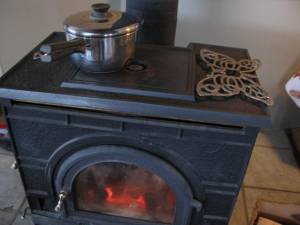
But, our wood stove is NOT a cook stove, it is just a wood stove for heating our home. Doesn’t matter! We are able to cook on it because our stove has a flat top.

We have electric heat as well, although we don’t even turn on the baseboard heaters unless it is -20C outside. Then we turn on a few heaters in the basement, just to keep things from freezing down there.


breakfast cooked on the woodstove


If you’re thinking of buying a woodstove for heating your home, good for you! It is amazing how much heating money you can save, if you have access to wood.

Our stove, although small, heats this almost 3000 square foot house, in part because of where it is situated. Located right in the middle of the main floor, with an open loft above it, we have no problem keeping the bedrooms upstairs warm enough, since the heat rises.

We have a large ceiling fan that helps to push the warm air back down. The fellow who built this house was thinking smart when he did the construction.

The only better place for our stove to have been located would have been down in the basement – that way, we would likely never have to turn on the electric heat.

But then, we would have to go up and down a lot to fill up the stove. I’m happy with where it is right now.


cooking on a woodstove


If you’re looking into wood stoves, strongly consider getting one with a flat top. That way you can use it for cooking, even though it is not a true cook stove. We are fortunate that ours does have a flat top and we do use it for making soups, stews, even bacon and eggs.

If you have a power outage and you don’t have a wood stove, how is your family going to stay warm? What if the power outage lasts for several days?

Cold kills and depending on where you live, sometimes it doesn’t take long for hypothermia to set in. If you’re fortunate enough to have a wood stove for heat to see you through power outages, good for you.

Wouldn’t it be even better to use it for cooking, as well as for heat? Of course it would. So, look for a stove with a flat top. Being able to do some cooking on the wood stove will help you take care of the two most important things in an emergency: warmth and food!


chicken broth, homemade chicken soup, cooking on a woodstove, country living in a caribboo valley

Sometimes, we will have bacon and eggs cooking on the wood stove. We also use our wood stove to cook up all kinds of soups and stews.

A couple of years ago, we pressure canned up chicken broth. When we butchered the meat birds, Graham had parted out 5 or 6 of them and so we had the carcasses sitting in the freezer.

When we had time in the late Fall, we heated them up in water, then picked the meat off the carcasses and canned the broth and meat together.

It’s a great way to use up as much of the chicken as possible.

Being able to grab a canned quart of broth to make some soup is a great time saver for us when it comes to cooking.


chicken broth, homemade chicken soup, cooking on a woodstove, country living in a caribboo valley


With a pantry full of canned broth, we just grab a couple of quarts and start heating the broth on the wood stove. Usually we get it going right after we finish breakfast.

We cut up some celery and carrots and added them to the broth. Later we added broken spaghetti noodles as well as a bunch of dried parsley and lovage.


chicken broth, homemade chicken soup, cooking on a woodstove, country living in a caribboo valley


After simmering on the stove for a couple of hours, we were able to enjoy some wonderful healthy Homemade Chicken Noodle soup.

We wouldn’t be able to do this if our stove did not have a flat top.


Do you have a wood stove? Can you use it for cooking? Leave a comment and let us know.

If you’re starting to think of getting a woodstove, I hope this article helps you to narrow down your choices.

Heating your home for free, if you have access to wood, is a great thing – being able to cook on it is even better!


Filed Under: Heating with Wood, Save Money Tagged With: Carrot

Connect With Us!

  • Email
  • Facebook
  • Instagram
  • Pinterest
  • Twitter

Search this site

Generic selectors
Exact matches only
Search in title
Search in content
Post Type Selectors
Search in posts
Search in pages

Our Most Popular Posts

Garlic cloves in oil

How to Preserve Garlic in Oil – and Other Ways to Store Garlic

a open jar of pickled brussel sprouts on a counter

Easy Pickled Brussels Sprouts Recipe (Water Bath Canning)

Privacy Policy

Read about our Privacy Policy

Disclosure

Please note that some of this site’s links are affiliate links, and CountryLivinginaCaribooValley.com is a participant in the Amazon Services LLC Associates Program, an affiliate advertising program designed to provide a means for us to earn fees by linking to Amazon.com and affiliated sites. At NO ADDITIONAL COST TO YOU, I will earn a small commission, if you purchase them. I recommend them as they are good products.

Theme Design By Studio Mommy · Copyright © 2026