Country Living in a Cariboo Valley

Homesteading in BC

  • How to Get Started
  • Vegetable Gardening
  • Preserving Food
  • Recipes
  • Homemade Wine Recipes
  • About Us
  • Work With Me
  • Shop
    • Vegetable Garden Planner Printable: Grow Your Best Garden Ever
    • Grow Enough Food for a Year
    • Delicious Dandelions: A Recipe Collection
    • Dirt to Dollars: Selling at the Farmers Market
    • 8 Pounds in 8 Weeks: Raising Chicks for the Dinner Table
    • Making Wild Wine
    • Build a Hanging Chicken Feeder
    • 15 Things to Know About Living in the Country

The Five “W’s” – Spring Chores

By Annie

My days are really full right now with lots of outside stuff going  on. I have a bit of the garden planted – the peas are all planted, as well as some carrots, lettuce and spinach.

I am early this year getting things in the ground but these cool weather veggies should be fine. We’re looking forward to a good harvest in a month or two. Things grow quick in the Cariboo.

Spring is one of the busiest times around here. We usually try to get a project done during this time – the bugs aren’t out yet, there isn’t a huge amount of garden work to do and we will NOT have time later in the season to get much done.

But, even without extra projects, it’s a busy time. Here’s what I’m working on, every day, in one form or another. I call them the “5 W’s”.


spring, garden, grow your own food


Spring Chores on the Homestead


Weeding – Who doesn’t dislike weeding? I am continually trying to stay one step ahead, but each year the weeds still seem to win. I am not seeing much chickweed this year (yet).

I’m thinking that all those hours put in a couple years ago with Jaime and I pulling chickweed together has really slowed that stuff down. A good thing.

I’m putting in at least two hours daily on weeding, whether it’s in one of the garlic beds, the veggie beds or the flower beds. The more time I spend now pulling weeds, the better it should be come July and August.

I use a stirrup hoe, and have for years. One of my favourite garden tools!


a fully growing garden sits behind a fence


Watering – Lots of watering going on here right now. It has been really dry and hot for the last week, so extra water is needed.

Plus I still have little seedlings emerging that I don’t want drying out. Not everything here is on a sprinkler, so I’m carving out some time to get extra water onto everything.

Standing at the end of a hose is never a bad thing – I can take some time and look around and all the beautiful things going on right now in the Valley.

Standing at the end of a hose while holding a homemade beer is even better!


Weedwhacking – It seems these days if I’m not riding the John Deere to get the lawn cut, I’m pulling out the Stihl and weedwhacking.

The lawn mowing will slow down once the temperatures really start to rise, but there will always be weedwhacking on my list.

Although we won’t be getting pigs this year, we will have the cattle. I’m looking into secure fencing so we can let them in the yard. That should help with the lawn mowing.


firewood, woodstove, cooking on a woodstove


Getting Wood in – We try to fill our wood room in the Spring. This is definitely a chore that needs to be done in the off season.

It takes days to fill our wood room, but then, we use the wood stove a lot for heat.

Graham takes down the trees with his chain saw and he bucks the logs. I work on getting the wood over to the splitter.

Then we can start splitting and stacking. We like to stay at least a year ahead  – this winter we will be burning the wood we got last year.

The wood we get in this year will be used next year. It would be great to keep three years worth of wood all the time.


grow rhubarb, perennial food, farm


Wine – It’s close to that time of year. If we’re not making it, we’re maintaining berries and fruits. I harvest a lot of the rhubarb and get it in the freezer.

A fair bit of it will go towards making wine, but we will definitely have more than enough for wonderful pies and fruit crisps.

In early Spring, I get started on a batch of Dandelion wine, next up is making Rhubarb wine, and later I will make our Saskatoon Raspberry wine.


make your own wine, beer, garden, flowers


It’s a good thing I spend late afternoon on the porch, usually with a beer in hand. An hour or so of relaxation after all that work is my reward for the day!


Filed Under: Grow Your Own Fruit, Grow Your Own Vegetables

Raspberry Vinegar with Honey

By Annie

This Raspberry Vinegar with Honey is a sweet and tangy mixture that’s a refreshing and delicious way to use raspberries. Make it into salad dressing or drizzle it on anything that needs a punch of fruity flavor!

Collage that shoes raspberries in a bowl, leaves, and a close up of raspberries.
This raspberry vinegar utilizes delicious honey to bring extra sweetness that plays nicely with the berry flavor!


Thanks so much to Annie for allowing me to do a guest post on her blog! I’m happy to be here and share the good things in life with her readers!

Why You’ll Love Raspberry Vinegar with Honey

Raspberries have been a favorite since childhood. Even as a little girl, I knew that when I had my own home, raspberries would be at the top of the list. Not only are the fruits delicious, but they grow well even in cold climates, which is a double-bonus for northern folks!

While I don’t own land (or a cottage) yet, I am part of a community farm with a wonderful raspberry patch, from which my man and I get a full harvest each year. I’ve been promised I can dig my own starts from these bushes when we do purchase land!

Oh yes, that excites me! And at that point, I’ll be refreshing my mind with Annie’s blog post on how to grow and care for raspberries!

In my mind, no summer is complete without these red, luscious fruits! When harvest season rolls around, I have a difficult time actually using them. A winter freezer without whole, frozen raspberries is like a bank account without money!

I usually talk myself into sacrificing half the berries for a few cordials, a batch or two of raspberry kvass, mini-jars of delicious jam and of course, raspberry vinegar!

With this fermented liquid, brilliancy of color is equally matched by brilliancy of flavor. And the salad dressing you can make with the finished product is lovely.

Because good things are meant to be shared, I’m going to share my favorite raspberry vinegar recipe with you today! The recipe makes approximately 7 cups of the finished product.

Both fresh and frozen berries are viable options. If using frozen fruit, be sure to thaw before beginning the process. Hint: making vinegar from frozen raspberries in early spring while snow blankets the earth is a wonderful way to curb the garden itch!

Bowl of raspberries in water.
These raspberries are so red and beautiful, and full of flavor!

Ingredients

  • 4 cups raspberries (x3)
  • 6 cups chlorine-free water (x3)
  • 1/2 cup raw honey
  • glass jar or bowl
  • 2 finely-woven cloths


How to Make Raspberry Vinegar with Honey

  1. Place 4 cups raspberries in a glass jar or bowl. Add approximately 6 cups water. Cover the mouth of container with a cloth and secure to keep fruit flies out.
  2. After 24 hrs have passed, place a second cloth in a colander and place colander over a bowl. Pour berries and liquid into cloth-lined colander, straining the liquid.
  3. Tie up the ends of cloth and hang from a kitchen cupboard, allowing juices to drip into the bowl for several hours.
  4. When dripping has ceased, toss berries or save for morning smoothies. Place another 4 cups of new raspberries in the container or jar.
  5. Take the strained, red raspberry water and pour over fruit.

    Raspberries dripping through cloth.
    Making this vinegar in multiple rounds ensures there’s plenty of punchy raspberry flavor.
  6. Let it also set for 24 hrs. Strain as instructed above and toss the old berries. On day 3, repeat the process by pouring twice-infused liquid over another 4 cups fresh fruit, once again letting it stand for 24 hrs. Strain liquid for the 3rd time.
  7. In a glass jar, bowl or in a crock, add 1/2 cup honey (crystallized or liquid), then add the deep red, raspberry-infused liquid. Come back 24 hrs later and stir honey. It will quickly dissolve. Be sure to cover the open-mouthed container with a cloth, tightly tying down to keep fruit flies out. The aroma of fermented fruit is certain to attract them!
  8. Vinegar ferments best in temperatures of 60-70F (15-21C). Let it sit without a lid for 2-5 months. When fermentation begins, you’ll see tiny bubbles on the sides of the glass.
  9. Several weeks later, it will smell slightly sour. The process to completion will take several months. Be aware that if you seal up vinegar while its still in the fermenting phase, pressure will build and explode glass jars and bottles!

Err on the side of caution: if you must seal it up, be sure to check for pressure 2 days later! If free from pressure build-up, vinegar is done processing and has gone “flat.” It’s delicious, ready to use immediately.


A bowl of raspberries and glass jar of raspberry vinegar.
The beautiful color from the raspberries transfers over to the vinegar!


Autumn Rose is an author, blogger and chronic Lyme survivor. She is passionate about bringing nutrition into her home and for this reason cooks from scratch, gardens and practices raw food preservation. She loves old fashioned living and leads what she refers to as the simple cottage life. Together, she and her husband are working to implement this lifestyle while saving to purchase land. There, they hope to build their own cottage and lead a life focused on what really matters most. Her tutorials, writing and musings can be found on her blog atraditionallife.com


More Sweet and Fruity Recipes

Our entire Country Living in a Cariboo Valley Recipe Collection can be found here, but here are some fruity highlights!

  • Homemade Lemonade
  • Chewy Coconut Cookies
  • Pumpkin Cranberry Banana Bread


First Published February 2017; Updated April 2021

Thanks for checking out this recipe. For more, follow me on Facebook, Pinterest, Instagram, and Twitter!

Filed Under: Food, Grow Your Own Fruit, Recipes

How to Sell Your Produce at the Farmers Markets

By Annie

Do you love gardening and growing your own vegetables? Ever wondered how to turn your love of growing into cash? Been to the local Farmers Market and wondered about getting a stall and giving it a try? 

From Dirt to Dollars: A Guide to Selling at the Farmers Market

will give you the low down on what to plant and how to sell it!


Markets can be a great way to supplement your income – in fact, some people attend several weekly markets and make enough from markets to pay their monthly bills.


vegetables in baskets at market
Special tips we learned that we’re sharing with you!

I enjoyed doing it so much, I wrote this book about it and I want to fill you in on a ton of information that will help. Here’s how to sell your produce at the Farmers Market.

a book cover about how to sell at the farm markets


How to Sell Vegetables at Farmers Markets


Get an idea of what SELLS at the market

Hit up a few local markets and take note of what is selling. It is a great idea to go first thing in the morning and scope out all the stalls.

Make some notes! Then go back about half an hour before the market closes and see what is missing and what is gone.

This will give you a fairly good idea of what items sell.


Plan (and plant) your vegetable garden

Take the time to thoughtfully consider your seed choices and get them in the ground.

You can plant seeds closely together; thin them as they grow.

You can take thinnings (of a decent size) to market and sell as “babies”. Baby carrots, baby beets, etc.


grow your own food


Plan Your Farmers Market Booth

You NEED a good looking stall. Actually, you need a GREAT looking stall – presentation counts. Make it inviting and colourful!

Put some thought into it and get feedback from friends and family.

Accept constructive criticism to make your booth even better!


Grab my book!


$7.99

Buy Now Button


Learn everything there is to know about how to sell your produce at the Farmers Markets. My book will show you just how to do it!


how to sell your produce at the farmers markets


From Dirt to Dollars: A Guide to Selling at the Farmers Market – it has everything you need to think about and then some.

Over 40 pages of information, from what to plant to how to present it and everything in between!

This book will take you through all the steps in learning how to sell your produce at the Farmers Markets.


Includes:

  • how to plan for success
  • how to present your veggies so you sell them all and don’t bring them back home
  • should you include value added products? Which ones?
  • what to do on a weekly basis to get ready for market


Ready to get going? Grab my book From Dirt to Dollars:

A Guide to Selling at the Farmers Market


$7.99

Buy Now Button


originally published Feb, 2017 updated Jan, 2021

Filed Under: Great Books, Grow Your Own Fruit, Grow Your Own Vegetables

How to Transplant Saskatoon Berry Bushes

By Annie

These tips for transplanting Saskatoon Berry bushes will make the job easier. And, remember the water!

Sometimes, things grow where we don’t want them to. Or we misjudge the grown size of small plants and crowd them in too closely together. This new growth ends up with something needing to be moved. Here’s how we transplant Saskatoon berry bushes without killing them.

A Saskatoon Bush with many ripe purple berries.
Need to know how to move a Saskatoon bush?

Where we live, Saskatoon Berry bushes (also known as Serviceberry, Juneberry, or their scientific name, Amelanchier alnifolia) are native to the area. They grow throughout North America, including many parts of Canada including across the Canadian prairies to the southern Yukon (Alberta, Saskatchewan and Manitoba) and as far into the northwest territories as Alaska.

Transplanting Saskatoon Berry Bushes

Where we live, Saskatoon Berry (also known as Western Serviceberry) bushes are native to the area. These berries are full of Vitamin C and make wonderful pies and also turn into delicious jams and jellies!

Information on Saskatoon Berry Bushes

Note: This article focuses more on transplanting Saskatoon bushes. If you want more in depth information on Saskatoons, head over here to How to Grow Saskatoon Berries. There you’ll find more general information, like:

  • health benefits and nutrients like protein, fiber, and antioxidants
  • pruning branches and leaves
  • differences between Saskatoons and blueberries
  • flavor of Saskatoon berries
  • growth of bushes depending on cultivar
  • growing Saskatoons as a privacy hedge
  • and more
A Saskatoon Berry Bush with lots of ripe purple berries.
This guide will tell you all you need to know about transplanting Saskatoon berry bushes!

How to Transplant Saskatoon Berry Bushes

But sometimes, I need to move the actual bush itself. The ideal time to do this in the late Fall, once the rains start again. You can transplant in very early Spring but you really need to make sure the bush gets lots of water.

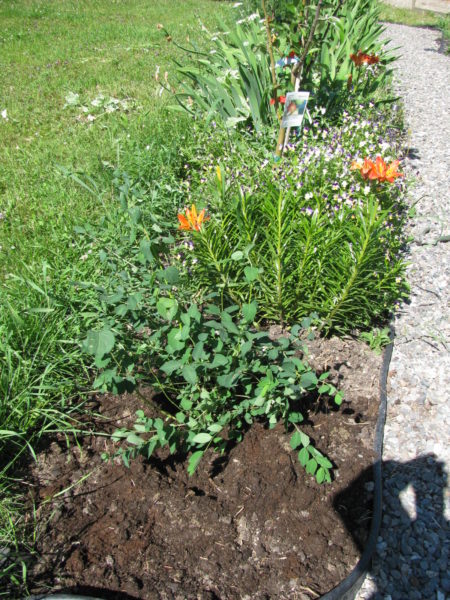
I found this wild Saskatoon Berry bush in my Barn pathway flower bed. I know I didn’t plant it there, but there it is all the same. Never wanting to turn away free food, especially a perennial fruit shrub, I decided to move it.

You can see it was getting overrun with the other plantings around it. I have had this flower bed in place for a couple of years now, and I had planted the perennials quite close together. Now, everything is growing and some things are getting a bit crowded.

This Saskatoon berry bush needs to be transplanted so it has room to grow.
This serviceberry bush grows tangled in iris and goutweed, so it needs to be moved.

Can you see the berry bush? It’s growing among the iris, goutweed and poppy plants. Poor thing is actually stuck in there. Iris bulbs are big and gangly.

(It wasn’t surprising that I damaged some bulbs while trying to get the berry bush out.)

A flowering Saskatoon berry bush ready to be transplanted.
Here are some beautiful berries on the plant!

It actually has a few berries on it. I don’t remember seeing this last year when I was weeding, so I don’t know how long it has been hiding here.

Preparing a Planting Hole for a Saskatoon Bush

Saskatoon bushes like to grow in full sun but they will also grow in filtered shade and partial shade. This makes them ideal to grow as a lower canopy under tall trees such as the aspen and spruce we have here.

I got the new hole dug and watered really well before digging the bush out. It’s important to do this, so the plant can have water to its roots as soon as it is planted.

Transplanting Saskatoon berries should be done as quickly as possible, so the shrub doesn’t go in shock.

Once the large hole was dug, I added more composted manure to the spot. I only have this one chance to get some really good compost or organic fertilizer down underneath the plant. You may also want to add some mulch for weed control.

Once the plant is in the ground, all I can do is top dress around the plant, so I like to make sure the hole gets a good amount of manure before planting.

The root ball of a Saskatoon berry bush ready for transplanting.
You can see this plant already has a good root system, which is important for transplanting.

Although the berry bush is quite small, the base of the plant and the root system look great. Lots of roots and nice and long too.

Planting the Berry Bush

I quickly took this picture, then soaked the roots and planted the bush upright right away. You don’t want these roots to dry out. The best thing to have done would be to take a bunch of the soil medium around the root ball along with the bush.

I couldn’t do that because this little bush was so crowded among other perennials. It took a fair amount of careful digging and prying to get this berry bush out of the ground.

A transplanted Saskatoon berry bush in wet soil.
Make sure to give the bush lots of space in its new location!

Here’s the bush in its new home, right at the top of the Barn pathway flower bed. Once I got it planted, I made a moat around it with soil. This will help the water remain around the trunk of the bush and make sure it gets down to the roots.

The #1 Tip for Keeping a Transplanted Saskatoon Bush Alive and Healthy

The most important thing I need to do now is water it every day from now until late Fall. If we have some rainy weather, that will help, but I need to make sure this shrub doesn’t dry out too much.

This is why it’s best to transplant in the late Fall or very early Spring. That way, the rains will help make your job easier. You won’t have to water every day, but you will need to keep up with the weather forecast. Remember, never let that soil dry out! And, keep the weeds away from the shrub. 

Now that this is planted, I am looking forward to a few years from now. By that time, this small shrub will have grown into a small tree, bearing fruit for us every year.

Pruning A Saskatoon Bush

I can prune the lower branches out over the next few years, so the bush will grow taller with branches higher up. Want to learn some great pruning tips for shrubs and trees?

That way, we can still see the perennial flowers in the flower bed from our porch and inside the kitchen. And over time, this bush will hopefully become large and start producing some suckers growing from the dirt. Then, those can be dug up and you will have more young plants.


A flowering Saskatoon berry bush after transplanting.
Here’s what the flowers of the bush look like around springtime. This plant makes a beautiful addition to any yard or garden!

Here’s what this small bush should look like in three or four years, lots of Spring flowers! Aren’t they pretty? Now all the Saskatoon bush needs is moisture. Lots of moisture will mean lots of berries.

After transplanting Saskatoon berry bushes, this can be your berry harvest.
Look how beautiful and colorful those berries are!

The flowers should hopefully be followed with loads of beautiful big berries for us to use in pies, muffins, fruit crisps and even Saskatoon Berry Wine. Turn some berries into juice or make syrups you can enjoy on pancakes and ice cream.

Harvesting the berries usually takes place between late June and early July. If the weather conditions are just right, you will definitely have higher fruit yields. The perfect amount of moisture, followed by heat during berry production means you are going to be to have a great fruit harvest.

Remember when Transplanting Native Shrubs

Most native shrubs and trees do not like to be transplanted at all, so it’s important to make it as easy on the plant as possible. Try and take as much soil around the roots as possible when you are transplanting Saskatoon berry bushes or any type of shrub.

If you can do it early in the morning or on an overcast day, that is even better. The cooler temperature and lack of direct sun will be better for the plant as it gets moved.

A transplanted Saskatoon bush with purple berries.
This guide will have your Saskatoon bushes healthy and in a better location in no time!

Protecting Transplanted Shrubs from Pests

You may want to place a wire cage around your Saskatoon bush, at least for the first full year. Wildlife loves to nibble on fresh shoots and of course taste the berries too.

Provide protection from deer, mice, rabbits, and moose to get your transplant off to the best start. Depending on the time of year, you may also have to worry about insects as well. Common pests that target these bushes are the Saskatoon Bud Moth, Saskatoon sawfly and the apple curculio.

Types of Saskatoon Cultivars

There are different variations of this plant, but here are just a few options to consider.

  • Pembina
  • Regent
  • Northline
  • Thiessen
  • Honeywood

Diseases to Watch For

Saskatoon bushes are prone to certain types of disease that can harm the plant. Especially when transplanting, it’s important to be on the lookout for these diseases.

  • Black leaf (also called witch’s broom)
  • Cytospora dieback
  • Cankers disease
  • Saskatoon-juniper rust
  • Fireblight
  • Powdery Mildew

Remember these Tips for Successfully Transplanting Saskatoon Berry Bushes

The best time for transplanting Saskatoon berries is during the fall season. This is when the rain will happen more frequently allowing the bush to take hold properly at the new location. An important key to a successful transplant of a Saskatoon bush is to make sure it gets plenty of water during the transplant process.

This encourages new shoots, and the younger and more vigorous branches tend to produce the best fruit when compared to the previous year’s growth.

Dig out the new hole and add some water to the hole. This will allow the Saskatoon bush to have plenty of water for its roots the moment you bury it in the new hole. Add a good healthy amount of composted manure to the hole before laying the roots into the new hole.

This allows your Saskatoon bush to get plenty of fertilizer and water during the transition stage. We won’t get to access the roots again, because you shouldn’t continuously transplant your berry plants!

Purple berries on a transplanted Serviceberry bush.
If you’re looking to move your berry bushes to a better location, follow these easy steps and tips!


originally published 2016; latest update September 2024

Filed Under: Grow Your Own Fruit

It’s Rhubarb Time in our Northern Garden…

By Annie

Northern gardeners who have rhubarb growing in their gardens are likely picking it already or just about to. Plants should be tall with healthy thick stalks along with many smaller stalks.

Pick those big fat ones first and let the others grow for awhile longer. And remember…


Leave the Small Stalks on the plant


Always leave some small stalks on your plant. If you want your rhubarb to keep growing, do not pick it clean.

That bit of top growth will keep your plant sending up stalks. Here’s everything you need to know about growing rhubarb.


fruit pie

Graham loves to bake a Rhubarb pie.

We like mixing the rhubarb with another type of fruit – either raspberries, blueberries or saskatoon berries.


Homemade Rhubarb Wine


Make a batch of Homemade Rhubarb Wine. It’s quite delicious and is wonderful with light summer meals.

Since we freeze ours before turning it into wine, I don’t go to the trouble of dicing the rhubarb. Bigger chunks works just fine.

I bag them up and just toss them in the freezer until we are ready to deal with it.


Cutting rhubarb for wine


For using in pies or other baking, I dice the rhubarb quite small. Since a pie needs 3 lbs of fruit, I just bag them up in 1 or 2 lb batches.

It makes it easy to make a two fruit pie or a four fruit pie!


What’s your favourite rhubarb recipe? It’s quite versatile – from jams to pies, stewed to baked!


Filed Under: Grow Your Own Fruit

  • « Previous Page
  • 1
  • 2
  • 3
  • 4
  • Next Page »

Connect With Us!

  • Email
  • Facebook
  • Instagram
  • Pinterest
  • Twitter

Search this site

Generic selectors
Exact matches only
Search in title
Search in content
Post Type Selectors
Search in posts
Search in pages

Our Most Popular Posts

Garlic cloves in oil

How to Preserve Garlic in Oil – and Other Ways to Store Garlic

a open jar of pickled brussel sprouts on a counter

Easy Pickled Brussels Sprouts Recipe (Water Bath Canning)

Privacy Policy

Read about our Privacy Policy

Disclosure

Please note that some of this site’s links are affiliate links, and CountryLivinginaCaribooValley.com is a participant in the Amazon Services LLC Associates Program, an affiliate advertising program designed to provide a means for us to earn fees by linking to Amazon.com and affiliated sites. At NO ADDITIONAL COST TO YOU, I will earn a small commission, if you purchase them. I recommend them as they are good products.

Theme Design By Studio Mommy · Copyright © 2026