Country Living in a Cariboo Valley

Homesteading in BC

  • How to Get Started
  • Vegetable Gardening
  • Preserving Food
  • Recipes
  • Homemade Wine Recipes
  • About Us
  • Work With Me
  • Shop
    • Vegetable Garden Planner Printable: Grow Your Best Garden Ever
    • Grow Enough Food for a Year
    • Delicious Dandelions: A Recipe Collection
    • Dirt to Dollars: Selling at the Farmers Market
    • 8 Pounds in 8 Weeks: Raising Chicks for the Dinner Table
    • Making Wild Wine
    • Build a Hanging Chicken Feeder
    • 15 Things to Know About Living in the Country

How to Dry Lovage Herb

By Annie

Learn how to dry Lovage, a herb that tastes like celery.

We have perennial Lovage growing in the garden, so every year we get to enjoy big harvests of the leaves. We use them fresh in cooking, but we also dry this Mediterranean herb to use in the winter. Here’s my method for drying Lovage for use all year long.

If you want to learn more about growing Lovage plants and the care it needs, you can find it here at Growing Lovage in the Herb Garden.

How to Dry Lovage

Lovage perennial herb grows beside a greenhouse.
This herb grows quite tall.

This is lovage. It tastes a lot like celery but with a stronger flavor. It’s great to use in soups, salads, stews or on top of baked potatoes. Add it to oven roasted chicken or crumble some on top of steamed fresh garden carrots. Use it as an ingredients in any type of cuisine you would use celery in.

You can see it grows quite tall and if it gets too large for its spot, you can divide it in the Fall and end up with two plants.

Lovage likes to grow in full sun, like here although it will grow well in part shade as well. The northern zones are where this plant loves to be and it has a long growing season.

Since it grows quite large, you can easily give it a really good trimming in late Spring. All these leaves are the new growth! Just cut the stems down low on the plant. You will have lots of Lovage to dry for future use and the plant will still be a good size.

Tip: Start harvesting the leaves early in the year. At some point in the season, you will see a seed head flower start to emerge. I always cut the plants flower off; I find that the leaves take on a different taste once the plant tries to flower.


Fresh Lovage leaves in a large basket.
Harvesting Lovage is easy!

A basket full of just picked Lovage. Oh it smells so wonderful and look at all those large leaves. I will dry all of the leaves and then pick some more. That’s how much Lovage we can use in a year. We use it often and I never want to find my herb jars empty come February!

What Size Bowls or Baskets to Use to Dry Lovage

Drying lovage in shallow bowls on a unused wood stove.
Shallow layers works the best.


I often start drying the lovage leaves by snipping them from the stalks into shallow bowls. I let them sit on top of the woodstove and rustle them with my fingers several times a day. We don’t use the woodstove while drying the herbs.

Our stove doesn’t get used during the summer months at all. It just becomes a safe spot where I can keep my herb dishes!

It doesn’t take long until the herbs are dry. When they are, I just put them in individual glass jars, using quart sized mason jars for the larger quantities. I use pint size jars and even half pints for the herbs I only store a small amount of. The bowl in the upper left is basil, and the rest is lovage.


Drying leaves in a shallow bowl.
Leaves will take days to dry, give them a toss every day.

Many herbs can easily be dried like this in shallow baskets or bowls, including parsley, thyme, rosemary, sage, oregano and others. 

Instead of using baskets, you could air dry them by gathering them in bunches, then hang them upside down out of the way. Or hang them in a paper bag if you are concerned about dust or pet hair.

Many people use a dehydrator to preserve their herbs although we do have (and use) a dehydrator here, we usually dry our herbs using this open air method. 

Have you tried drying your own herbs? It’s easy to do and they make everything taste so much better, it’s worth a try to start using more herbs on a daily basis.

Other Herbs We Grow

Fresh lovage leaves on the plant ready for picking and drying.
Save this pin to your gardening Pinterest board!

The leaves from a Bay Laurel are also easy to dehydrate – bay leaves are used often in soups or stews. They add a wonderful flavour; just be sure to remove the leaves before serving your dish! Here is how to dry Bay Laurel leaves for using all year long.


Basil in a basket
Fresh picked Basil leaves ready for preserving.


I grow Basil every year. It has such a strong flavour I find not much is needed to add some awesome flavour to dinners. But I don’t dry my Basil – I found a special trick that really works. Preserving Basil this way really keeps that strong flavour. When you dry herbs, some flavour is always lost – another instance where “fresh is best”.

Here’s how to preserve Basil and keep that strong flavour – it’s a simple, fast and super easy way to preserve a lot of Basil in a short amount of time! Want to find out how to dry Parsley?

I’ve yet to try using herbs in a salt but this one sounds delicious. It calls for Basil to be used in this Herb Infused Cooking Salt.

How to Dry Lovage


Originally published Aug 2017; latest update Oct 2024

Filed Under: Drying Herbs, Food

Growing and Using Stevia

By Annie

Stevia is an easy herb to grow even as a houseplant. Plant some this year and grow stevia to use in place of sugar.

Last Spring, I came across some Stevia (Stevia rebaudiana) plants while picking up some bedding plants. I remember just a few years ago, even stevia seeds were hard to find and they were very expensive. Finding growing Stevia plants was impossible, at least here in south central BC.

Now the price has come down somewhat, and they are being sold as seedling plants as well. This is great for those of us who want to grow Stevia. Of course, if you would rather not grow your own Stevia, you can buy a bundle of the herb at your grocery store. Then, just follow the directions below to dry the leaves to use as a natural sweetener.


How to Grow Stevia

I picked up two plants, repotted them into larger pots (with good drainage holes) and they sat out on the porch all Spring and early Summer. Since stevia grows best in full sun, the sunny porch was a great place for them. Water them regularly and add a little natural fertilizer to the soil before planting.

Stevia is hardy in Zone 11 (USDA hardiness zone) and grows wild in warm climates like Brazil and Paraguay. Definitely higher than the hardy zones in Canada, so potted plants cannot stay outdoors past late summer.

Once the nights started really cooling down, I brought the plants in and set them in a sunny window.


Growing stevia to dry and use as sugar


Here are a few pictures of the plants and how I use harvested and dried the leaves.

Stevia makes a great substitute for sugar!

I think it’s much better for a person to use Stevia rather than Sweet n Low or Splenda, as the Stevia plant has no chemicals in it. Just add water with no fertilizer and it is a “natural” plant.


Grow Stevia as a houseplant and just snip leaves to use as a healthier sugar substitute.
Pinch off leaves of Stevia to dry them and use in coffee and baking.

Growing Stevia as a House Plant

It’s quite a pretty plant – I should have probably kept it trimmed lower but I let it go. Eventually it started trailing. If you grow Stevia in a hanging container, it will just spill over the sides and trail down.


Grow as a house plant or in a sheltered area on your porch.
The herb Stevia is perfect for a hanging houseplant with its trailing leaves.

Harvesting Stevia

To harvest Stevia, you can easily pinch off a few fresh stevia leaves at a time if you like, or let it start trailing and then give it a good haircut!

If you have several stems that are trailing down, just cut one whole stem off for using. The rest of the plant will keep growing. 

Always try to keep the flower buds from forming – this is nature’s way of trying to bloom and set seed. The best way to do this is to keep trimming off any tiny buds you see starting to grow.

If your plant has already started setting flowers, pinch it back hard to remove all the buds and blooms. You can still use the leaves at this point, although there is a chance your Stevia will have a slightly bitter aftertaste.


Dry the herb leaves in a shallow bowl
Dry stevia in a shallow bowl


I snipped the stems right above a spot on the stem which had two leaves on either side. I snipped the leaves off of the stem and onto a large plate.

You may need to rinse the leaves but the leaves on my plant were very clean so I didn’t bother to wash them.


Grow stevia as a houseplant and snip the leaves and dry them

How to Dry Stevia

When I was finished I had ended up with a large serving platter and a wide serving bowl full of Stevia leaves. Any large shallow bowl or open weave basket will work for air drying. Look how many leaves I was able to harvest, yet the plant will keep growing.

All I did to dry them was to leave them out on the counter out of direct sunlight. I would give them a good stir with my fingers two or three times a day. Within a few days, they looked like this:


The herb after drying. It can now be crumbled and used in baking.
Stevia herb after drying. It can now be crumbled and used in baking.


Once they felt quite dry to the touch, I put the dried leaves into a Ziplock bag and used my rolling pin to crush the leaves.

Crushing Stevia Leaves

You could do this by hand if you prefer not to use plastic. A mortar and pestle or food processor would work great for this step of the process. You could also use your food dehydrator to dry leaves more quickly. This would work well if you have a large amount to dry. We usually air dry herbs here, but other methods work just as well.


The leaves are dried and crushed with a rolling pin
Stevia leaves dried and crushed with a rolling pin


Then I transferred the crushed leaves into a small glass jar with a lid. Any airtight container will work for storing the dried herb. I have been using it in my coffee, I just add it in with a spoon.

The sweetness flavor is a lot like sugar and it does taste good. You can even bake with it. Stevia is a lot more healthy for a person that using sugar. If you want some great recipes using Stevia, take a look at the link.

Why not grow Stevia this year? You can find more information about how to grow Stevia here.

Don’t want to grow your own Stevia? You can buy low calorie Stevia sweeteners such as:

  • Stevia powders
  • Stevia extract
  • Stevia Liquid
  • other Stevia products

Grow Stevia this year and use as a natural sweetener.

Grow Stevia and use as a natural sugar substitute.


Here’s how I dry lots of homegrown herbs every year – we use them all winter.

The very best way I have found to preserve Basil – it still tastes fresh even in February!

Lovage is a herb that tastes like Celery – here’s how to grow Lovage in your herb garden.

Learn how to dry Parsley to use all year round.


A Stevia plant growing on a table


published January 2017; latest update January, 2023

Filed Under: Drying Herbs, Flowers, Growing Herbs

How to Harvest and Dry Parsley

By Annie


Once you learn how to dry Parsley, it will be easy to store jars of dried herbs to use in your favorite recipe.

Herbs are so easy to grow and they are super easy to preserve over the Winter. Many people grow herbs in pots inside their homes, or you can dedicate part of your flower garden to grow herbs like Parsley outside.

When you know how to dry Parsley, you will always have some on hand.
I use a good pair of kitchen scissors to cut and harvest bundles of fresh Parsley from the garden.

We grow Rosemary in a pot, because our winters are far too cold for it to survive outdoors. Every summer, we move the Rosemary to our outdoor porch and every Fall, we bring it back inside.

But Parsley is easy to grow outdoors (or indoors!) – it also self seeds quite easily, which is a bonus I always like. The beautiful green color and subtle herb-y aroma is also welcome to have around the house.

The only downfall with dried herbs is they never seem to taste as good as fresh herbs. That’s all right by us – we would still rather harvest and dry our own herbs and settle for the flavor, just because we know that they haven’t been sprayed with any chemicals.

 How to Harvest Parsley

So every year, we grow some Parsley plants and just keep trimming the Parsley. Not only do we use it fresh, but we are also trying to keep it from trying to go to flower and set seed. If the plant survives our winter, it will act as a perennial and come back up in the Spring.

Parsley growing in a pot, ready to be picked and dried.
Save this to your Pinterest Herb board!

However, I always let a couple of Parsley plants go to seed. Why? So that in the Spring, if we get lucky, some of those seeds sprout and give us new Parsley plants. This way, I have my bases covered and I know I will never need to buy more seed. 

When I want to dry Parsley, I cut a large amount of stems off the mother plants. Air-drying or making dehydrated parsley is a great way to increase longevity.


How to Air Dry Parsley

Learning how to dry parsley means you will always have it on hand to use in cooking.
Use kitchen scissors to trim Parsley leaf from the stem.

I usually cut the stems fairly low on the plant, especially if that plant has a lot of growth. I like to cut and place my herbs right into a large shallow open weave basket.

The basket allows air to circulate better through the herbs – which is definitely what you want for drying!

Cleaning and Trimming Parsley

When I bring the full basket inside, I first snip off all the tips and discard the Parsley stems. These are some really handy herb scissors that make quick work of trimming! There isn’t any point in drying the stems of the plant.

It’s important to wash your parsley to be sure it’s clean of dirt, bugs, and other natural contaminants that are best to get rid of. Dry your parsley by patting with a paper towel, or you could put it through a salad spinner.

If you want to avoid damaging the parsley at all, another way to dry it is to hang upside down over a paper towel or some parchment paper and allow it to drip-dry. But parsley is fairly resilient, so patting it dry shouldn’t do any real damage.

Dry herbs in shallow bowls and stir every day
I use shallow bowls and try to spread the herbs out.

I leave all the tips sitting in a shallow bowl. I’ll give them a good stir with my fingers every few days or so and let it dry before storing in mason jars. In the photo, I am drying the herb Lovage which we also use a lot of. Read more about growing Lovage!

We like to use a lot of Parsley in our cooking. If we do ever run out, I know I can easily get more at the grocery store, but we usually do harvest and dry enough to keep in storage until the next Spring.

By then, our new plants are ready to have a bit of a trim and we use that fresh.

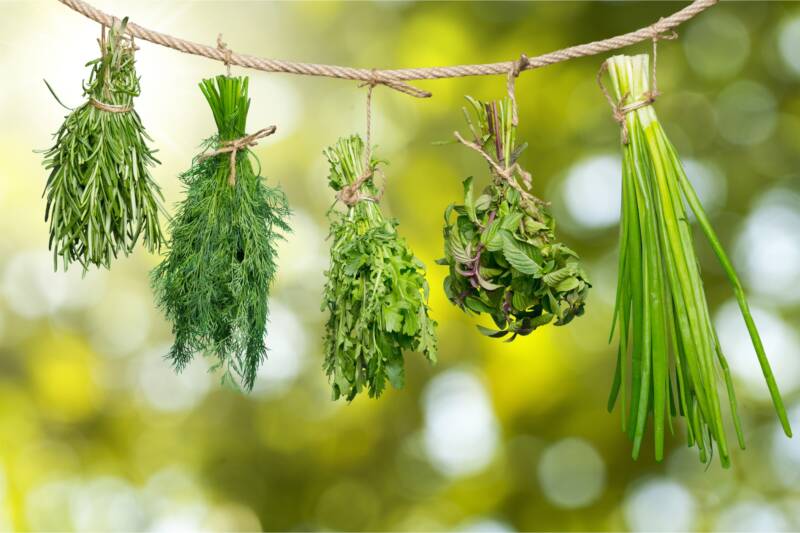
Herbs hanging from twine for drying
Air dry herbs by tying bundles with twine and hanging.

Another method to air-dry parsley involves tying the parsley into small bundles using rubber bands or twine and storing the parsley bundles in brown paper bags.

Poke holes in the bags to encourage air flow and store in a cool place away from moisture.


How to Dry Parsley in the Oven

If you’re looking for a quicker method to dry your parsley, the instructions are simple. Spread the leaves out in a single layer on a baking sheet and popping them in the oven.

You can do this with multiple baking trays at a time. Bake at 170 degrees F for about 20 minutes, but keep an eye on the parsley to make sure it doesn’t burn or crumble.

You can also use a food dehydrator, which is specifically designed to dry foods. Follow a similar method, spreading parsley leaves onto dehydrator trays and set to about 95 degrees.

It can take up to 18 hours to complete this process, but the low and slow method may help preserve the freshness of the flavor.

Drying parsley by using appliances like the microwave won’t work; the trick is low heat for a more extended period of time.

Parsley in a basket for drying
Click to save to your Pinterest board.

Ways to Use Dried Parsley

Dried parsley leaves are great to use in all kinds of cooking, including as a garnish to add color and flavor to all of your favorite dishes. Throw some parsley in homemade soups or stews, mix it into casseroles, include it in pesto, sprinkle on top of pasta or even mix into salads.

If you want even finer parsley flakes, you can crush your dried parsley using a mortar and pestle or by using a wooden spoon and a sturdy bowl.

More articles on Drying and Using Herbs can be found here:

  • How to Grow Herbs Indoors and Outdoors – everything you need to know!
  • How to Dry Herbs – in depth info and great herbal tips.
  • Grow Valerian Herb – a pretty flower with an incredible scent!
  • How to Grow Lovage – also known as the “Maggi” plant.
  • More info on drying herbs


Originally published 2012, latest update March 2026

Filed Under: Drying Herbs

  • « Previous Page
  • 1
  • 2

Connect With Us!

  • Email
  • Facebook
  • Instagram
  • Pinterest
  • Twitter

Search this site

Generic selectors
Exact matches only
Search in title
Search in content
Post Type Selectors
Search in posts
Search in pages

Our Most Popular Posts

Garlic cloves in oil

How to Preserve Garlic in Oil – and Other Ways to Store Garlic

a open jar of pickled brussel sprouts on a counter

Easy Pickled Brussels Sprouts Recipe (Water Bath Canning)

Privacy Policy

Read about our Privacy Policy

Disclosure

Please note that some of this site’s links are affiliate links, and CountryLivinginaCaribooValley.com is a participant in the Amazon Services LLC Associates Program, an affiliate advertising program designed to provide a means for us to earn fees by linking to Amazon.com and affiliated sites. At NO ADDITIONAL COST TO YOU, I will earn a small commission, if you purchase them. I recommend them as they are good products.

Theme Design By Studio Mommy · Copyright © 2026